Why HVAC Students Struggle with Electrical—and How Training Programs Can Close the Gap
The Hidden Challenge in HVAC Education
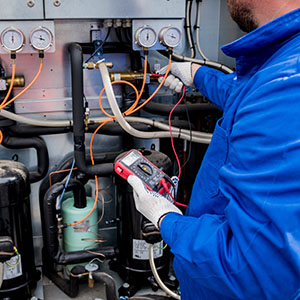
Many HVAC students struggle more with electrical concepts than mechanical systems because electrical principles can be harder to visualize, harder to practice without the right equipment, and more difficult to connect to real HVAC applications. Strengthening electrical training with hands-on trainers and curriculum can help close this gap and better prepare students for careers in HVAC.
Quick Answer: HVAC students often find electrical topics more difficult than mechanical topics because they must understand abstract concepts like voltage, current, resistance, control logic, and troubleshooting. With hands-on electrical trainers, HVAC electrical systems trainers, and guided curriculum, schools can help students build confidence and improve job readiness.
In this Guide
- Why do HVAC students struggle more with electrical than mechanical?
- What is the electrical knowledge gap in HVAC training?
- Why are electrical skills so important in modern HVAC careers?
- How can HVAC training programs close the electrical skills gap?
- What HVAC training solutions can help students build electrical skills?
- Frequently asked questions about HVAC electrical training
- Final thoughts
Why Do HVAC Students Struggle More with Electrical Than Mechanical?
HVAC instructors across the country are seeing a common trend: many students are more comfortable with mechanical systems than electrical concepts. While learners may quickly grasp airflow, refrigeration cycles, piping, and physical components, they often hesitate with wiring, controls, schematics, and troubleshooting.
This gap matters because today’s HVAC systems are not purely mechanical. They are electromechanical systems that require technicians to understand how electrical components, sensors, motors, relays, and controls work together. If students lack confidence in electrical fundamentals, they may struggle to troubleshoot problems efficiently and safely in the field.
What Is the Electrical Knowledge Gap in HVAC Training?
Many students enter HVAC programs expecting to work with tools, ducting, piping, refrigeration systems, and equipment installation. What they may not expect is how heavily HVAC depends on electrical knowledge. From reading wiring diagrams to testing circuits and diagnosing control issues, electrical skills are essential for success in the lab and on the job.
Students often struggle with:
- Understanding voltage, current, resistance, and electrical flow
- Reading and interpreting wiring diagrams and schematics
- Connecting classroom theory to real HVAC electrical systems
- Troubleshooting faults in motors, relays, contactors, and controls
- Building confidence when working with live or simulated electrical systems
In many cases, the issue is not a lack of ability. It is a lack of repeated, hands-on practice with the right training tools and curriculum. When electrical concepts are only taught through lecture or limited demonstrations, students may memorize terms without truly understanding how to apply them.
Why Are Electrical Skills So Important in Modern HVAC Careers?
Modern HVAC equipment has become more advanced, more connected, and more dependent on electrical controls. Technicians are expected to do more than replace parts. They must be able to identify faults, verify performance, and understand how electrical and mechanical systems interact.
Employers need graduates who can:
- Use electrical test instruments correctly
- Diagnose electrical faults safely and efficiently
- Understand motors, drives, relays, contactors, and sensors
- Work with increasingly sophisticated HVAC control systems
When students are weak in electrical knowledge, they may graduate with gaps that affect employability, confidence, and long-term success. Strengthening this area of training can help programs produce better-prepared technicians and better outcomes for employers.
How Can HVAC Training Programs Close the Electrical Skills Gap?
Closing the electrical skills gap in HVAC education requires more than adding a few extra lessons. Students need structured, progressive training that builds from fundamentals to system-level troubleshooting. The following strategies can help programs better support student success.
Before students can troubleshoot HVAC systems, they need to understand core electrical concepts such as voltage, current, resistance, circuit types, measurement, and safety. Without this foundation, more advanced HVAC topics can become overwhelming.
Hands-on electrical training systems help students move beyond theory by allowing them to build circuits, take measurements, and see how electrical principles work in real time.
Students learn best when they can connect foundational knowledge to the systems they expect to work on in the field. HVAC training should clearly show how electrical concepts apply to thermostats, motors, compressors, relays, contactors, and control circuits.
Training that bridges theory and application helps students understand that electrical knowledge is not separate from HVAC—it is central to it.
Many students can follow a procedure or assemble a system, but troubleshooting requires a different level of thinking. They need repeated opportunities to identify faults, test components, interpret symptoms, and make logical decisions.
Fault-insertion trainers and guided troubleshooting curriculum can give students valuable real-world practice that strengthens both skill and confidence.
HVAC programs should prepare students for the technologies they will encounter on the job. That means incorporating trainers and curriculum that reflect modern electrical systems, controls, motors, and diagnostic processes.
Interactive learning systems, eLearning, and hands-on trainers can help instructors teach electrical concepts more effectively while giving students a more engaging and repeatable learning experience.
What HVAC Training Solutions Can Help Students Build Electrical Skills?
We help schools, colleges, and training organizations strengthen HVAC instruction with hands-on trainers and curriculum designed to build real technical skills. For programs looking to address the electrical knowledge gap, we offer solutions that can support both foundational learning and advanced troubleshooting.
Depending on program goals, training solutions may include:
- Electrical Fundamentals Trainers for core circuit knowledge, measurement, and safety
- Motor Control and Drive Training Systems to help students understand electromechanical operation
- HVAC Electrical and Troubleshooting Trainers that connect electrical theory to HVAC system performance
- Interactive Curriculum and eLearning to reinforce classroom and lab instruction
With the right combination of equipment and curriculum, programs can give students more opportunities to practice, troubleshoot, and build the confidence they need to succeed in modern HVAC careers.
Frequently Asked Questions About HVAC Electrical Training
Electrical topics are often harder because students must understand invisible processes such as voltage, current, resistance, and control logic. Mechanical systems are usually easier to see and physically relate to, while electrical troubleshooting requires deeper diagnostic thinking.
HVAC students should begin with electrical safety, voltage, current, resistance, series and parallel circuits, measurement tools, wiring diagrams, and basic control components. These fundamentals support more advanced HVAC troubleshooting later.
Schools can improve HVAC electrical training by combining hands-on trainers, structured curriculum, troubleshooting practice, and industry-relevant systems that connect theory to real HVAC applications.
Electrical fundamentals trainers, motor control training systems, HVAC electrical troubleshooting trainers, and interactive eLearning curriculum can all help students build stronger electrical skills and confidence.
Final Thoughts
Many HVAC students do not struggle because they lack potential. They struggle because electrical concepts are often harder to visualize, practice, and connect to real-world outcomes without the right teaching tools.
By strengthening electrical training within HVAC programs, educators can help students become more capable troubleshooters, more confident technicians, and more valuable hires for employers.
Ready to explore hands-on HVAC training systems, electrical trainers, and curriculum designed to close the skills gap.