Bridging the Gap Between Skills and Performance in Emergency Care
Why EMS Students Struggle Under Pressure—and How to Fix It
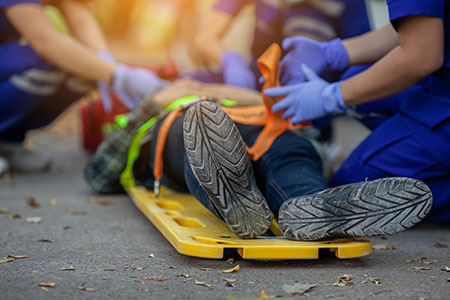
In emergency care training, students are taught critical skills—airway management, bleeding control, patient assessment—but when faced with real-world emergencies, many struggle to perform under pressure.
The reality is simple: students don’t rise to the occasion—they fall to their level of training. And for many EMS and fire programs, there’s a gap between what students know and how they perform in high-stress situations.
Traditional training methods often focus on knowledge acquisition and isolated skill practice. While these are essential, they don’t fully prepare students for the complexity and intensity of real emergency scenarios.
- Performing under time pressure
- Managing multiple priorities at once
- Working through distractions and chaos
- Communicating effectively with a team
- Making fast, high-stakes decisions
These are performance skills—and they require a different type of training.
In high-acuity situations, even well-trained students can experience cognitive overload. Stress impacts memory recall, slows decision-making, and reduces motor skill accuracy.
Without exposure to realistic, high-pressure environments, students may:
- Freeze or hesitate during critical interventions
- Miss key assessment steps
- Struggle to prioritize care effectively
- Lose confidence in their abilities
This isn’t a failure of the student—it’s a limitation of the training environment.
To bridge the gap, training programs are shifting toward high-fidelity, scenario-based simulation that replicates the realities of emergency care.
These environments allow students to practice:
- Responding to evolving patient conditions
- Making decisions in real time
- Performing under stress and time constraints
- Working as part of a coordinated team
Instead of simply demonstrating a skill, students must apply it in context—building both competence and confidence.
Advanced trauma simulators introduce realism that traditional training tools cannot replicate. With features like realistic bleeding, airway complications, and physiological responses, students experience the urgency and unpredictability of real emergencies.
This type of training helps:
- Improve response speed and accuracy
- Increase retention through experiential learning
- Build confidence before entering the field
- Prepare students for high-risk, high-impact situations
Building More Prepared First Responders
The goal of EMS education isn’t just to teach skills—it’s to ensure students can perform when it matters most.
By incorporating realistic, high-pressure simulation into training programs, educators can better prepare students for the demands of the field—reducing hesitation, improving outcomes, and ultimately saving lives.
Looking to strengthen high-acuity trauma training in your program? We can share how other EMS and fire programs are incorporating simulation to improve performance under pressure.