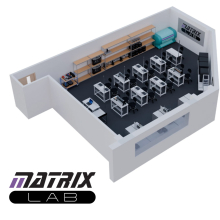
Create a flexible, future-ready engineering learning environment with Matrix Lab. Integrated equipment, curriculum, storage, and classroom design solutions for technical education, workforce development, and engineering training programs.
View Collaborative Robots from FANUC – The world’s leader in industrial robotics and automation. Developed out of the spirit of collaboration, these are the first industrial robot able to work alongside of students without the need for fencing, with the ability to lift and move heavy objects up to 35 kg. These robots stop on contact and restart with the simple push of a button.
These robots are green because... they are different!
In contrast to yellow FANUC robots, the green color lets everyone know the robots are designed to work side by side with humans, and don't require a fence! That frees up a lot of valuable floor space and cuts costs. They have highly sensitive contact sensing technology and soft outer skin, so you don't have to worry about bumping them. It will gently stop if they come into contact with something while working, It's ISO 10218-1:2011 safety certification is proof that it can share a workspace.
Be the difference between students getting a job or not.
Certify your students in the AM skills industry demands. Preparing the workforce for tomorrow with this hands-on certification will give them a step ahead of the rest.
FDM Technology works with specialized 3D printers and production-grade thermoplastics to build strong, durable, and dimensionally stable parts with the best accuracy and repeatability of any 3D printing technology.
Benefits of FDM:
- The technology is clean, simple-to-use, and office-friendly
- Supported production-grade thermoplastics are mechanically and environmentally stable
- Complex geometries and cavities that would otherwise be problematic become practical with FDM technology

FDM System & Material Overview
FDM 3D Printers use a variety of engineering-grade thermoplastics to manufacture functional parts. FDM thermoplastics are environmentally stable, so overall shape and part accuracy don’t change with ambient conditions over time. Materials are easy to change with no mess or complicated processes.
PolyJet is a powerful 3D printing technology that produces smooth, accurate parts, prototypes, and tooling. With microscopic layer resolution and accuracy down to 0.014 mm, it can produce thin walls and complex geometries using the widest range of materials available with any technology.
Benefits of PolyJet 3D Printers:
- Create smooth, detailed prototypes that convey final-product aesthetics
- Produce accurate molds, jigs, fixtures, and other manufacturing tools
- Achieve complex shapes, intricate details, and delicate features
- Incorporate the widest variety of colors and materials into a single model
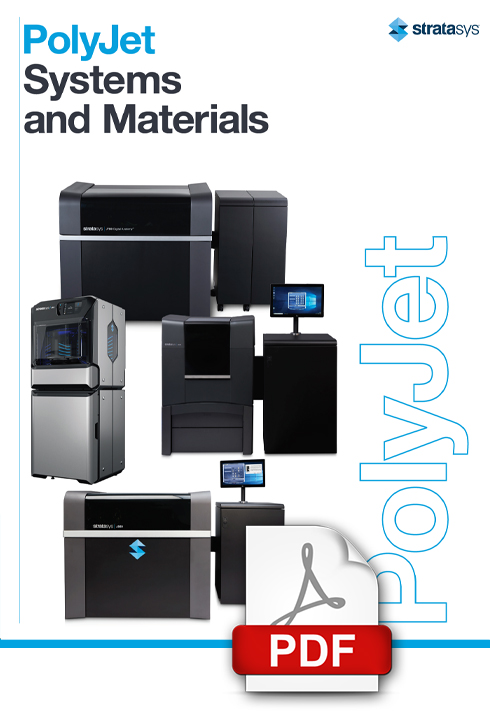
PolyJet System & Material Overview
PolyJet™ 3D printers empower designers, engineers, educators and healthcare professionals to create and problem-solve without the limitations of traditional methods of modeling. The power lies with PolyJet technology, curable liquid photopolymers capable of producing very fine layers for smooth surfaces, intricate details and vivid color.
A New World of Innovation
Levil Technology is dedicated to designing and producing tabletop CNC machines with many users across many industries. Unlike many tabletops out there, their machines can reach incredible precision and high speeds thanks to their servo-controlled technology.
They are capable of machining and can also digitize, change, and measure tools automatically, perform canned cycle, and much more using a simple-to-use Windows-based software or FANUC control.
Visit Levil Technology
 Agriculture can be considered one of the oldest industries in th world tracing its origin back 12,000 years. What started with small groups of people in various locations figuring out how to domesticate animals and grow their food has become a multi-trillion-dollar global industry.
Over the last few centuries, sparked by a series of industrial revolutions, significant changes have taken place throughout the industry that has shaped agriculture as we know it today. Machinery has replaced manual processes and hand tools. Additionally, technological advances, including computers and the Internet, have enabled agricultural machines and procedures to be more productive and efficient.
As technology continues to advance, agriculture must keep evolving to ensure that productivity keeps pace with an ever-expanding world population. Today’s agricultural experts need experience with more types of technology than ever before.
Agricultural mechanics is a critical component of robust and relevant agriscience programs. With the right equipment, educators can demonstrate how to construct and repair equipment, buildings, and facilities by following architectural and mechanical plans, show mechanical equipment and power systems, and teach hydraulic and pneumatic systems service and repair.
Plants, farms, and animals are the main functions of agriculture. Still, there are additional opportunities in this field. This career pathway covers a variety of careers - ranging from animal science and veterinary science to metal technologies/welding, oil and gas production systems, and energy & natural resources.
Students need the opportunity to apply physical science principles to their studies with an agricultural mechanics career track that covers:
- Agricultural systems including equipment, power systems, alternative fuel sources and precision technology
- Welding trainers, CNC tables, and hydraulics training systems are all key components to the formula that makes up a robust educational program
- Food Production & Processing Systems
- Natural and Rewable Resource Systems
- Animal Systems, Veterinary Programs
Explore hands-on learning technologies for agricultural programs.
 1.6 million new construction jobs will be required in the next decade in careers ranging from carpentry and masonry to 3-D design and computer programs that control the internal environments of commercial office buildings.
Opportunities abound in HVAC & Electrical — 2,230 annual electrician job openings in the state of Texas and 17.44% average annual job growth. There is a 14% annual growth rate for careers in HVAC, much faster than average.
We offer a wide range of product for Architecture & Construction training programs, including:
The Arts, A/V Technology and Communications cluster focuses both on creativity and on the technologies used in today’s leading industries. From paper and pen to computer technology, from behind the scenes to on the stage, there are plenty of career opportunities in the arts.
Empowering the Future of Healthcare with Innovative Training Solutions
Health Science is the fastest-growing sector in today’s job market and offers some of the highest-paying careers. As the country’s population ages and more people need health services, opportunities expand for healthcare workers.
In the dynamic healthcare landscape, staying ahead requires a blend of cutting-edge knowledge and hands-on skills. We are dedicated to providing comprehensive training solutions for health science education and empowering students to excel in the fastest-growing sector of today's job market. Our range of products encompasses essential tools and resources designed to prepare students for successful careers in healthcare.
From foundational courses in anatomy and physiology to specialized training in medical technologies and patient care, our training solutions cover a wide spectrum of healthcare disciplines. Our immersive simulations and practical learning modules enable students to develop critical thinking, problem-solving, and communication skills essential for delivering quality patient care in diverse healthcare settings.
Explore our range of Health Science training solutions and join us in shaping the future of healthcare education.
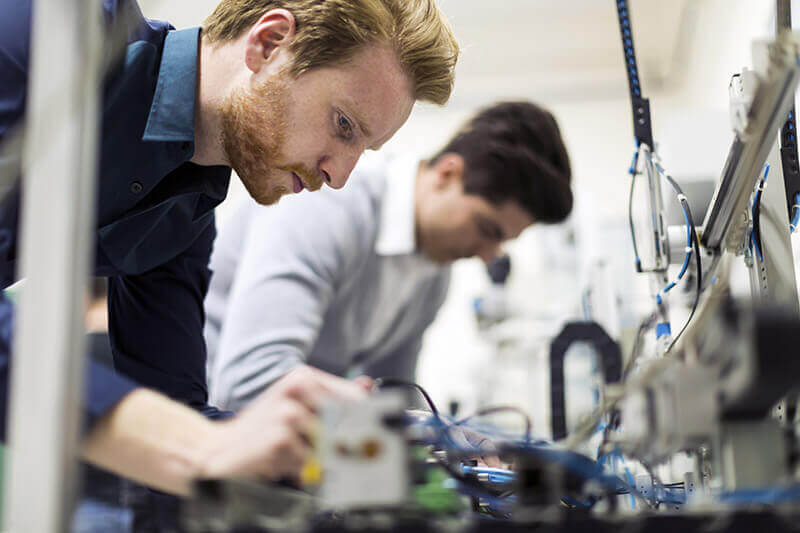 Our learning programs develop job-ready skills that have been proven time and again. Take a look at how we can help you be successful!
Colleges are challenged to offer courses whenever students are available – and frequently, wherever they are available. Students want courses that are available on campus as well as from home while also providing strong hands-on skills for the technology demands facing them. Meeting these demands is no small task.
Amatrol has learning programs that allow colleges to excel in this demanding environment. We offer a full range of learning systems, both in a traditional equipment lab setting as well as in a virtual lab, that meet and exceed students' expectations.

Unlocking STEM Opportunities for Future Careers
According to the National Science Board, in 2019, the STEM workforce represented 23% of the total U.S. workforce. Notably, over half of STEM workers don't hold a bachelor’s degree and are prominent in sectors like health care (19%), construction trades (20%), installation and repair (21%), and production (14%). STEM workers experienced lower unemployment (2%) compared to non-STEM workers (4%) in 2019, with higher median earnings.
Our Approach
Through activity-, project-, and problem-based curriculum, our programs empower students to apply their knowledge, solve problems, and lead their own learning. When students see the relevance of their education to their lives and careers, they become more engaged and successful.
Pages
-
-
 Item Number:MATTI-BLAST-FMM-1Explore TacMed's Simulation™ MATTi™ Medical Simulator, a modular whole-body female medical simulator designed to revolutionize medical training. Discover unparalleled realism, versatility, and effectiveness in simulation technology. Prepare healthcare professionals for real-world scenarios with MATTi™ today.
 -
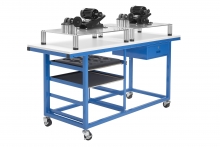 Item Number:27-MEA1Amatrol’s Mechanical Drives 1 Assessment Workstation (27-MEA1) features a compact workstation designed to effectively assess hands-on mechanical skills with both belt and chain drives.
 -
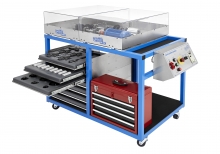 Item Number:970-ME1Amatrol’s Mechanical Drives 1 Learning System (970-ME1) covers installation, operation, motor drive alignment, and various motor drive systems applications.
 -
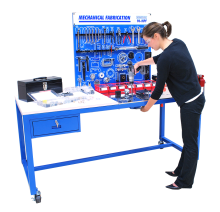 Item Number:950-MPF1Hands-on mechanical fabrication assembly training with Amatrol’s 950-MPF1. Teach essential industrial hand and power tool skills with safety-focused curriculum and optional interactive eLearning.
 -
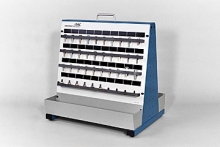 Item Number:805-PACDAC Worldwide’s Mechanical Fasteners Sample Board (805-PAC) is a hands-on teaching aid designed specifically to supplement training in industrial fastener identification, measurement, selection, and design.
 -
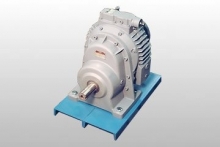 Item Number:205-190DAC Worldwide’s Mechanical Speed Variator Dissectible (205-190) provides students with realistic training that will build industrial skills hands-on.
 -
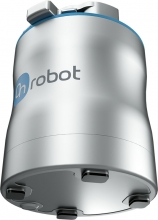 Item Number:MG10OnRobot's MG10 is a versatile, easy-to-use magnetic gripper for material handling, assembly and machine tending applications in manufacturing, automotive and aerospace environments.
 -
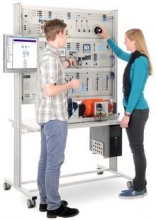 Item Number:EMG 1 / EMG 2A stand-alone power network is a type of power supply network which is closed and has no active lines coupling it to other parts of the electrical power supply grid. A stand-alone network is markedly smaller than a combined electricity grid and does not usually incorporate high-voltage power lines. For this type of network, there are two distinct modes of operation, stand-alone mode, and isolated parallel or generator-to-generator operation.
 -
MIMBUS Discover is a turnkey VR solution for career exploration. Engage students with 16+ immersive modules across skilled trades while tracking performance in real-time with VULCAN. Ideal for CTE, K-12, and workforce programs.