DAC Worldwide’s Centrifugal Clutch Cutaway (200-2204) depicts a modified industrial centrifugal clutch for mechanical drive training in a classroom or laboratory. This sectioned mechanical power transmission component uses centrifugal force to connect two concentric shafts by throwing a centrifugal shoe outwards at a right angle to the primary shaft axis, which allows for shift during start-up.
Watch an unboxing Lincoln Electric's VRTEX® 360 Compact tabletop virtual reality welding trainer.
Watch an overview of setting up and using the GTAW function on Lincoln Electric's VRTEX® 360 Compact tabletop virtual reality welding trainer.
Introducing PETRA - SCADA-controlled factory automation for the classroom.
Take a look around LJ Create's virtual learning library! The library is filled with over 10,000 STEM lessons for students from elementary school age all the way up to vocational level.
PLCs are used widely across a range of industrial and manufacturing applications to control processes and systems. They play an important part in ensuring manufactured goods and automated services are provided as efficiently as possible. The skills required to implement and maintain these devices are key to many engineering programs of study.
LJ Create's Exploring STEM provides practical activities and real-world problem-solving tasks in the classroom. Investigate, design, build, and program robotic and automated machinery across a wide range of areas of technology.
Design projects include
- Engineering Design
- Biomedical Technology
- Energy in Buildings
- Agricultural Technology
- Construction Engineering
- Mobile Robotics
- Mechatronics
- Transportation Technology
- Manufacturing Technology
- Industrial Robotics
- Mass Transportation
- Electronics Technology
Explore LJ Create's Learning Management System
Exporting your LMS data is as easy as 1-2-3!
This video shows how to create a simple report for your class, delete a failed assessment attempt and save your report to use again later... all in less than 2 minutes!
Life-Saving Skills: First Aid Training for CPR & AED Use
Cardiopulmonary resuscitation (CPR) and automated external defibrillators (AEDs) are crucial in emergencies, often making the difference between life and death. Immediate CPR, as per the American Heart Association (AHA), can double or triple survival chances post cardiac arrest. When coupled with AED usage, survival rates significantly increase. This course is tailored to impart comprehensive CPR and AED skills, empowering participants to act effectively during cardiac emergencies.
Key Learning Objectives
This course aims to equip participants with vital knowledge and practical skills in CPR and AED use. Topics covered include:
- Understanding the basics of the human cardiovascular system
- Techniques for performing hands-only and traditional CPR for adults
- Safe and efficient operation of an AED device
- Emphasizing the importance of swift response in cardiac emergencies
- Role of CPR and AEDs in the chain of survival
Ideal for individuals ranging from laypersons to healthcare professionals, the First Aid: CPR & AED course prepares participants to confidently respond to cardiac emergencies in community or workplace settings.
Simulation Details
Industry Focus: General Industry
Duration: 10-15 minutes
Language: English
Headset Compatibility: Our training content is compatible with most major headset models available in the market.
Pages
-
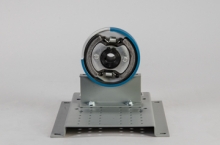 Item Number:200-2204
 -
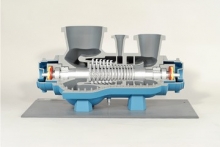 Item Number:211CThe design of the Centrifugal Compressor Model is based upon common industrial centrifugal compressors.
 -
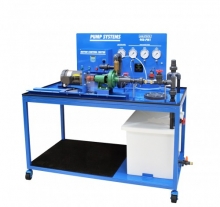 Item Number:950-PM1The model 950-PM1 Pumps Learning System teaches skills related to centrifugal pumps, which are used in almost every industry to transfer non-hydraulic fluids of various types from one place to another. Students learn a comprehensive set of industry-relevant skills including how to operate, install, maintain, troubleshoot, analyze performance, and select centrifugal pumps as well as system design.
 -
 The CFT program was created in partnership with the Material Handling Equipment Distributors Association (MHEDA) to provide skills to entry-level forklift technicians, enhancing their performance in the world of material handling. The CFT prepares individuals to repair and maintain technical systems utilizing key engineering principles that underpin most forklift vehicles.
 -
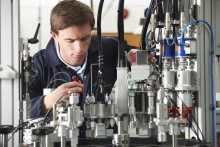 Item Number:C-101 / C-102 / C-103 / C-104SACA’s Associate certifications are introductory Industry 4.0 certifications appropriate for operators and other individuals seeking to become familiar with Industry 4.0 factory floor automation equipment and processes.
 -
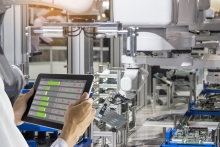 SACA’s Certified Industry 4.0 Professional certification is an engineering certification that focuses on the analysis, design, and optimization of Industry 4.0 systems. It prepares engineers to succeed in positions in modern production environments that use Industry 4.0 technologies.
 -
 SACA’s Specialist certifications certify Industry 4.0 technical skills in operations, troubleshooting, programming, maintenance, and systems integration. Each certification is keyed to a skilled occupation.
 -
 The purpose of the Certified Logistics Technician (CLT) program is to recognize through certification individuals who demonstrate mastery of the core competencies of material handling at the front-line (entry-level through front-line supervisor) through successful completion of the certification assessments.
 -
 Item Number:CPT / CPT+ / CPT 4.0The purpose of the Certified Production Technician (CPT) ® 4.0 certification program is to recognize through certification, individuals who demonstrate mastery of the foundational, core competencies of advanced manufacturing production at the entry-level to front-line supervisor through successful completion of the certification assessments.
 -
 Item Number:CT-SCAMSSC’s Certified Technician in Supply Chain Automation (CT-SCA) logistics certification enables both students and incumbent workers to gain the skills needed to meet the definition of a supply chain automation technician established by the National Science Foundation-funded National Center for Supply Chain Automation: a technician who installs, operates, supports, upgrades or maintains the automated material handling equipment and systems which support the supply chain.