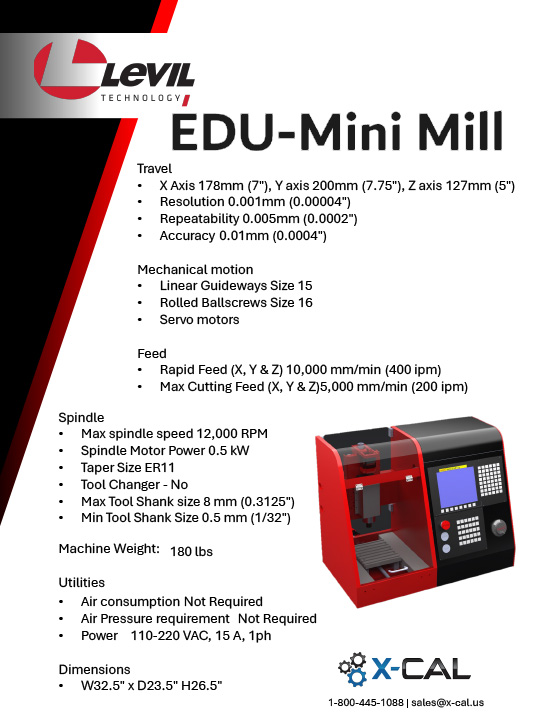
The EDUMiLL is a revolutionary system that incorporates technologies from the additive and subtractive manufacturing fields to open the door to a new realm of possibilities and further innovation by making it affordable to include a 3D printer and a robust CNC mill in one package.
Unlock the Future of Welding with Robotic Solutions
Robotic welding is transforming the manufacturing industry by increasing productivity, improving weld quality, and reducing labor costs. Our comprehensive brochure dives into the latest advancements in robotic welding technology, providing insights into how automation can streamline your welding processes. From system integration to programming and operation, discover how robotic welding can enhance your workforce’s capabilities and meet growing production demands.
Download our brochure to learn more about how robotic welding solutions can help you stay competitive, boost efficiency, and ensure high-quality, repeatable welds across various applications. Equip your team with the skills needed to excel in automated welding today.
Join X-Cal’ SACA Webinar Series and learn how to establish a SACA Academy for industry-recognized certifications. Explore best practices, tools, and resources to prepare students for advanced manufacturing careers. Don’t miss out on this opportunity to enhance your technical training program!
Mastering the control of hazardous electrical energy is crucial to preventing workplace accidents. DAC Worldwide’s Electrical Lock-Out/Tag-Out Training System (Model: 810-000) provides hands-on, practical training designed to ensure that workers are fully equipped to identify, isolate, and safely deenergize electrical equipment. This portable training system replicates real-world industrial scenarios, giving workers the confidence to perform lock-out/tag-out (LOTO) procedures with ease. All training exercises operate at a reduced voltage of 24VDC, ensuring maximum safety during instruction while still providing a highly effective learning experience.
With this comprehensive system, users will have access to industry-standard lock-out/tag-out components, a complete lock-out/tag-out tool kit, and a detailed Use Guide that leads them through practical exercises. The training system is ideal for industrial safety programs, technical colleges, and vocational training centers aiming to enhance their electrical safety training. Download the Electrical Lock-Out/Tag-Out Training System PDF now to learn more about how this system can improve your organization’s safety protocols.
Download the PDF to explore the full features and specifications of the Electrical Lock-Out/Tag-Out Training System and see how it can benefit your safety training program today!
Wednesday, October 2, 2024
This video provides a detailed overview of DAC Worldwide’s Electrical Lock-Out/Tag-Out Training System, highlighting its key features and operational capabilities.
Safety is the cornerstone of any industrial environment, and mastering the control of hazardous energy, particularly electricity, is essential to prevent injury or death. Lock-out/tag-out (LOTO) procedures are critical for ensuring that machinery and electrical currents are properly deenergized, creating a safe workspace for employees. By following LOTO practices, workers can significantly reduce the risk of accidents caused by unexpected energy releases.
DAC Worldwide’s Electrical Lock-Out/Tag-Out Training System offers an affordable, portable solution designed for hands-on learning in industrial safety training. This tabletop trainer provides practical experience in identifying and securing dangerous electrical energy sources, operating at a reduced voltage to ensure user safety.
The system includes real-world components such as clamp-on circuit breaker lock-outs, a knife-type disconnect switch, an IEC rotary safety switch, a 3-in-1 plug lock-out, and more. Along with test points, indicator lights, and a comprehensive toolbox of locking and tagging devices, the system also features a detailed Use Guide to reinforce critical lock-out/tag-out procedures.
Thursday, October 10, 2024
At X-Cal, we pride ourselves on offering more than just cutting-edge training equipment—we provide full support from installation to troubleshooting, ensuring our customers have everything they need to succeed. In this video, Daniel Nolan, our Field Service Manager with over nine years of experience, walks through how his team assists educators and organizations in setting up and maintaining their training systems.
Daniel discusses the Amatrol training systems, known for their modular design and use of industry-standard components, preparing students for real-world industrial environments. Our support team not only helps with installation but also ensures that customers are comfortable using the equipment. From addressing safety concerns in training on three-phase power systems to guiding educators through detailed, step-by-step curriculum, Tech-Labs is committed to making technical training both accessible and effective.
Daniel also highlights the advanced mechatronics system—a capstone training solution that integrates AC/DC relay control, PLCs, fluid power, and robotics, giving students a full automation experience. These systems, paired with our collaborative robotics solutions, create a safe and interactive learning environment.
Why Choose Tech-Labs?
- Installation Services: Seamless setup and configuration of your new training systems.
- Support: Quick resolutions for any missing or damaged components and ongoing support to keep your system running smoothly.
- Curriculum Integration: Step-by-step curriculum to help educators and students maximize the potential of their equipment.
- Industry-Standard Equipment: Amatrol systems feature components commonly found in industrial environments, giving students hands-on experience with real-world tools.
At X-Cal, we're here to help you create the best learning environment for your students. With a team of dedicated professionals ready to assist, we ensure that every step of your technical training process is smooth and successful.
Contact Us today to learn more about how X-Cal can elevate your training programs.
X-Cal' Approach to Support
Thursday, October 10, 2024
At X-Cal, our approach goes far beyond the sale of equipment. For over 50 years, we have partnered with educators and trainers to ensure they receive the support they need long after installation. We believe in lifelong partnerships, which is why we provide full-circle services, from initial site prep to ongoing training for new instructors.
Our team, including Mark Venske, Director of Technical Services, and Ross Patton, Inside Sales Manager, is dedicated to customer success. Whether it’s through technical orientation, ongoing troubleshooting, or on-site retraining, we ensure that the tools we provide are fully utilized to impact lives and careers positively.
Our commitment is simple: if we’re only meeting your expectations, we’re not doing enough. We strive to exceed what you expect from any other company, offering unmatched support and guidance throughout your entire journey with us.
Explore how our solutions can enhance your programs by contacting us today. Together, we’ll make sure the next generation of learners is equipped to succeed.
Reach out to our team today to learn more about how we can support your training goals. Contact Us
Prepare Your Students for Real Emergencies
Thursday, October 10, 2024
X-Cal's, in partnership with TacMed, offers a range of advanced simulators to equip medical professionals, first responders, and healthcare educators with realistic training tools. These simulators provide hands-on experiences in managing traumatic situations, helping students and trainees develop critical skills in a controlled environment.
The TacMed Clinical Response Upper-Resuscitate and Lower Simulators are designed to offer comprehensive training in airway management, neurological assessment, bleeding control, and more. With options for four upper torso and six lower torso configurations, educators can tailor training sessions to match specific clinical skill sets.
Whether it’s performing tracheostomies, decompressing a tension pneumothorax, or managing a gunshot wound, TacMed simulators give learners a life-like experience. These simulators also feature vital signs monitoring, realistic limb movements, and pulse detection to mimic real patient responses.
At X-Cal's, we ensure that implementing these simulators into your program is seamless. We provide on-site training to faculty, ensuring that educators are fully prepared to use the equipment effectively.
Contact us today to learn how TacMed simulators can elevate your medical training program.
Learn more about TacMed's trauma simulators and schedule a demonstration with our team. Contact Us
Creating Custom Medical Solutions with Stratasys
Thursday, October 10, 2024
At the University of Texas at Arlington Research Institute (UTARI), 3D printing plays a pivotal role in driving medical research forward. With the help of Tech-Labs and cutting-edge Stratasys printers like the Neo450s SLA and J35 PolyJet, UTARI’s researchers are able to quickly prototype and fabricate parts with unmatched precision.
Research Scientist Alex Jamison, part of the Biomedical Technologies division, highlights their work in creating soft robotic exoskeletons to aid patients with neurological conditions. Using advanced 3D modeling and simulation, their team designs wearable devices that help patients regain function in their hands and wrists. The flexibility and speed of 3D printing have significantly improved their ability to iterate on designs and produce exact replicas of their simulations.
Clayton Webb, Equipment Technician at UTARI, emphasizes how 3D printing has transformed their workflow. What once took days to create using traditional CNC methods now takes only hours with the Neo450s. With the ability to switch between different materials, the team can quickly adapt to new projects and challenges.
Through their partnership with Tech-Labs, UTARI continues to innovate, creating life-changing medical solutions. With ongoing support and expertise from Tech-Labs, the team is always prepared to meet the demands of their groundbreaking research.
Learn more about how Tech-Labs and Stratasys 3D printing solutions can accelerate your research. Contact Us
Customized Technical Solutions for Education and Industry
Thursday, October 10, 2024
At Tech-Labs and X-Cal, we are more than just a distributor – we are your partner in transforming education and workforce development. For over 40 years, we’ve provided tailored technical solutions to schools, businesses, and governments, helping close the skills gap and prepare the workforce of the future. Our expertise spans a wide range of industries, from 3D printing and industrial automation to medical training and Industry 4.0 solutions.
Led by Warner Brown, CEO and President, Tech-Labs and X-Cal operates Solutions Centers in Katy, Texas, and Utah, with a new center opening soon in Denver. These centers allow us to showcase customized solutions to fit our clients' needs, providing a hands-on experience in a state-of-the-art facility. Even if you can’t visit us in person, we bring our solutions to you with our mobile equipment setups.
We partner with industry leaders like SACA, MSSC, Stratasys, and FANUC to offer nationally recognized credentials and competency-based training programs that ensure successful outcomes for both educators and industries. Whether you are looking to enhance a technical program at a school or need help with workforce development in your company, our subject matter experts will guide you every step of the way, from curriculum development to equipment adoption and training.
Our mission is to help close the skills gap by working with educators, companies, and government agencies to deliver solutions that are easy to implement and designed to succeed.
Get in touch with us to explore how we can help your organization with tailored solutions. Contact Us
The EDU MiNi MiLL: Precision CNC Training for Future Engineers
The EDU MiNi MiLL is designed specifically for educational environments, providing students with practical, hands-on experience in CNC machining and modern manufacturing. This compact yet powerful machine is built with precision engineering and an industrial-grade control system, ensuring students are trained on the same technology used in professional settings. With flexible integration into various curricula, the EDU MiNi MiLL is ideal for foundational training as well as more advanced projects, giving students the skills needed to thrive in today’s fast-evolving manufacturing industry.
In addition to its robust performance, the EDU MiNi MiLL prioritizes safety and user-friendliness, creating a secure learning environment for students of all skill levels. The intuitive interface, paired with precision servo motors, allows for highly accurate and efficient machining. Whether you're looking to expand your current technical training program or enhance research capabilities, the EDU MiNi MiLL offers the versatility and reliability you need to shape the engineers of tomorrow.
Contact us today to learn how the EDU MiNi MiLL can become a part of your educational program!
Pages
-
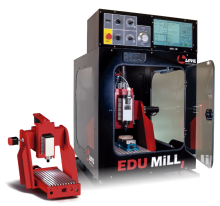 Item Number:EDU-MiLL
 -
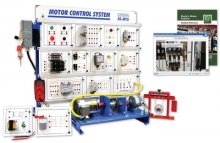 Item Number:85-MT5Amatrol’s Electric Motor Control Learning System (85-MT5) covers electric relay control of AC electric motors found in industrial, commercial, and residential applications. Learners study industry-relevant skills including how to operate, install, design, and troubleshoot AC electric motor control circuits for various applications.
 -
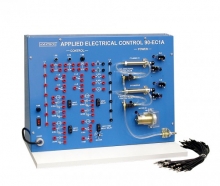 Item Number:90-EC1AThe Applied Electrical Control Learning System (90-EC1-A) teaches learners how to interpret, design, and operate relay control circuits using ladder diagrams. Electrical control is vital in the operation of electric and fluid power actuators and also forms the fundamental building block of automation systems like programmable logic controllers (PLCs), which are programmed using the electrical control schematic method, the ladder diagram.
 -
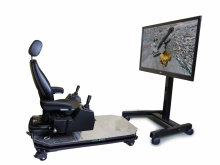 Item Number:ERSThere are eight "Simulation Modules" of increasing difficulty, starting with Controls Familiarization. The final modules combine elements of dipper fill at the rock face, and cab-side or blind-side truck loading. A simulated Mining Truck is built right in, to help teach truck spotting interaction. Key "Performance Indicators" measure how quickly and how carefully the simulated work is performed.
 -
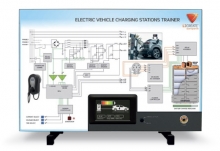 Item Number:743-01This trainer provides students and instructors with the opportunity to demonstrate, investigate and fault-find the circuitry and operation of off-car charging systems.
 -
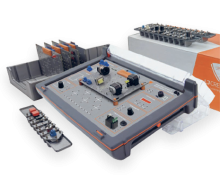 Item Number:730-10 / 730-00Desktop training systems provide very specific instruction and practice in the basic skills that are required by students as they embark on their careers.
 -
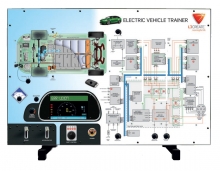 Item Number:740-01LJ Create's Electric Vehicle Systems Panel Trainer provides students and instructors with the opportunity to demonstrate, investigate, and fault-find a simulation of the electrical system of a typical electric vehicle.
 -
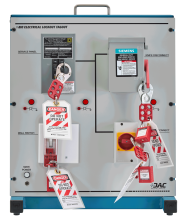 Item Number:810-000Teach the critical safety skill of electrical lock-out/tag-out with DAC Worldwide's Electrical Lock-Out/Tag-Out Training System (Model: 810-000). This hands-on, portable trainer ensures your workforce is prepared to handle hazardous electrical energy safely and effectively.
 -
 Explore electrical machines, motor control, power conversion, and drivetrain technologies with the Matrix TSL Electrical Machines Training System. A modular, hands-on platform for engineering and technical education.
 -
 Item Number:85-MT7BAmatrol’s Electrical Power Distribution Learning System (85-MT7B) teaches a broad range of electrical advanced manufacturing skills, such as installing, maintaining, and troubleshooting modern power distribution systems that require skills ranging from setting up basic raceways to selecting appropriate over-current protection for sensitive equipment.