
Amatrol’s High School Learning Systems create the need for students to want to learn math and science – they can’t interact with the exciting technology without it. Learning is interactive and challenging, keeping them engaged and wanting to do more. The math and science so desperately needed for 80% of jobs today is a natural outcome.
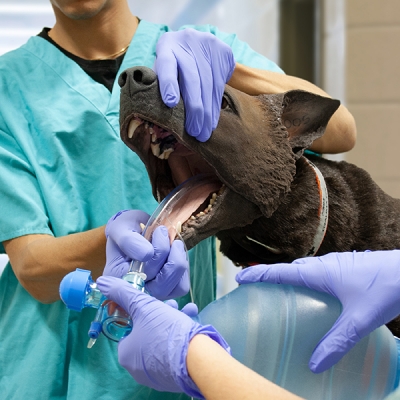
TacMed Solutions' canine simulators are cutting-edge training tools designed to provide realistic and effective training for veterinary professionals and first responders who work with animals. These simulators accurately replicate the anatomy and physiological responses of canines, allowing trainees to practice a wide range of medical procedures, from basic first aid to advanced emergency interventions. The lifelike features include realistic skin, muscles, and internal organs, providing a comprehensive and immersive training experience. By using these simulators, veterinary students and professionals can develop the skills and confidence needed to handle real-life medical situations involving dogs, ensuring high standards of care and improving outcomes for their animal patients.
One of the standout features of TacMed Solutions' canine simulators is their ability to simulate various medical conditions and injuries that are commonly encountered in veterinary practice and emergency scenarios. Trainees can practice procedures such as wound management, intubation, and intravenous access, gaining valuable hands-on experience in a controlled, safe environment. The advanced feedback systems integrated into these simulators offer immediate, realistic responses to medical actions, enabling users to refine their techniques and make informed decisions during training. This practical, experiential learning approach enhances technical proficiency and prepares trainees to respond effectively and compassionately to critical situations in real-world veterinary settings.
World Leader in Fume Extraction Technology
With years of designing and manufacturing fume extraction and filtration systems for a wide range of industries, BOFA has the experience and expertise to ensure that their product solutions are the best in the industry. BOFA has applied their in-depth understanding of industrial processes and applications into the design and manufacture of their products.
BOFA’s products are developed to be reliable, simple to use, and cost-effective. By continuing to listen to their customers, they can develop solutions that satisfy or go beyond regulatory health and safety requirements, and add value through enhanced functionality.
The need for fume extraction continues to be inherently linked with Health and Safety laws and compliance. Within the developed western markets such legislation is well defined and in the main compliance levels are high.
Most encouraging is the growing trend for improved employee welfare and environmental responsibility in regions where historically there has been less regard for either. This is a welcome and significant step change for our planet and one that at the macro level will drive an even greater demand for fume extraction.
BOFA's range of ADVANTAGE laser fume extraction and filtration systems are designed for applications that generate particulate and gaseous volatile organic compounds (VOC's) within the Laser Marking, Coding, and Engraving Industries.
BOFA’s range of PrintPRO print fume extraction systems is designed for applications that generate particulate and gaseous organic compounds within the wide and super-wide printing sector. Solutions are available for a variety of ink types including; Solvent, UV and Dye Sublimation.
The PrintPRO range combines high capture performance with proven filter technology ensuring the effective removal of particulate, gases/ vapors and odors associated with MEK, other Ketone, and Ozone (UV) applications.
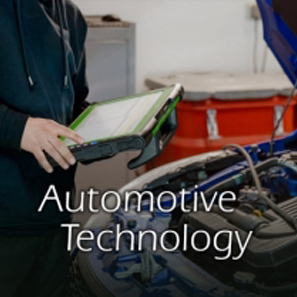
Automobile and Diesel technology is ever-changing as cars incorporate more electronics than ever before, creating the demand for workers with advanced automotive skills. Teaching the latest skills has never been more important. X-Cal offers a wide range of training solutions for teaching everything from basic engine function to complex maintenance and troubleshooting, as well as collision repair.
Today’s automotive technicians must be as proficient on a computer as they are with an engine. LJ Creates Automotive Program prepares students for a successful career in the automotive field.
Materials for Innovation
BÖHLER has over 200 different types of steel, making it one of the world’s leading providers of tool steels, high-speed steels, and specialty materials. They have always pushed developments forward and set benchmarks in metallurgy.
BÖHLER steels can be used in multiple ways, from a dimensionally stable tool for producing goods, to cold-work steels for punching, bending, and cutting, hot-work steels for pressure die casting, or as highly stressed specialty steels in aircraft, in turbines for energy production, in medical technology, and in offshore oil production.
Pages
-
-
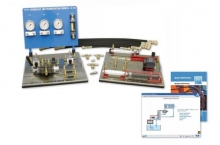 Item Number:BH-85Each Basic Hydraulics training system features standard industrial grade components. This attention to quality gives students experience they would normally only get on-the-job by helping them recognize industrial components and how to troubleshoot them more effectively. Components included with Basic Hydraulics are pre-mounted on circuit panels with silk-screened labels next to each, which facilitates ease of use and identification.
 -
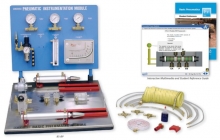 Item Number:85-BPAmatrol’s Basic Pneumatics training system (85-BP) introduces pneumatic principles through a combination of Amatrol’s top-flight multimedia curriculum with hands-on industrial pneumatic skill-building. Topics covered in this learning system include single-acting cylinder circuits, pressure vs. cylinder force, and flow control valves, while the panels can be used to practice skills such as connecting and operating a needle valve to control actuator speed.
 -
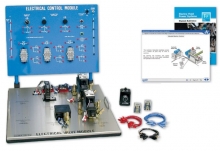 Item Number:85-EHThe Electro-Hydraulics training system includes an electrical control panel with relay control components and an electrical valve module with solenoid-operated hydraulic directional control valves and electrical/electronic sensors. These components will be used to study a variety of topics including electrical control systems, basic control devices, power devices, control relays, sequencing control, timer control, pressure control applications, and circuit applications.
 -
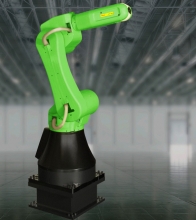 Item Number:CR-35iAFANUC’s new CR-35iA is the world’s first collaborative robot with a payload capacity of up to 35 kg. Fenceless, it opens a whole new world of possibilities. Working safely side by side with human operators, it is space as well as cost saving. And because inside it’s like any other FANUC robot, it operates like all FANUC robots. Certified to meet the requirements of ISO 10218-1:2011 and RIA/ANSI R15.06-2012, FANUC’s CR-35iA collaborative robot can work in a variety of applications alongside human workers including: machine tending, handling heavy payloads that require lift assist devices or custom equipment, higher payload mechanical assembly, palletizing or packing, and tote or carton handling.
 -
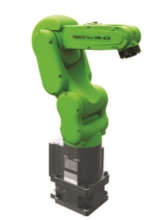 Item Number:CR-4iACR-4iA is a small collaborative robot with 4 kg payload
 -
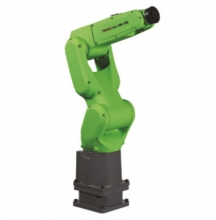 Item Number:CR-7iAThe FANUC CR-7iA is FANUC's newest collaborative robot resembles the LR Mate family. Painted green to show it's ability to work beside humans, you can expect the same reliability as FANUC's yellow robots. The CR-7iA is ideal for small part sorting and assembly, inspection, machine tending, and part delivery. It has a 7 kg payload, 717 mm reach, and is equipped with iRVision and Force Sensing. There are a variety of mounting options such as floor, wall, and ceiling.
 -
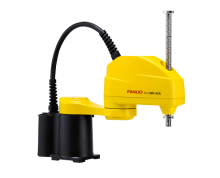 FANUC’s new SCARA robots are ideal for high-speed, precision applications such as assembly, pick and place, testing/inspection and packaging processes.
 -
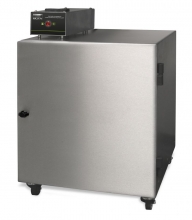
In the rare event that a burning ember or spark is drawn into the fume extraction unit, there is the possibility that debris in the filters could ignite. Although any resultant fire would typically be retained within the fume extraction unit, this would cause significant damage and in extreme circumstances, the risk may extend beyond the extraction unit. For processes where such risks have been identified, additional protection in the form of an in-line firebox is an additional precaution.
-
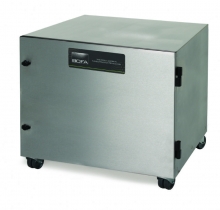
The BOFA inline pre-filter 1000 has been designed specifically for applications that generate high amounts of dust or particulate.
This inline filter unit is positioned alongside the main BOFA fume filtration system to increase the overall filter capacity and extend the life of the main filters. The DeepPleat DUO pre-filter incorporates a massive drop-out chamber within the filter, having a volume area of 15ltrs. Above the drop-out chamber but still within the housing there is a sealed 200mm deep pleat layer of F8 media giving a surface area in excess of 30 sq meters.