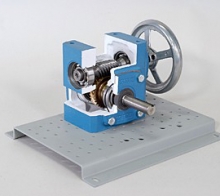
DAC Worldwide’s Right-Angle Worm Gear Reducer Cutaway (205-201) is a sectioned industrial gear reducer to aid in mechanical drives' training and learning experiences. This example, which was procured as industrial surplus, has been cleaned, restored, repainted, and refinished using durable coatings.
Pump Maintenance and Troubleshooting
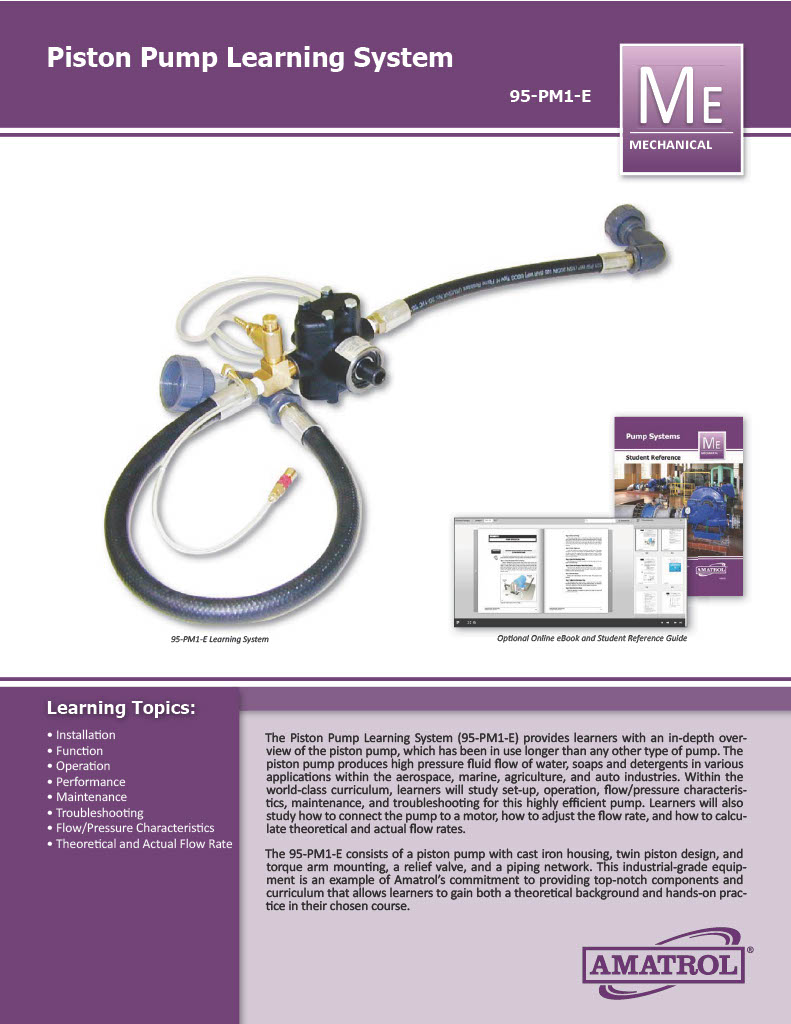
The Piston Pump Learning System (95-PM1-E) provides learners with an in-depth overview of the piston pump, which has been in use longer than any other type of pump. The piston pump produces high pressure fluid flow of water, soaps and detergents in various applications within the aerospace, marine, agriculture, and auto industries. Within the world-class curriculum, learners will study piston pump set-up, operation, flow/pressure characteristics, maintenance, and troubleshooting for this highly efficient pump. Learners will also study how to connect the pump to a motor, how to adjust the flow rate, and how to calculate theoretical and actual flow rates.
Industrial Pump Maintenance and Troubleshooting
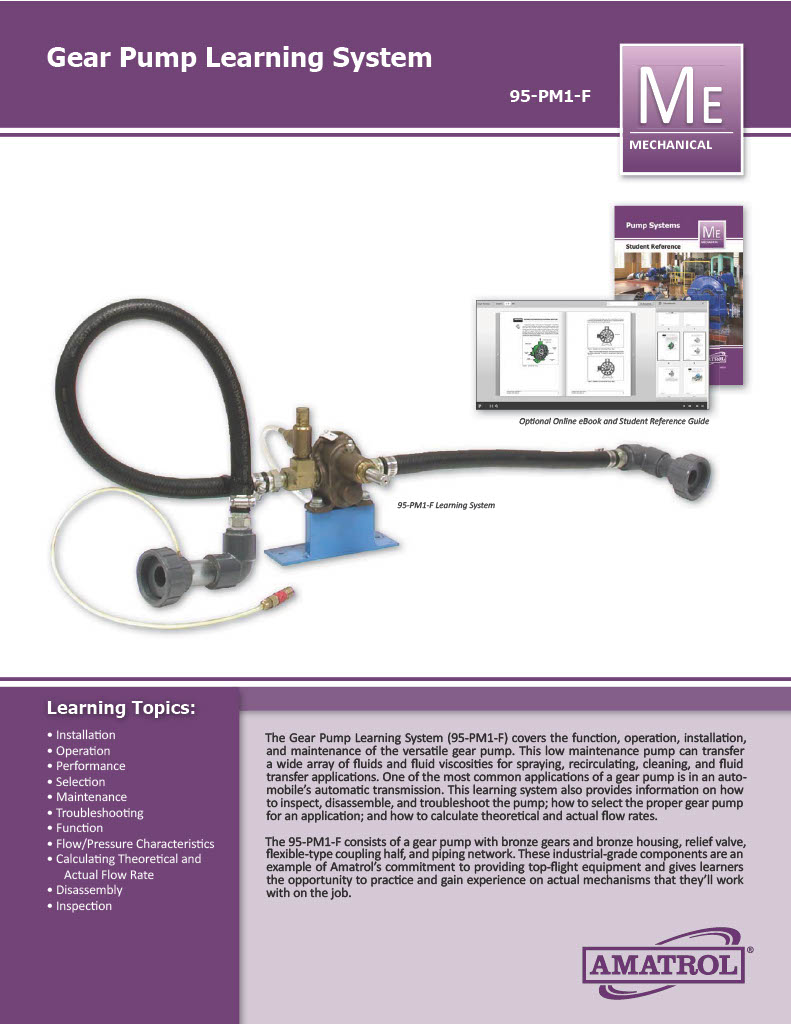
The Gear Pump Learning System (95-PM1-F) covers the function, operation, installation, and maintenance of the versatile gear pump. This low maintenance pump can transfer a wide array of fluids and fluid viscosities for spraying, recirculating, cleaning, and fluid transfer applications. One of the most common applications of a gear pump is in an automobile’s automatic transmission. This industrial pumps training system also provides information on pump inspection, pump disassembly, pump maintenance, and pump troubleshooting, as well as how to select the proper gear pump for an application and how to calculate theoretical and actual flow rates.
Pump Maintenance & Troubleshooting Skills
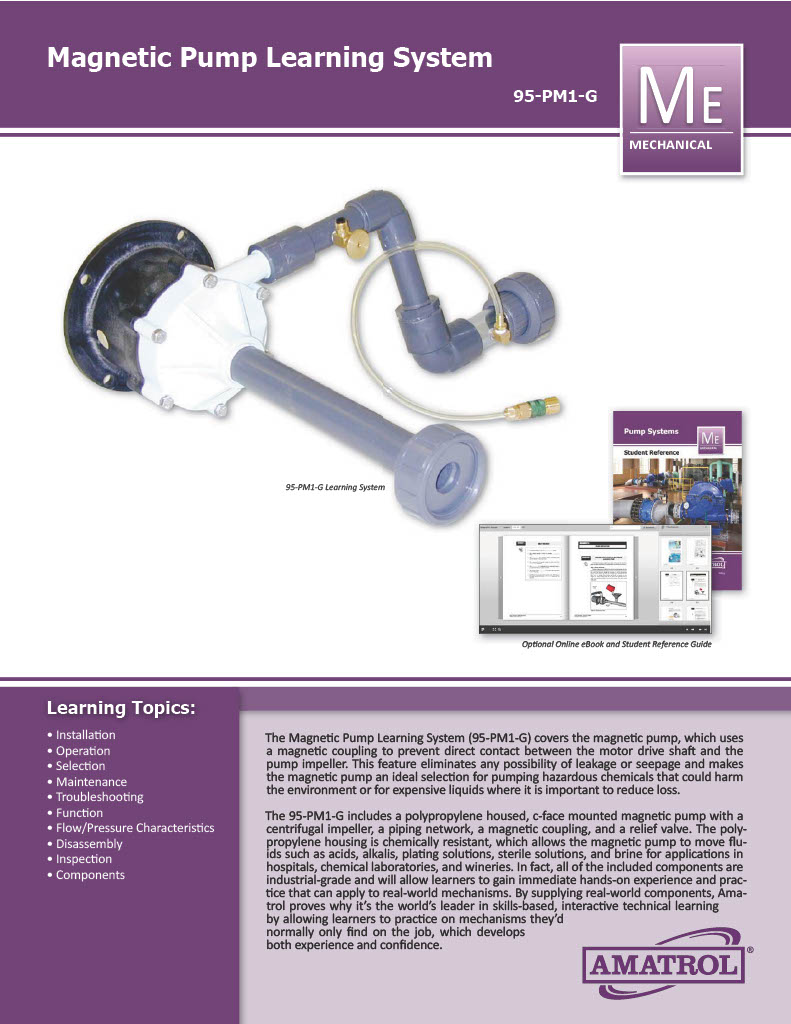
The Magnetic Pump Learning System (95-PM1-G) covers the magnetic pump, which uses a magnetic coupling to prevent direct contact between the motor drive shaft and the pump impeller. This feature eliminates any possibility of leakage or seepage and makes the magnetic pump an ideal selection for pumping hazardous chemicals that could harm the environment or for expensive liquids where it is important to reduce loss. This industrial pumps training system explains the function, operation, installation, disassembly, inspection, and maintenance of a magnetic pump.
Additional topics include: how to properly align the magnetic coupling; how to troubleshoot problems; how to select the correct magnetic pump for an application; how to determine a pump’s flow/pressure characteristics; and how each component of the pump factors into the overall operation.
Pump Maintenance Skills
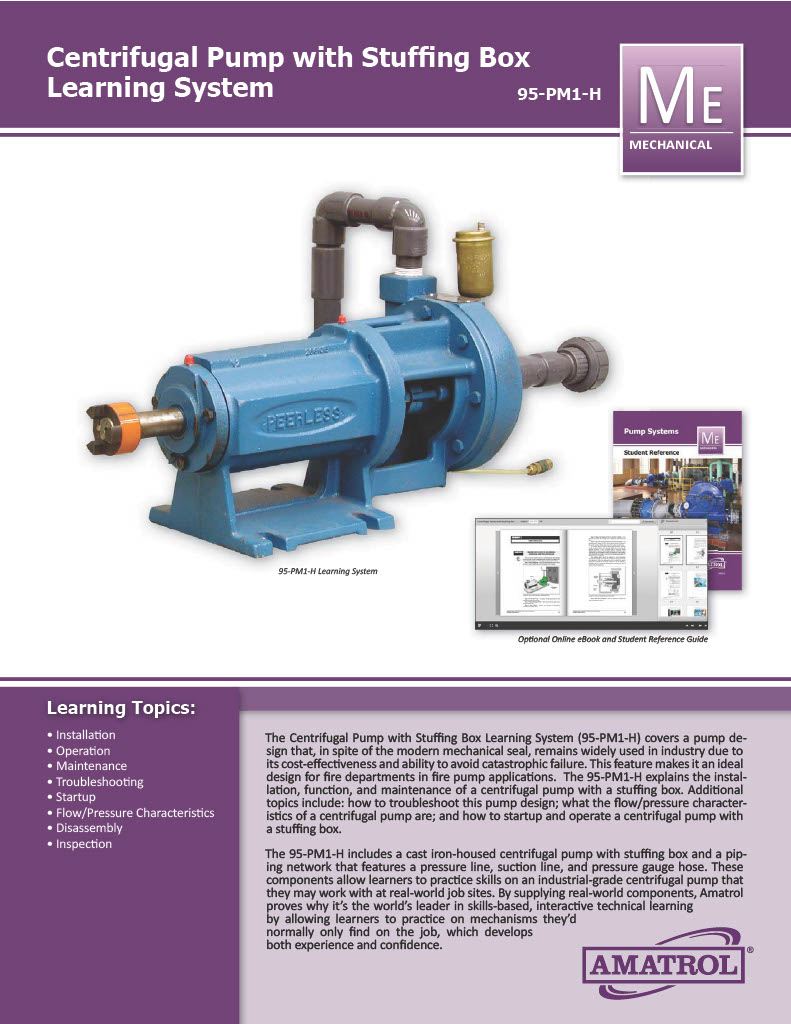
The Centrifugal Pump with Stuffing Box Learning System (95-PM1H) covers a pump design that, in spite of the modern mechanical seal, remains widely used in industry due to its cost-effectiveness and ability to avoid catastrophic failure. This feature makes it an ideal design for fire departments in fire pump applications. This industrial pumps training system explains the installation, function, and maintenance of a centrifugal pump with a stuffing box.
Additional topics include: how to troubleshoot this pump design; what the flow/pressure characteristics of a centrifugal pump are; and how to startup and operate a centrifugal pump with a stuffing box.
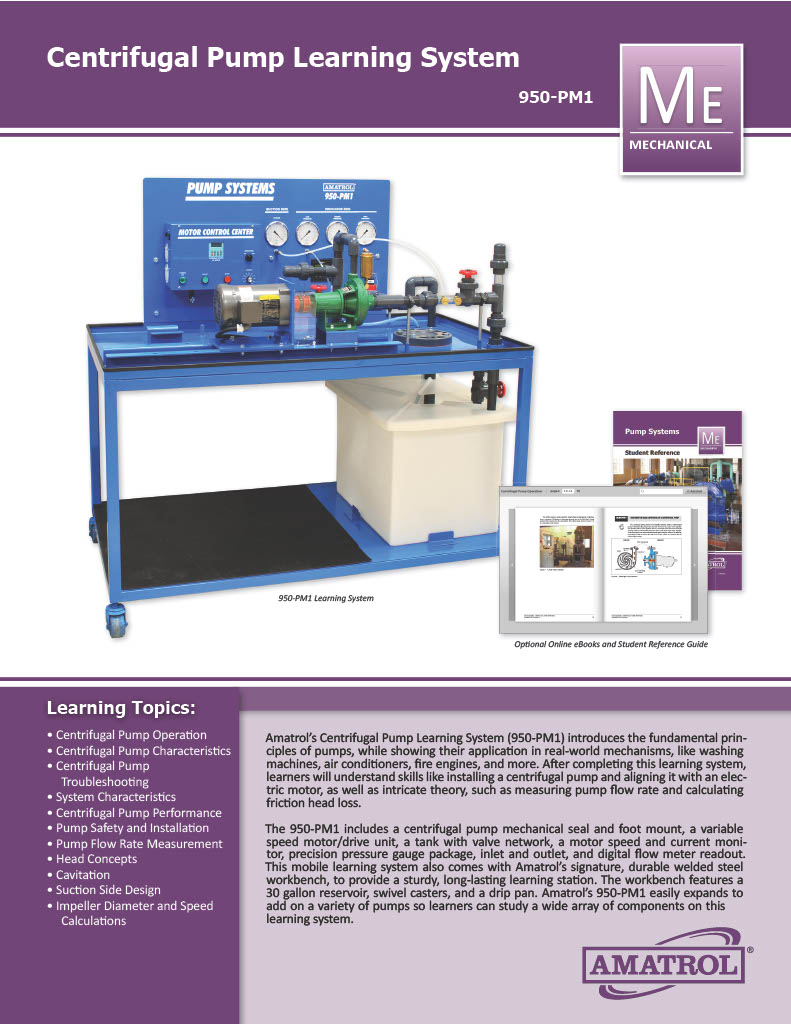
The model 950-PM1 Centrifugal Pumps Training System teaches skills related to centrifugal pumps training, which are used in almost every industry to transfer non-hydraulic fluids of various types from one place to another. Students learn a comprehensive set of industry-relevant skills including how to operate, install, maintain, troubleshoot, analyze performance, and select centrifugal pumps as well as system design.
The model 950-PM1 includes a centrifugal pump, mobile test workstation, student learning materials for both theory and lab, and teacher’s guide. This centrifugal pumps operation and maintenance training system uses industrial quality components such as a cast iron centrifugal pump to help students become better prepared for what they will encounter on the job.
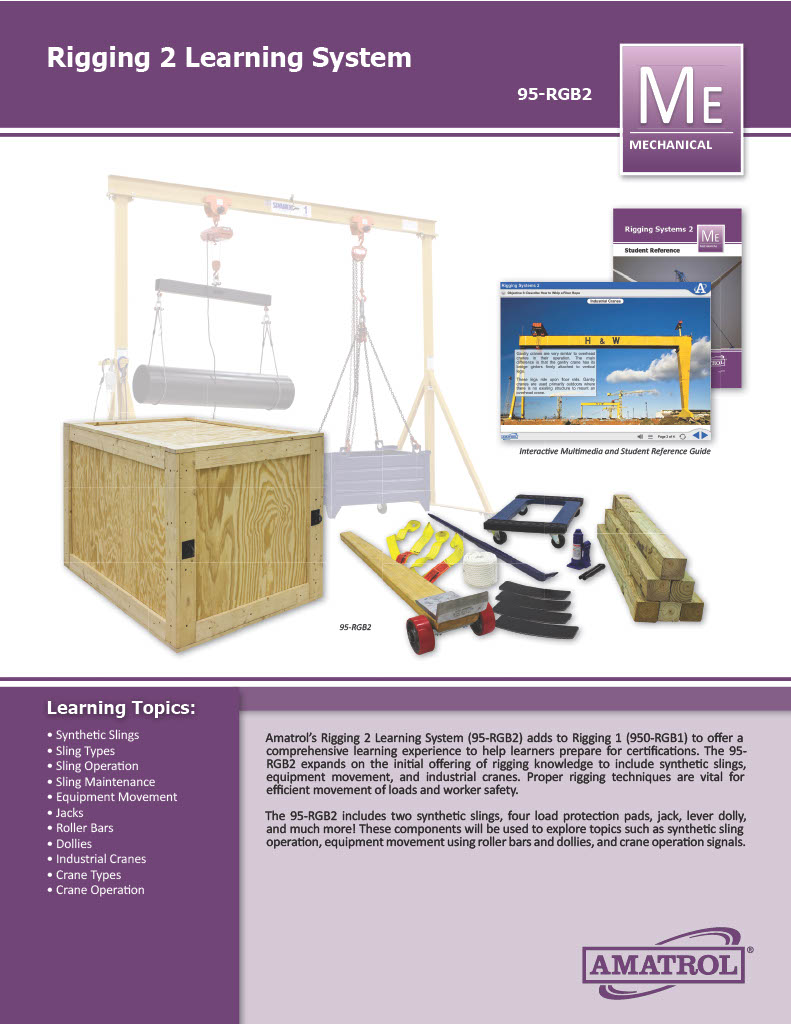
Amatrol’s Rigging 2 Learning System (95-RGB2) adds to the first Rigging training system (950-RGB1) to offer a comprehensive learning experience, to teach rigging safety training and industrial crane operation skills, and to help learners prepare for certifications. This hands-on Rigging training system expands on the initial offering of rigging knowledge to include synthetic slings, equipment movement, and industrial cranes. Proper rigging techniques are vital for efficient movement of loads and workers safety.
This Crane Operation training course includes two synthetic slings, four load protection pads, jack, lever dolly, and much more! These components will be used to explore topics such as synthetic sling operation, equipment movement using roller bars and dollies, and crane operation signals. In addition to equipment and printed curriculum, this industrial system offers a student reference guide, instructor’s manual, installation guide, and an optional online rigging training course.
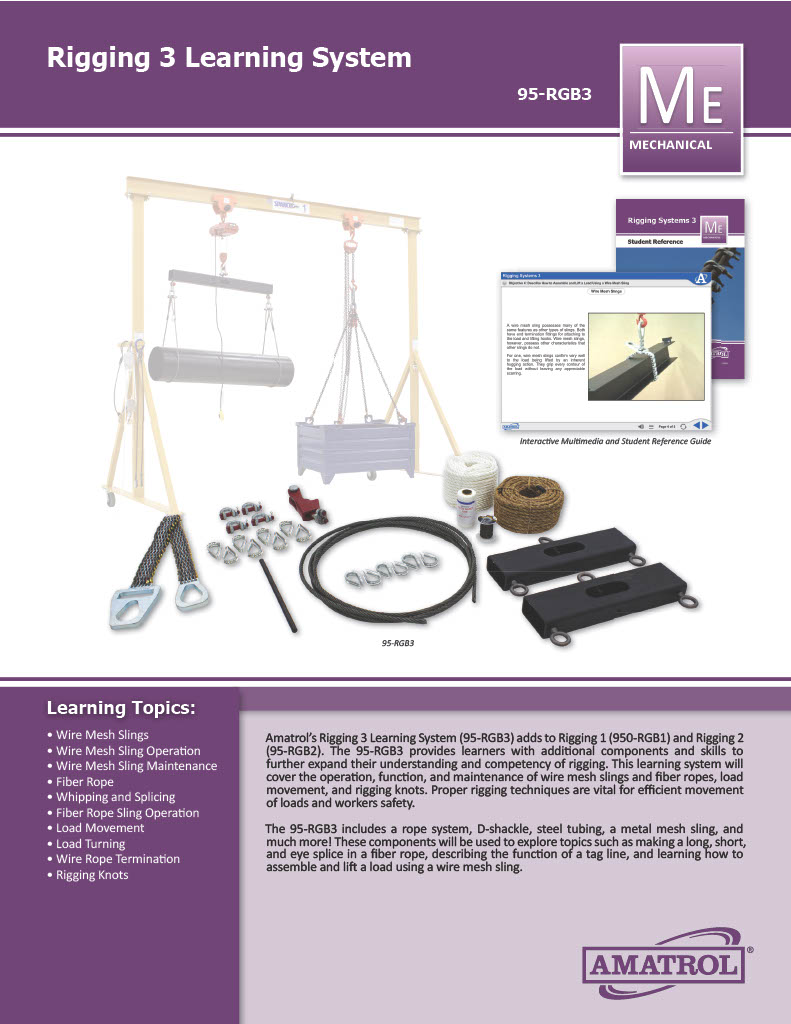
Amatrol’s Rigging 3 Learning System (95-RGB3) adds to the initial hands-on rigging training systems (950-RGB1 and 95-RGB2) by including hands-on wire mesh sling skills, rigging knots training, and rigging safety skills. This advanced rigging training system provides learners with additional components and skills to further expand their understanding and competency of rigging. Proper rigging techniques are vital for efficient movement of loads and workers safety.
This advanced rigging training system includes a rope system, D-shackle, steel tubing, a metal mesh sling, and much more! These components will be used to explore topics such as making a long, short, and eye splice in a fiber rope, describing the function of a tag line, and learning how to assemble and lift a load using a wire mesh sling. In addition to equipment and printed curriculum, this system offers a student reference guide, instructor’s manual, installation guide, and an optional online eBook.
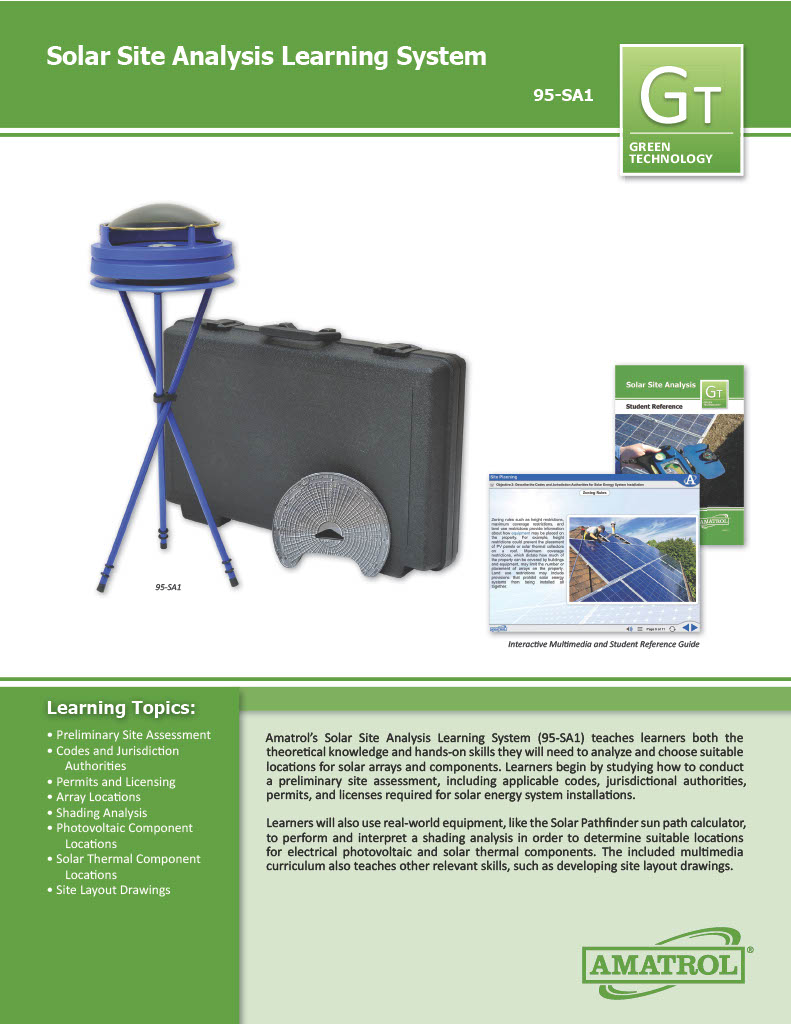
Amatrol’s Solar Site Analysis Training System (95-SA1) teaches learners both the theoretical knowledge and hands-on skills they will need to analyze and choose suitable locations for solar arrays and components. Learners begin by studying how to conduct a preliminary site assessment, including applicable codes, jurisdictional authorities, permits, and licenses required for solar energy system installations.
Learners will also use real-world equipment, like the Solar Pathfinder sun path calculator, to perform and interpret a shading analysis in order to determine suitable locations for electrical photovoltaic and solar thermal components. The included multimedia curriculum also teaches other relevant skills, such as developing site layout drawings.
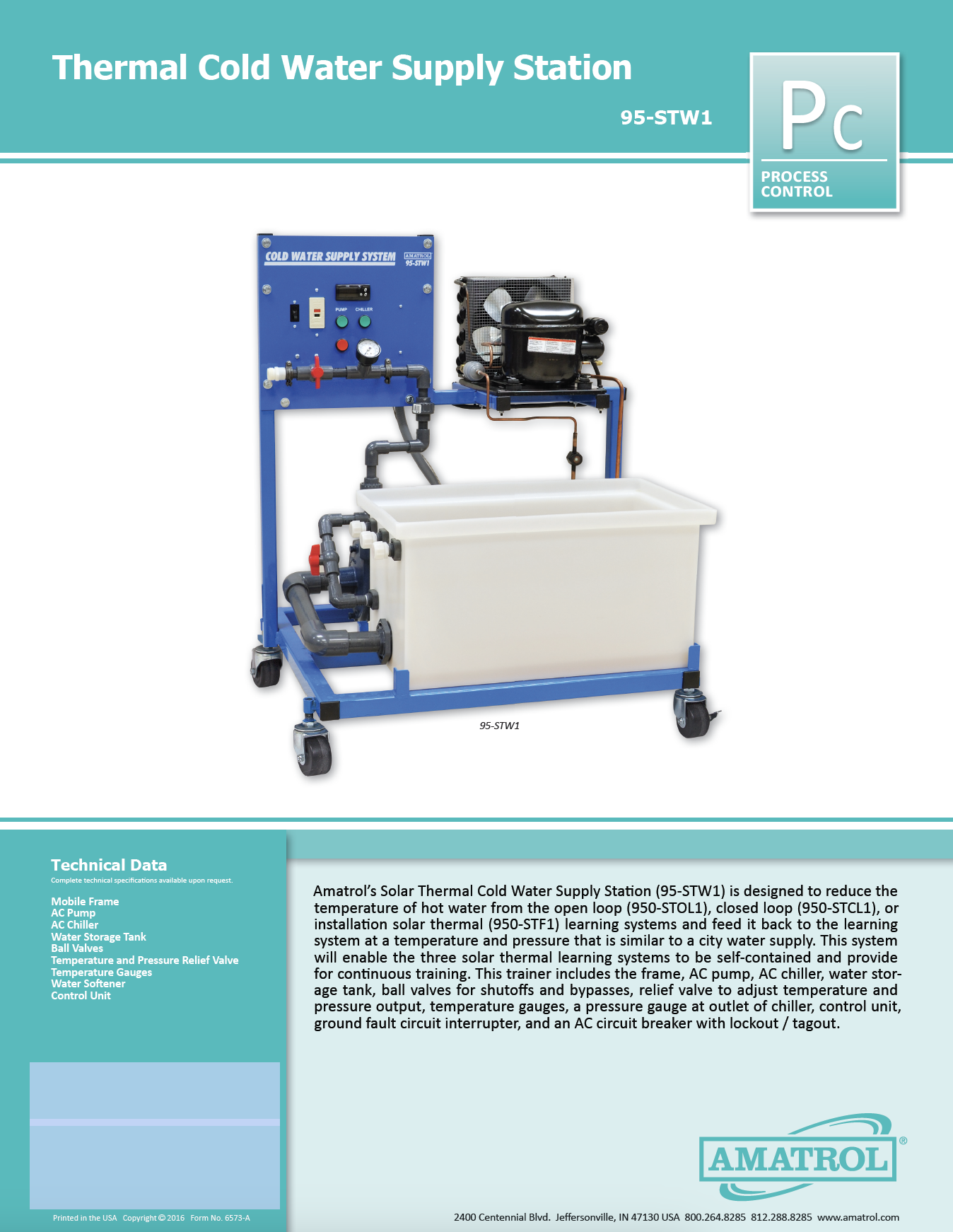
The Solar Thermal Cold Water Supply Station training is designed to reduce the temperature of hot water from the open loop (950-STOL1), closed loop (950-STCL1), or installation solar thermal (950-STF1) learning systems and feed it back to the learning system at a temperature and pressure that is similar to a city water supply. This system will enable the three solar thermal learning systems to be self-contained.
The Solar Thermal Cold Water Supply Station training includes the frame, AC pump, AC chiller, water storage tank, ball valves for shutoffs and bypasses, relief valve to adjust temperature and pressure output, temperature gauges, a pressure gauge at outlet of chiller, control unit, ground fault circuit interrupter, and an AC circuit breaker with lockout / tagout.
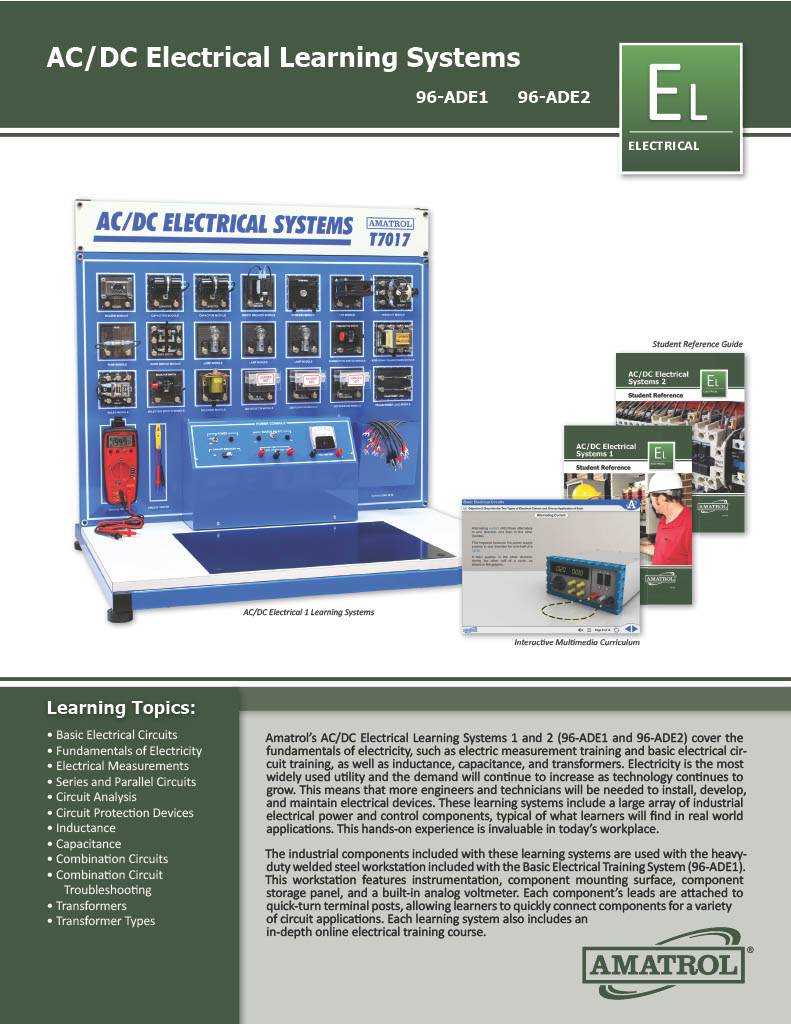
Amatrol's AC/DC Electrical Learning Systems 1 and 2 (96-ADE1 and 96-ADE2) cover the fundamentals of electricity, such as electric measurement training and basic electrical cir-cult training, as well as Inductance, capacitance, and transformers. Electricity Is the most widely used utility and the demand will continue to increase as technology continues to grow. This means that more engineers and technicians will be needed to Install, develop, and maintain electrical devices. These learning systems include a large array of Industrial electrical power and control components, typical of what learners will find In real world applications. This hands-on experience Is Invaluable In today's workplace.
Pages
-
 Item Number:205-201
 -
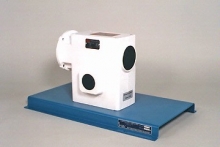 Item Number:205-101DAC Worldwide's Right Angle Worm Gear Reducer Dissectible (205-101) provides training scenarios to aid learners in the tasks they will encounter on the job.
 -
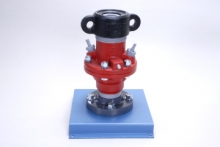 Item Number:295-406This Sucker Rod Pump Stuffing Box Assembly Replica features a formed-steel, 8-gauge baseplate, which allows for demonstration of primary packing compressions while under pressure, as well as the assembly’s accommodation of pump alignment.
 -
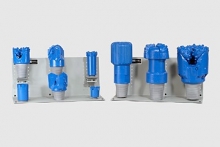 Item Number:295-405DAC Worldwide’s Rotary Drilling Bit Replica Set, 9-Piece (295-405) is an assortment of rotary drilling bit replicas that teaches learners about the primary drill bit technology used on today's oil & gas rotary drilling rigs.
 -
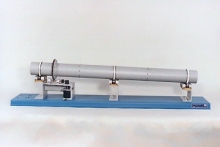 Item Number:241-000DAC Worldwide’s Rotary Kiln Maintenance Training System (241-000) is a heavy-duty, steel benchtop training device that allows for realistic training in maintenance activities associated with large rotary kilns.
 -
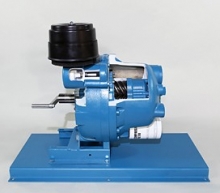 Item Number:211-192DAC Worldwide's Rotary Screw Compressor Cutaway (211-192) is a realistic, sectioned rotary screw compressor commonly found in manufacturing plants and other industrial applications. This device includes a 7-gauge formed-steel mounting baseplate, allowing for stand-alone use, bench-top mounting, or mounting on specialized DAC mounting workstations.
 -
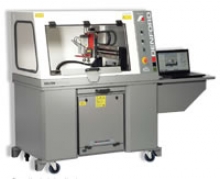 Equip your lab with the Router 2600 or 2600 Pro, versatile CNC routers that deliver large-capacity cutting for technical education and prototyping.
 -
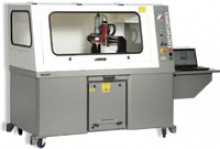 Expand CNC training capabilities with the Router 6600 and 6600 Pro, large-format routers designed for precision education and industrial-level projects.
 -
 SACA's Micro-Credentials can be attained to prove efficiency in specific applications or combined to attain a full SACA Specialist Certification. The Smart Automation Certification Alliance (SACA) is a non-profit organization supported by industry partners and educators.
 -
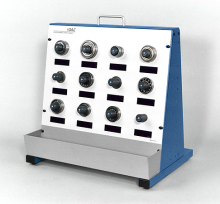
DAC Worldwide’s sample boards offer valuable maintenance training in the identification and selection of a variety of industrial components. Each sample board features a selection of industrial-quality components mounted on either a panel or a station that features nameplates for easy association with individual components.