DAC Worldwide’s Single-Phase Transformer Cutaway (273-912) is a detailed and professionally-crafted single-phase transformer cutaway that depicts a common shell-type, single-phase transformer.
Solving the Seat-Time Challenge with Simulation Training
Alfred State College faced a critical challenge in its Heavy Equipment Operation program: limited access to real machinery meant students weren’t getting enough hands-on experience to build essential skills. At the same time, training inexperienced students on live equipment introduced safety risks for both learners and instructors.
To overcome these challenges, Alfred State integrated CM Labs simulators into its training program. By adding multiple simulation units, the college expanded instructional capacity, increased student access to practice time, and created a safer, more controlled learning environment.
How Simulation Transformed Training
- Increased Capacity: Expanded program enrollment and provided consistent access to training resources.
- Enhanced Safety: Allowed students to build confidence before operating real equipment.
- Faster Skill Development: Training time improved by an estimated 20–30%.
- Real-World Scenarios: Simulators replicate weather, lighting, and jobsite conditions.
- Objective Assessment: Performance metrics such as task time, fuel usage, and precision support measurable outcomes.
Students were able to gain critical seat time faster, improving skill development and reducing training bottlenecks.
Real Impact for Workforce Readiness
With the addition of simulation, Alfred State grew its program from approximately 40 students to over 100, all while improving training quality. Students now gain exposure to multiple machine types and develop both operational and performance-optimization skills—helping reduce fuel consumption, minimize wear, and extend equipment life.
By combining simulation with traditional training, Alfred State has created a scalable, safe, and highly effective pathway to workforce readiness—preparing students with the confidence and competence needed to succeed in the field.
FANUC CNC training solutions are designed to help students, educators, and workforce trainees develop the real-world skills required for modern CNC machining environments. Built around industry-standard FANUC CNC controls, these solutions support hands-on learning in CNC programming, setup, operation, and troubleshooting. By using the same control platforms found on production shop floors, learners gain practical experience that directly translates to in-demand manufacturing careers.
Ideal for high school CTE programs, community colleges, technical schools, and industrial training centers, FANUC CNC training solutions can be integrated into curricula for machining, mechatronics, and advanced manufacturing. Whether used alongside CNC simulators, machine tools, or automation systems, these solutions bridge the gap between classroom instruction and real-world application, preparing learners to confidently operate, program, and maintain CNC equipment in today’s automated manufacturing environments.cnc
Amatrol Mechanical Drive Trainers
When your goal is job-ready mechanical maintenance skills, learners need more than a cutaway view of components. Amatrol Mechanical Drive Trainers are designed for true hands-on skill-building—students assemble, align, operate, measure performance, and troubleshoot real power transmission systems using industry-standard components.
X-Cal provides these Amatrol training systems as part of a complete training solution, helping schools and workforce programs select the right configuration, map outcomes to program goals, and plan a smooth implementation.
Amatrol’s mechanical drives learning systems support training in power transmission fundamentals and real-world maintenance tasks—ideal for CTE pathways, maintenance technology, mechatronics support skills, and industrial upskilling.
- Assemble shaft, belt, chain, and gear drive applications using real components
- Align motors and driven components using practical alignment methods
- Adjust belt tension and chain sag to specification
- Measure speed and performance variables to connect theory to outcomes
- Troubleshoot common mechanical drive issues tied to installation, alignment, and wear
- Amatrol Mechanical Drive Trainers: learners build and run working systems (shaft, belt, chain, gear, couplings), practice alignment and tensioning, take measurements (speed/torque/power), and complete troubleshooting tasks with safety procedures integrated.
- DAC Cutaways: excellent for visual understanding and component identification, but typically focused on “see how it’s built” rather than “install, adjust, measure, and diagnose under operating conditions.”
- Best practice: use cutaways for quick concept reinforcement and use functional trainers for competency, performance verification, and repeatable hands-on assessments.
- Mechanical drive systems and power transmission fundamentals
- Key fasteners and coupling installation
- Shaft alignment methods and best practices
- V-belt drives and belt tensioning
- Chain drives, master links, lubrication concepts, and adjustment
- Spur gear drives and backlash concepts
- Multi-shaft drive applications and system setup
These systems pair theory with immediate application—learners study a concept, then perform the task on the trainer to reinforce retention and build confidence for real maintenance environments. This approach supports consistent outcomes across multiple cohorts and instructors.
- CTE and STEM programs: introduce power transmission and maintenance fundamentals with safe, repeatable labs
- Community & technical colleges: support industrial maintenance and mechanical systems coursework
- Industry training: accelerate onboarding and upskilling for maintenance technicians and multi-craft teams
- Workforce development: build measurable, hands-on competencies that align to employer expectations
Get a Recommended Trainer Package
Tell us what you’re teaching (and to whom), and we’ll help you select the best training solutions and implementation plan—from foundational skills to expanded training options.
X-Cal offers DAC Worldwide mechanical training tools designed to support visual learning, component inspection, and reliability-focused education. These tools help learners understand how mechanical components are constructed, how they operate internally, and where common wear and failure points occur.
DAC Worldwide training tools are ideal for reinforcing mechanical concepts, supporting predictive maintenance instruction, and complementing hands-on functional training systems.
Mechanical Cutaways & Dissectibles
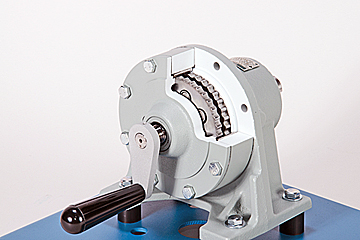
Sectioned cutaways and dissectible models allow learners to see inside real industrial components such as pumps, valves, motors, and gearboxes. By exposing internal parts, flow paths, and wear surfaces, these tools help students visualize operation and failure modes that are otherwise hidden during normal use.
- Sectioned pumps, valves, motors, and gearboxes
- Clear visibility of internal components and assemblies
- Identification of common wear points and failure areas
- Ideal for demonstrations, inspections, and classroom discussion
Mechanical Sample Boards
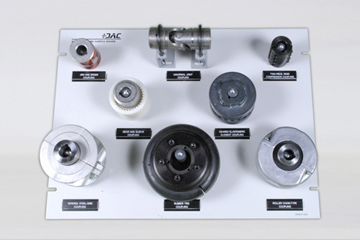
DAC Worldwide sample boards present mechanical components in a side-by-side format that supports comparison, identification, and inspection skills. Learners can examine construction differences, materials, and design features across commonly used mechanical elements.
- Bearings, seals, couplings, and fasteners
- Side-by-side comparison for inspection and identification
- Supports foundational mechanical knowledge and vocabulary
- Excellent visual aids for labs and classrooms
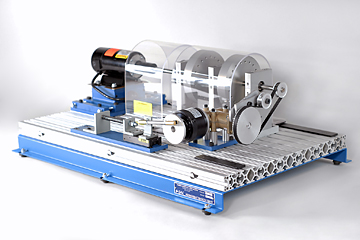
Alignment & Vibration Training Tools
Alignment and vibration trainers use authentic industrial hardware to introduce predictive maintenance and reliability concepts. These tools help learners understand how misalignment and vibration affect equipment performance, lifespan, and maintenance planning.
- Hands-on exposure to alignment concepts
- Introduction to vibration and condition monitoring principles
- Supports predictive maintenance and reliability training
- Reinforces inspection-based maintenance practices
How These Tools Are Commonly Used
DAC Worldwide mechanical training tools are most effective when used to support instruction, demonstrations, and inspection-based learning. They are frequently paired with functional trainers to provide both visual understanding and real-world context.
- CTE and STEM programs introducing mechanical systems
- Industrial maintenance and reliability coursework
- Predictive maintenance and vibration awareness training
- Instructor-led demonstrations and lab supplements
Complementary Training Approach
While DAC Worldwide tools excel at visualizing internal operation and component construction, many programs pair them with functional training systems for performance-based skill development. This blended approach helps learners move from understanding how components work to applying that knowledge in real maintenance environments.
Building the Future of Chemical Engineering
Friday, April 18, 2025
University of St. Thomas Expands Chemical Engineering with Pignat Training Systems
At the University of St. Thomas in Houston, Texas, students are preparing for real-world careers in chemical engineering through hands-on practice with industry-grade equipment. The university recently added a Batch Continuous Distillation trainer (DVI/3000) and a Gas-Liquid Absorption trainer (ABS/2000) to its new Unit of Operations Lab. These systems, manufactured by Pignat SAS and sourced through DAC Worldwide, give students direct experience with two essential separation processes: distillation and gas absorption.
Preparing the First Class of Chemical Engineers
According to Lab Manager Thomas Ciavatti, the new additions mark an important milestone for the program. Four years ago, the Physics and Engineering Department expanded to include multiple disciplines, with chemical engineering joining most recently. Thanks to these units, the University of St. Thomas will graduate its first class of chemical engineers this year.
“These process units will really give students experience with very important processes. The units that have been delivered are top quality and we’re really looking forward to our students getting the full experience with them.” — Thomas Ciavatti
Real-World Processes in the Lab
- DVI/3000 Distillation Column – separates alcohol from water, reinforcing concepts in liquid-liquid separation.
- ABS/2000 Absorption Unit – demonstrates gas separation, such as removing CO₂ from a gas mixture.
With these Pignat trainers, students gain an experiential grasp of core engineering concepts that can be applied across industries. For Ciavatti, this hands-on training ensures graduates leave school with knowledge layered by experience, ready to solve challenges in their future careers.
Partnering for Workforce Success
Through partnerships with Pignat and DAC Worldwide, the University of St. Thomas is equipping students to become highly skilled engineers. The program not only emphasizes technical expertise but also the university’s mission of shaping ethical, well-rounded professionals ready to make an impact in industry and society.
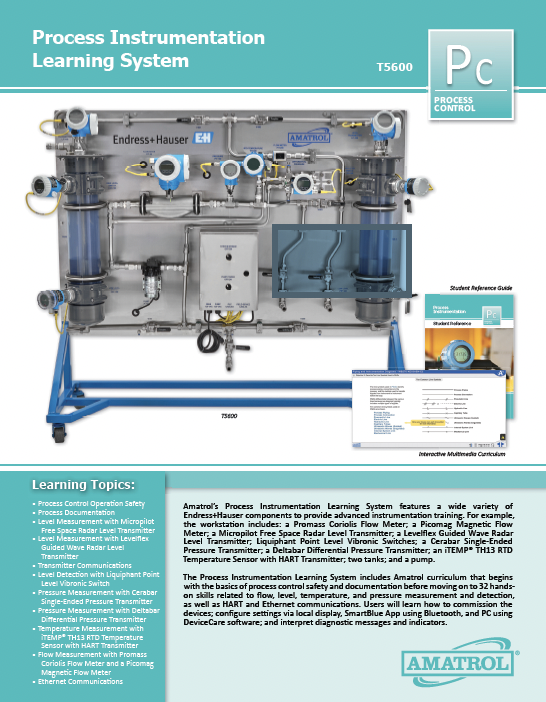
Download the brochure for Amatrol’s Process Instrumentation Learning System (T5600) and explore a hands-on training solution designed to build real-world skills in modern process control and instrumentation.
This learning system features a wide variety of Endress+Hauser instrumentation components, including flow meters, radar level transmitters, pressure transmitters, point level switches, and an RTD temperature sensor with HART transmitter. Learners can develop practical experience with core process measurement applications involving flow, level, pressure, and temperature.
The included multimedia curriculum begins with the fundamentals of process control, safety, and documentation before progressing into 32 hands-on skills. Students also learn transmitter communications, device commissioning, configuration through local display and software tools, and diagnostic interpretation using HART and Ethernet communications.
What You’ll Find in the Brochure
- Overview of the T5600 Process Instrumentation Learning System
- Featured Endress+Hauser instrumentation components
- Learning topics covering safety, documentation, and measurement applications
- Details on HART and Ethernet communications training
- Information about the included multimedia curriculum and hands-on skill development
Key Training Areas
- Process control operation safety
- Process documentation
- Level measurement and detection
- Pressure measurement
- Temperature measurement
- Flow measurement
- Transmitter communications
- Ethernet communications
Endress+Hauser Trainer from Amatrol
Wednesday, October 4, 2023
Watch the Amatrol T5600 Process Instrumentation Learning System video to see how this advanced training system helps learners build practical skills in process control, instrumentation, and transmitter communications. Developed through a partnership between Amatrol and Endress+Hauser, this system is designed for hands-on training in calibration, commissioning, and diagnostics using industry-relevant instrumentation components.
The T5600 includes a wide variety of Endress+Hauser components, including a Promass Coriolis Flow Meter, Picomag Magnetic Flow Meter, Micropilot Free Space Radar Level Transmitter, Levelflex Guided Wave Radar Level Transmitter, Liquiphant Point Level Vibronic Switches, Cerabar Single-Ended Pressure Transmitter, Deltabar Differential Pressure Transmitter, and an iTEMP® TH13 RTD Temperature Sensor with HART Transmitter, along with two tanks and a pump.
In the video, viewers get an overview of the trainer’s measurement and detection capabilities across flow, level, pressure, and temperature, as well as its role in teaching calibration, commissioning, and diagnostic procedures. The system is also built for durability, with heavy-duty features such as stainless steel mounting panels and tubing, Swagelok compression fittings, NPT-threaded connections, anti-vibration mounting, and plastic sight tubes.
What You’ll See in This Video
- An overview of the T5600 Process Instrumentation Learning System
- Featured Endress+Hauser transmitters and measurement devices
- How learners practice calibration, commissioning, and diagnostics
- Training applications for flow, level, pressure, and temperature measurement
- Examples of transmitter communication using HART, Bluetooth, and Ethernet
- How the system supports engineering, electrical, process control, and industrial training programs
Hands-On Skills Covered
- Process control safety and documentation
- Flow measurement and detection
- Level measurement and point level detection
- Pressure measurement
- Temperature measurement
- Calibration and commissioning procedures
- Device diagnostics and troubleshooting
- Transmitter communication via HART, Bluetooth, and Ethernet
Learners can configure settings directly on the device, through Endress+Hauser’s SmartBlue application, or on a PC with DeviceCare software. This makes the T5600 a strong fit for programs preparing students and technicians for work in process control, instrumentation, and industrial maintenance environments.
Industrial facilities depend on reliable maintenance teams to keep equipment running safely, efficiently, and with minimal downtime. Today’s maintenance technicians need more than theory—they need hands-on experience with the mechanical systems, lubrication practices, and troubleshooting methods used in real industrial environments.
Tech-Labs provides industrial maintenance training solutions built around Amatrol hands-on learning systems that help learners practice installation, adjustment, inspection, and diagnostics. These solutions support career pathways in industrial maintenance, mechatronics support, manufacturing maintenance, and multi-craft technician roles.
Build Job-Ready Maintenance Skills
A strong industrial maintenance program develops foundational mechanical knowledge, safe work habits, and practical troubleshooting ability. Learners benefit from repeatable training exercises that reinforce real maintenance tasks—before they ever step onto a plant floor.
- Mechanical power transmission fundamentals
- Shaft alignment concepts and best practices
- Belts, chains, couplings, and gear drives
- Lubrication fundamentals and lubricant management
- Central lubrication system operation and troubleshooting
- Diagnostics and fault isolation using safe testing methods
Featured Training Systems
Premier High School CTE Programs | Quick Access
Amatrol offers a comprehensive lineup of Career & Technical Education (CTE) programs designed specifically for high school environments. Whether your district is implementing a 1-, 2-, 3-, or 4-year CTE pathway, Amatrol provides scalable solutions that align with industry needs and classroom realities.
Built around hands-on skill development, interactive eLearning, and competency-based instruction, these programs help students gain real-world technical skills while supporting career readiness, postsecondary success, and workforce alignment. Amatrol’s CTE programs are ideal for schools seeking engaging, outcomes-driven training that supports Perkins V, local workforce initiatives, and industry-recognized credentials.
Explore programs that help students connect classroom learning to real careers.
Available High School CTE Program Areas
Manufacturing & Industrial Technology
Build foundational skills in mechanical systems, electrical systems, fluid power, and industrial maintenance to support modern manufacturing careers.
Build foundational skills in mechanical systems, electrical systems, fluid power, and industrial maintenance to support modern manufacturing careers.
Automation, Robotics & Mechatronics
Introduce students to automated systems, PLC fundamentals, robotics, and smart manufacturing concepts used across Industry 4.0 environments.
Introduce students to automated systems, PLC fundamentals, robotics, and smart manufacturing concepts used across Industry 4.0 environments.
Electrical, Electronics & Power Systems
Develop essential skills in AC/DC electricity, wiring, controls, and electrical troubleshooting for industrial and technical career pathways.
Develop essential skills in AC/DC electricity, wiring, controls, and electrical troubleshooting for industrial and technical career pathways.
Welding, Fabrication & Skilled Trades
Prepare students for careers in welding, fabrication, and mechanical assembly with hands-on equipment and safety-focused training.
Prepare students for careers in welding, fabrication, and mechanical assembly with hands-on equipment and safety-focused training.
HVAC, Energy & Building Systems
Support pathways in HVAC/R, renewable energy, and building technologies with applied training aligned to real-world systems.
Support pathways in HVAC/R, renewable energy, and building technologies with applied training aligned to real-world systems.
Process Technology & Advanced Manufacturing
Teach core concepts in fluid systems, process control, and system troubleshooting for chemical, energy, and advanced manufacturing careers.
Teach core concepts in fluid systems, process control, and system troubleshooting for chemical, energy, and advanced manufacturing careers.
Programs can be implemented as standalone courses or combined into multi-year pathways that support career exploration, skill progression, and postsecondary readiness.
Need help mapping a multi-year pathway? Contact us for a recommended program plan.
Today’s automotive technicians must understand increasingly complex electrical and electronic vehicle systems. From lighting and charging circuits to sensors, actuators, and body control systems, modern vehicles rely on integrated technology that requires both theoretical knowledge and hands-on diagnostic skills.
LJ Create Automotive Panel Trainers provide a safe, structured, and highly visual learning platform for teaching automotive electrical and electronic systems. Designed specifically for education and workforce training environments, these panel trainers allow students to explore real-world circuits, perform measurements, diagnose faults, and build confidence before working on live vehicles.
- Real automotive components mounted on durable training panels
- Clearly labeled circuits for structured learning
- Safe, low-risk training environment
- Supports hands-on diagnostics and troubleshooting
- Aligned with automotive career pathways
LJ Create panel trainers allow learners to build practical skills in automotive wiring, circuit testing, and system diagnostics. Students use multimeters, test equipment, and structured lab activities to measure voltage, current, and resistance, and to analyze signal patterns.
By working on clearly organized training panels before transitioning to full vehicles, learners gain a foundational understanding while reducing the risk of component damage and improving diagnostic confidence.
- Basic automotive electrical principles
- Wiring diagrams and circuit interpretation
- Lighting and accessory circuits
- Charging and starting systems
- Sensors and actuators
- Body electrical systems
- Fault finding and diagnostic procedures
- Safe use of automotive test equipment
LJ Create Automotive Panel Trainers are ideal for high school CTE automotive programs, technical colleges, community colleges, and apprenticeship pathways. Their modular design allows institutions to select panels that align with specific curriculum goals—from foundational electrical systems to advanced electronic diagnostics.
These systems integrate easily into automotive labs and complement live-vehicle training, helping programs build structured, progressive skill-development models.
- Automotive Technology CTE programs
- Community and technical college automotive labs
- Apprenticeship and pre-apprenticeship programs
- Workforce development initiatives
- Instructor-led or blended learning environments
Strengthen your automotive training program with hands-on panel trainers that build diagnostic confidence and real-world system understanding.
Contact us today to explore available panels, curriculum alignment, and funding opportunities for your program.
Pages
-
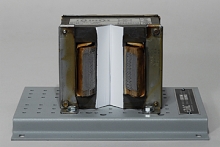 Item Number:273-912
 -
 Item Number:SSLSimlog’s new Skid Steer Loader Personal Simulator, the world’s first, puts you at the controls of a typical skid steer loader equipped with either a bucket (there are two kinds) or forks, at work in a typical construction site. Three configurations are offered for the simulator controls to reproduce the most common kinds of operator controls in the cabin of real skid steer loaders.
 -
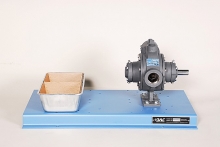 Item Number:275-139DAC's 275-139 is a realistic industrial pump for use in classroom and laboratory training relating to process pumps.
 -
 Item Number:895Amatrol’s Smart Controls Troubleshooting Workstation (895) teaches hands-on programmable logic controller (PLC) troubleshooting skills needed in various applications with Industry 4.0 technologies. Trainees will learn how to operate, program, and troubleshoot PLCs that interface with many applications, including electro-pneumatics; motor control; temperature control; variable frequency drives; smart sensors; process control; and I/O Link communications.
 -
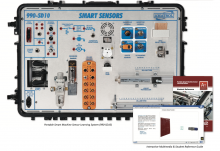 Item Number:990-SD10Amatrol’s Portable Smart Machine Sensor Learning System (990-SD10) offers training for building skills with smart capacitive, inductive, photo, ultrasonic, and more, all within an easily portable case. The Smart Machine Sensor training system is instrumental for learners to understand Industry 4.0 concepts and practice with components commonly found in Industrial Internet of Things (IIoT) environments.
 -
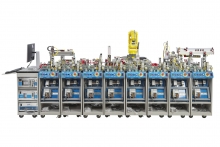 Amatrol Smart Factory training system and in-depth curriculum teaches all aspects of smart factory maintenance and operation.
 -
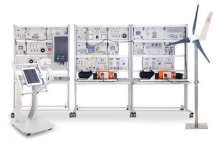 Item Number:ESG 1Features 9 stations that can be individually configured.
 -
 Item Number:87-SWPF1VThe 87-SWPF1V Smart Robot Logistics Palletizing Workcell, which includes a mobile workstation with a FANUC 6-axis robotic arm, teaches students how to operate, program, maintain, and troubleshoot a robotic palletizing workcell.
 -
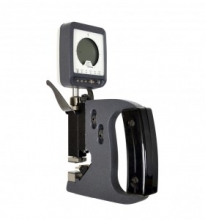 Item Number:99-PG2The 99-PG2 includes a digital snap gauge and a master part turned to precisely 0.500”, which learners use to calibrate the device. As the learners work their way through the curriculum, they use the snap gauge to measure custom parts from the 990-PG1 that ensure a complete learning experience.
 -
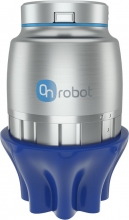 Item Number:SG-a-H, SG-a-S, SG-b-HThe OnRobot Soft Gripper is able to pick a wide array of irregular shapes and delicate items, making it ideal for pick-and-place applications in food and beverage production, as well as manufacturing or packaging.