Amatrol’s High School Learning Systems create the need for students to want to learn math and science – they can’t interact with the exciting technology without it. Learning is interactive and challenging, keeping them engaged and wanting to do more. The math and science so desperately needed for 80% of jobs today is a natural outcome.
Amatrol’s Solar PV Installation Learning System consists of a mobile workstation with real solar PV components, including a PV array, micro-inverter, combiner box, communications gateway, charge controller, and remote meter. To make installation training more efficient, tools and consumables, such as a clamp meter, digital meter, wire, and conduit, are stored conveniently on the workstation.
Amatrol’s Solar PV Troubleshooting Learning System features a wide variety of industry-standard solar PV equipment to teach relevant hands-on skills. For example, the 950-SPT1 includes a mobile workstation with a combiner box, MPPT charge controller, micro inverter, grid interactive inverter, programmer, and communications gateway and hub.
For a complete solar PV troubleshooting training experience, the required Solar PV Array Station (95-SPA1) adds multiple solar panels to enable students and workers to duplicate realistic situations with both series and parallel connections. The mobile array station allows instructors to take advantage of sunny days without having to move the entire trainer. It is also equipped with a sun simulator to enable indoor use.
The growing interest in alternative energy and renewable resources has created a shortage of qualified solar thermal technicians throughout the green energy sector. So what are some of the essential skills that solar thermal technicians need to succeed?
Solar thermal technicians need basic knowledge and hands-on skills in a variety of foundational technologies, such as electrical, electronics, and fluid power, as well as advanced abilities related directly to the latest solar thermal technologies. Amatrol’s Solar Thermal Troubleshooting – Closed-Loop Learning System (950-STCL1) teaches a range of solar thermal troubleshooting skills for closed-loop systems through a unique combination of eLearning curriculum and hands-on experience with real industrial solar thermal components.
The 950-STF1 Solar Thermal Installation training system teaches students the installation and commissioning of closed loop and open loop solar thermal systems for commercial and residential applications. Students will learn how to install systems by selecting, preparing, mounting and connecting solar thermal components using copper tubing, PVC piping, and electrical wiring. Students will create and commission complete working systems, just as they would do on the job.
The Solar Thermal Installation training system includes a mobile workstation with solar thermal components; solar thermal collectors; PC-based interactive, multimedia student curriculum; and teacher’s guide. The mobile workstation is equipped with shadow boards for component storage, a benchtop worksurface and vise for tubing preparation, and mounting surface for assembly of solar thermal systems.
Amatrol’s Solar Thermal Troubleshooting – Open-Loop Learning System features a wide variety of industry-standard solar thermal equipment to teach relevant hands-on skills. For example, the 950-STOL1 includes a mobile workstation with a digital differential controller; AC and DC centrifugal pumps; temperature probes; check valves; flow meters; relief valves; vacation bypass; tempering valves; solar storage tank; multiple component circuit panels; photovoltaic panel; and two solar collectors.
Learners using Amatrol’s eLearning will find that its comprehensive, detailed curriculum teaches both the foundational knowledge and practical hands-on skills they need to troubleshoot both draindown and pressurized open-loop solar thermal systems. It will also help students and workers prepare for solar certifications from the North American Board of Certified Energy Practitioners (NABCEP), the premier solar technology certification organization.
Wind turbine electric hubs present unique operational and maintenance challenges. Wind turbine technicians must pinpoint and resolve a wide variety of situations where the hub is key, especially in changing load conditions. The turbine electric hub troubleshooting and problem solving skills have to be excellent to keep wind turbines operational.
Amatrol’s Turbine Electric Hub Troubleshooting Learning System (950-TEH1) teaches learners adaptive skills for wind turbine operation, adjustment, and troubleshooting in a wide variety of situations. Turbine Electric Hub Troubleshooting training system allows learners to develop and practice component, subsystem, and system level skills. It is fully functional like a utility-scale turbine electric hub. Turbine Electric Hub Troubleshooting includes Amatrol’s unique electronic fault insertion system, which allows instructors to electronically create realistic hub problems and then track the learner’s progress in solving the problem. Additionally, Turbine Electric Hub Troubleshooting will connect to the Turbine Nacelle Learning System (950-TNC1) and the Turbine Generator Control Troubleshooting Learning System (950-TGC1) to create a complete wind turbine learning experience.
Turbine Electric Hub Troubleshooting is an effective training platform for wind turbine technicians. This system includes a mobile workstation, blade simulator with 3-axis servo system, pitch control unit, emergency power unit, blade simulator, pitch control software, and fault insertion system.
The generator control system is the heart of a utility-scale wind turbine, converting mechanical rotation of the hub into clean, 3-phase power that synchronizes with the utility grid. Keeping these turbines operational and well maintained requires a specialized skill set, and wind turbine technicians possess these skills. They know how to service, operate, and troubleshoot the generator control system, which includes the generator, rectifier, generator control unit, power distribution panel, pad mounted transformer, and generator control software.
Amatrol’s Wind Turbine Generator Control Troubleshooting Learning System (950-TGC1) allows learners to gain adaptive skills for generator system operation, adjustment, and troubleshooting in a wide variety of situations. It helps learners to develop and practice both wind turbine component and system level skills and gives them the classroom instruction and hands-on experience that they need to succeed in this emerging and growing field. Wind Turbine Generator Control Troubleshooting also includes Amatrol’s unique electronic fault insertion system, which lets learners gain hands-on experience with the troubleshooting of realistic generator control problems, as well as receive automatic feedback on their progress.
Furthermore, Turbine Generator Control Troubleshooting connects to Amatrol’s Nacelle and Hub workstations to create a comprehensive wind turbine learning laboratory.
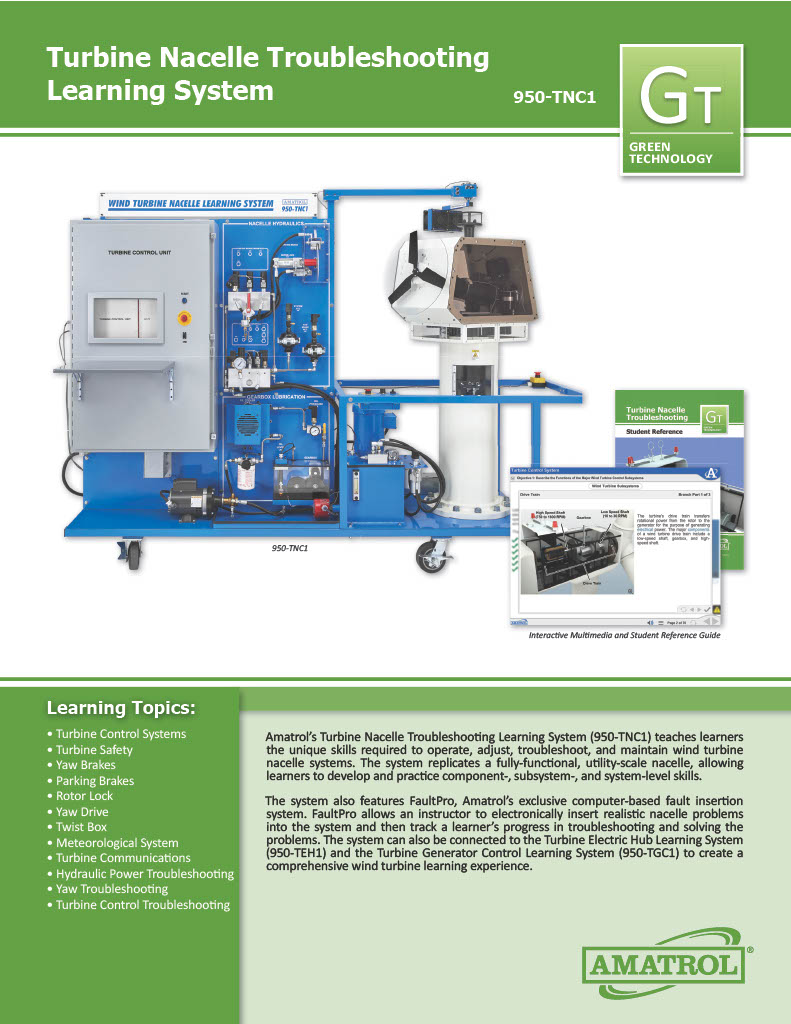
Amatrol’s Turbine Nacelle Troubleshooting Learning System (950-TNC1) teaches learners the unique skills required to operate, adjust, troubleshoot, and maintain wind turbine nacelle systems. The system replicates a fully-functional, utility-scale nacelle, allowing learners to develop and practice component-, subsystem-, and system-level skills.
The Wind Turbine Nacelle training and troubleshooting system also features FaultPro, Amatrol’s exclusive computer-based fault insertion system. FaultPro allows an instructor to electronically insert realistic nacelle problems into the system and then track a learner’s progress in troubleshooting and solving the problems. The wind turbine nacelle troubleshooting system can also be connected to the Turbine Electric Hub Learning System (950-TEH1) and the Turbine Generator Control Learning System (950-TGC1) to create a comprehensive wind turbine learning experience.
Wind Energy Technology Foundational Skills
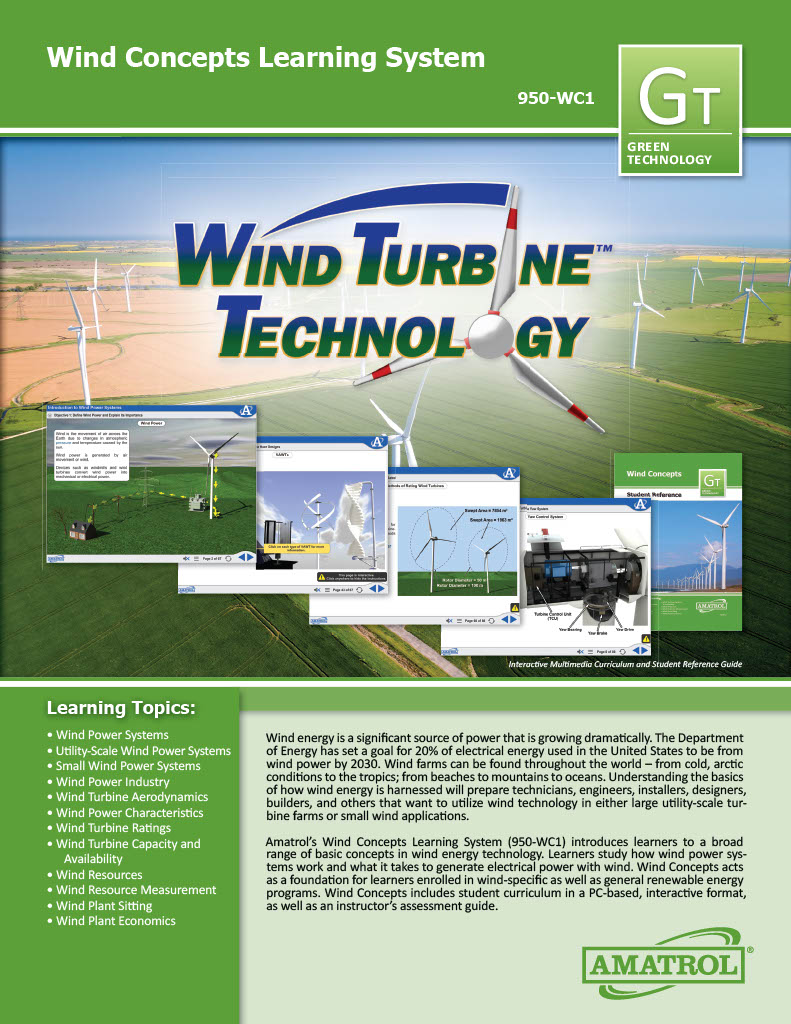
Wind energy is a significant source of power that is growing dramatically. The Department of Energy has set a goal for 20% of electrical energy used in the United States to be from wind power by 2030. Wind farms can be found throughout the world – from cold, arctic conditions to the tropics, from beaches to mountains to oceans. Understanding the basics of how wind energy is harnessed will prepare technicians, engineers, installers, designers, builders, and others that want to utilize wind technology in either large utility-scale turbine farms or small wind applications.
Amatrol’s Wind Concepts Learning System (950-WC1) introduces learners to a broad range of basic concepts in wind energy technology. Learners study how wind power systems work and what it takes to generate electrical power with wind. Wind Concepts training acts as a foundation for learners enrolled in wind-specific as well as general renewable energy programs.
Hands-On Gas Metal Arc Welder Skills
Welding plays a critical role throughout our economy. It is central to many industries including manufacturing, construction, and aerospace to name only a few. GMAW Welding is a blend of both art and science, joined together to create enduring bonds that allow us to create structures and machines on a scale impossible to achieve without it.
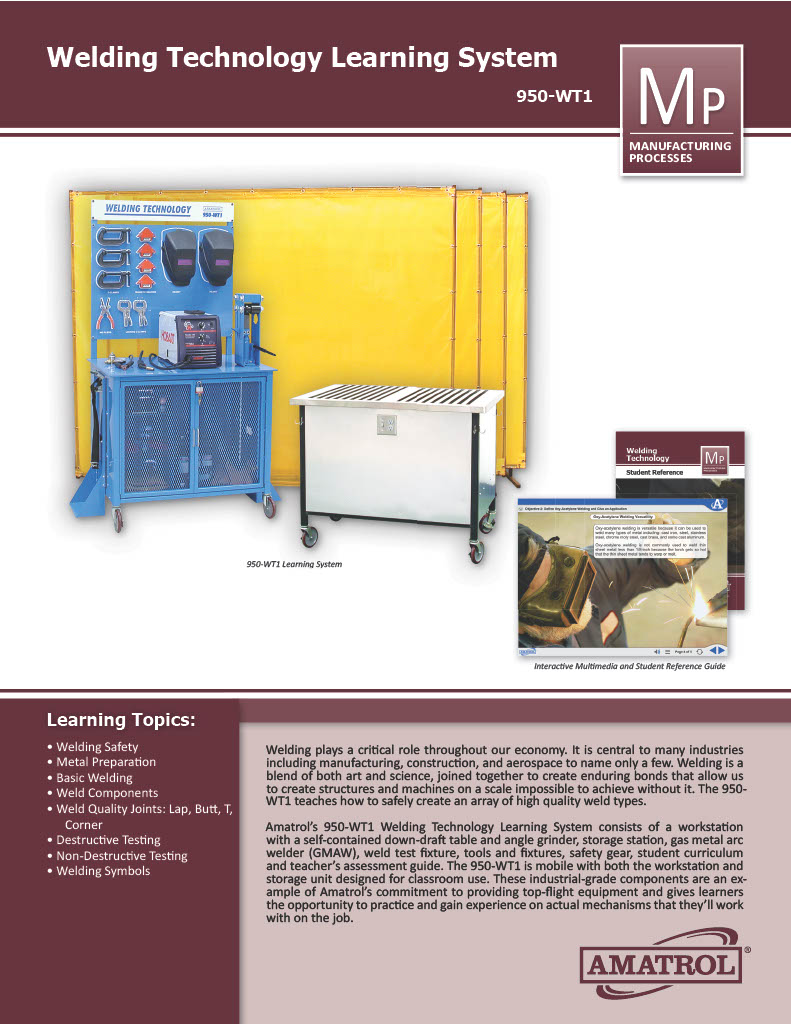
Amatrol’s Welding Technology Learning System (950-WT1) teaches how to safely create an array of high quality weld types. This welding training system consists of a workstation with a self-contained down-draft table and angle grinder, storage station, gas metal arc welder (GMAW), weld test fixture, tools and fixtures, safety gear, student curriculum and teacher’s assessment guide. This industrial welding training system is mobile with both the workstation and storage unit designed for classroom use. These industrial-grade components are an example of Amatrol’s commitment to providing top-flight equipment and gives learners the opportunity to practice and gain experience on actual mechanisms that they’ll work with on the job.
Pages
-
-
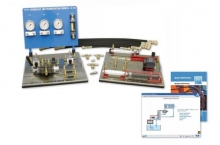 Item Number:BH-85Each Basic Hydraulics training system features standard industrial grade components. This attention to quality gives students experience they would normally only get on-the-job by helping them recognize industrial components and how to troubleshoot them more effectively. Components included with Basic Hydraulics are pre-mounted on circuit panels with silk-screened labels next to each, which facilitates ease of use and identification.
 -
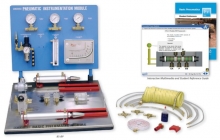 Item Number:85-BPAmatrol’s Basic Pneumatics training system (85-BP) introduces pneumatic principles through a combination of Amatrol’s top-flight multimedia curriculum with hands-on industrial pneumatic skill-building. Topics covered in this learning system include single-acting cylinder circuits, pressure vs. cylinder force, and flow control valves, while the panels can be used to practice skills such as connecting and operating a needle valve to control actuator speed.
 -
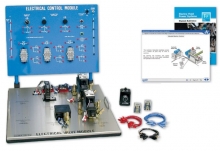 Item Number:85-EHThe Electro-Hydraulics training system includes an electrical control panel with relay control components and an electrical valve module with solenoid-operated hydraulic directional control valves and electrical/electronic sensors. These components will be used to study a variety of topics including electrical control systems, basic control devices, power devices, control relays, sequencing control, timer control, pressure control applications, and circuit applications.
 -
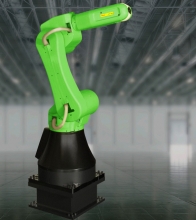 Item Number:CR-35iAFANUC’s new CR-35iA is the world’s first collaborative robot with a payload capacity of up to 35 kg. Fenceless, it opens a whole new world of possibilities. Working safely side by side with human operators, it is space as well as cost saving. And because inside it’s like any other FANUC robot, it operates like all FANUC robots. Certified to meet the requirements of ISO 10218-1:2011 and RIA/ANSI R15.06-2012, FANUC’s CR-35iA collaborative robot can work in a variety of applications alongside human workers including: machine tending, handling heavy payloads that require lift assist devices or custom equipment, higher payload mechanical assembly, palletizing or packing, and tote or carton handling.
 -
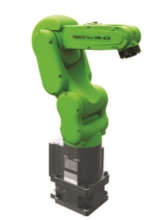 Item Number:CR-4iACR-4iA is a small collaborative robot with 4 kg payload
 -
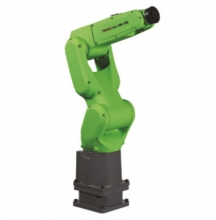 Item Number:CR-7iAThe FANUC CR-7iA is FANUC's newest collaborative robot resembles the LR Mate family. Painted green to show it's ability to work beside humans, you can expect the same reliability as FANUC's yellow robots. The CR-7iA is ideal for small part sorting and assembly, inspection, machine tending, and part delivery. It has a 7 kg payload, 717 mm reach, and is equipped with iRVision and Force Sensing. There are a variety of mounting options such as floor, wall, and ceiling.
 -
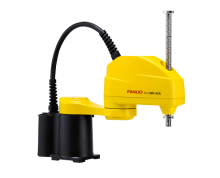 FANUC’s new SCARA robots are ideal for high-speed, precision applications such as assembly, pick and place, testing/inspection and packaging processes.
 -
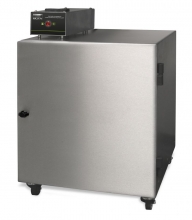
In the rare event that a burning ember or spark is drawn into the fume extraction unit, there is the possibility that debris in the filters could ignite. Although any resultant fire would typically be retained within the fume extraction unit, this would cause significant damage and in extreme circumstances, the risk may extend beyond the extraction unit. For processes where such risks have been identified, additional protection in the form of an in-line firebox is an additional precaution.
-
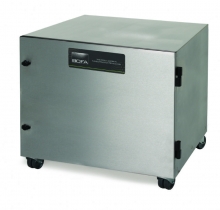
The BOFA inline pre-filter 1000 has been designed specifically for applications that generate high amounts of dust or particulate.
This inline filter unit is positioned alongside the main BOFA fume filtration system to increase the overall filter capacity and extend the life of the main filters. The DeepPleat DUO pre-filter incorporates a massive drop-out chamber within the filter, having a volume area of 15ltrs. Above the drop-out chamber but still within the housing there is a sealed 200mm deep pleat layer of F8 media giving a surface area in excess of 30 sq meters.