The VLS3.75 is a free-standing platform with a materials processing envelope of 24" x 12" x 8.5" or 2,448 in³. The single laser platform supports a 10.6µm CO2 laser source ranging in power from 10 to 75 watts or one 9.3µm CO2 30 watt, 50 watt, or 75 watt laser source.
Amatrol EV Manufacturing Training Systems provide hands-on instruction aligned with today’s electrified automotive production environments. Learners explore key EV manufacturing processes, including electric motors, power electronics, battery fundamentals, automation, and industrial controls used in advanced vehicle and mobility production.
Designed for both education and workforce development programs, these systems prepare students and technicians for careers in electric-vehicle, battery, and advanced-mobility manufacturing—helping institutions stay aligned with the rapidly evolving electrification industry.
Amatrol’s Mitsubishi automation training solutions provide industry-aligned instruction using authentic industrial components from Mitsubishi Electric. Students gain practical experience working with PLCs, HMIs, variable frequency drives, and integrated automation systems that mirror the technologies used in modern manufacturing facilities.
Designed to support mechatronics, industrial maintenance, and automation pathways, these systems bridge the gap between classroom theory and real-world application. Learners build programming, troubleshooting, and system-integration skills that prepare them for careers in advanced manufacturing and smart factory environments.
Hands-On CNC Machining for Education & Industry
Advanced manufacturing demands highly skilled CNC operators and programmers who understand precision machining, safety, and real-world production workflows. As industries continue to modernize, training programs must provide students with hands-on experience using equipment that reflects what they will encounter in the field.
APT CNC training systems provide robust, industrial-grade machining platforms designed specifically for education and workforce development. These systems allow learners to gain experience in CNC milling and turning operations while building confidence in setup, programming, operation, and troubleshooting.
- Industrial-quality CNC milling and turning platforms
- Designed for hands-on technical training environments
- Supports G-code programming and CAM integration
- Safe, instructor-friendly controls for classroom use
- Scalable for high school, college, and industry training
APT CNC systems allow students to progress from foundational machining principles to advanced programming and precision part production. Learners develop competencies in blueprint interpretation, workholding, tooling selection, machine setup, offsets, and part verification.
Through real machining applications, students experience the full manufacturing workflow—from raw material to finished part—while reinforcing critical thinking and problem-solving skills required in modern machine shops.
- CNC machine safety and operation
- Manual data input (MDI) and G-code programming
- Tool setup and tool offsets
- Work coordinate systems
- Spindle speed and feed rate calculations
- Fixture setup and part clamping
- Turning and milling operations
- Part inspection and quality verification
APT CNC platforms are well-suited for Career & Technical Education (CTE) programs, community colleges, technical institutes, and industrial training departments. The systems provide the durability and precision required for repeated instructional use while maintaining an accessible learning curve for students.
These machines integrate seamlessly into advanced manufacturing pathways, including robotics, automation, and Industry 4.0 programs, helping institutions create stackable skill development models aligned with workforce needs.
APT CNC systems can be integrated into broader automation training environments, including robotic machine tending cells and smart manufacturing demonstrations. This allows programs to expand from standalone machining instruction to fully automated production workflows.
- High school manufacturing labs
- Community and technical college machining programs
- University engineering labs
- Apprenticeship and workforce upskilling programs
- Industrial training departments
Get Started
Whether you are launching a new CNC machining program or expanding an existing advanced manufacturing lab, APT CNC training systems provide the hands-on experience learners need to succeed in today’s precision manufacturing careers.
Contact us today to discuss system configurations, automation integration options, and program alignment for your facility.
Empowering Education Through 3D Printing
 UltiMaker is a global leader in professional desktop 3D printing, renowned for delivering accessible, reliable, and high-performance additive manufacturing solutions. In the world of education and technical training, UltiMaker's printers are empowering instructors and students alike by turning ideas into tangible models—bridging the gap between theory and practice. From middle school makerspaces to advanced engineering labs, UltiMaker’s user-friendly ecosystem provides educators with the tools they need to build 21st-century skills through hands-on, project-based learning.
Built for the classroom, UltiMaker’s printers—such as the S3 and S5—offer seamless workflows, intuitive software integration, and a broad material compatibility, making them ideal for cross-curricular applications in STEM, CTE, and design programs. Educators can unlock student creativity while teaching real-world problem-solving, prototyping, and design thinking—critical skills that prepare learners for success in today’s rapidly evolving industries.
With an extensive library of lesson plans, curriculum support, and a global community of educators, UltiMaker is more than a technology provider—it's a partner in shaping the future of education. Whether you’re launching a makerspace, enhancing a Fab Lab, or incorporating additive manufacturing into your existing curriculum, UltiMaker provides scalable solutions to fit your goals.
Improve Safety and Performance for Waste Management Drivers—Before They Take the Wheel
Monday, February 23, 2026
Driver Training Solutions’ Sanitation Simulator provides immersive, scenario-based training designed specifically for waste collection and sanitation fleet operators. Trainees can safely develop critical skills such as route navigation, vehicle handling, stop-and-go operations, backing, tight turns, and hazard awareness—all within a controlled virtual environment.
By removing the risks, costs, and wear associated with on-road training, organizations can deliver consistent, repeatable instruction while protecting both equipment and personnel. The simulator allows drivers to build confidence and competence before ever operating a real vehicle.
Ideal for municipalities, private waste contractors, and fleet training academies, this solution supports safer operations, reduces accident rates, and improves overall efficiency across a wide range of waste management applications.
Download the Matrix Automatics PLC Adaptor Guidelines to learn how to connect PLC systems to pneumatic training platforms for advanced automation instruction.
Available through Tech-Labs, these adaptor modules allow educators to bridge pneumatic fundamentals with real-world PLC control, helping students build practical automation skills.
What’s Covered in This Guide
- PLC input, output, relay, and power interface modules
- Wiring diagrams and connection examples
- Module compatibility with different PLC types
- DIN rail mounting options and configurations
- Suggested setups for Siemens and other PLC systems
The guide outlines multiple module options for connecting PLC inputs, motor outputs, relay outputs, and power connections to the Automatics training platform.
Why PLC Integration Matters
Integrating PLCs into pneumatic training allows students to move beyond basic circuits into industrial automation concepts such as digital inputs/outputs, relay logic, sequencing, and control system design.
- Bridges foundational skills with advanced automation
- Supports real-world industrial control workflows
- Enhances troubleshooting and system design skills
This guide is ideal for programs looking to expand into Industry 4.0-aligned automation training.
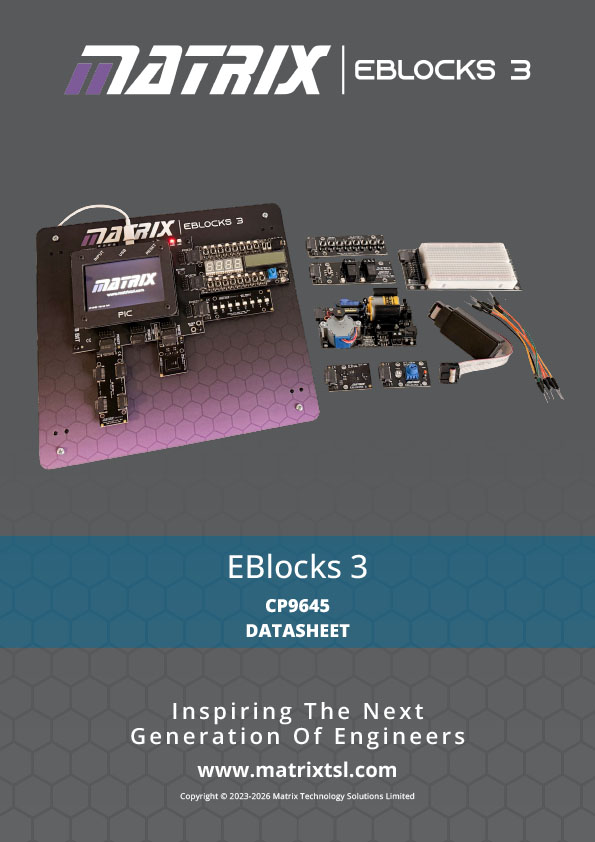
EBlocks3 from Matrix TSL is a modern, modular embedded systems platform designed to simplify the teaching and learning of microcontrollers, electronics, programming, and rapid prototyping. Whether students are just beginning their journey in embedded systems or advancing toward complex IoT and automation projects, EBlocks3 provides a flexible and scalable learning environment.
The platform combines powerful upstream processor boards with a growing ecosystem of downstream modules, allowing learners to build complete embedded systems quickly and easily. With support for PIC®, Arduino®, ESP32, and FPGA technologies, EBlocks3 enables institutions to teach multiple hardware and software platforms using a common modular architecture.
- Modular design for rapid system development and experimentation
- Compatible with PIC, Arduino, ESP32, and FPGA platforms
- Integrated color touchscreen display with Wi-Fi and Bluetooth capabilities
- Automatic hardware detection through Matrix Auto-ID technology
- Support for Flowcode, MPLAB X, Arduino IDE, and other development environments
- Extensive range of sensor, communications, actuator, and interface boards
- Designed specifically for educational environments
- Fully compatible with existing EBlocks 2 downstream hardware
EBlocks3 helps bridge the gap between theory and practical application by allowing students to build real-world embedded systems using industry-relevant hardware. Learners can explore digital electronics, sensor integration, communications protocols, control systems, wireless technologies, and Internet of Things (IoT) applications through hands-on projects and experimentation.
The modular architecture allows instructors to create learning experiences that grow alongside student skill levels—from introductory electronics concepts through advanced embedded systems development and engineering design projects.
- Overview of the EBlocks3 platform architecture
- PIC, Arduino, ESP32, and FPGA programming solutions
- Communication and networking modules
- Sensor and actuator expansion boards
- Prototype and project development boards
- Wireless, RFID, Ethernet, CAN Bus, and IoT technologies
- Software integration and Flowcode support
- Technical specifications and system configurations
Download the catalog to discover how EBlocks3 can support embedded systems, electronics, mechatronics, automation, engineering, and computer science programs.
Pages
-
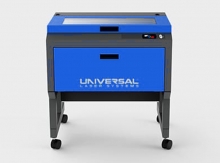 Item Number:VLS3.75
 -
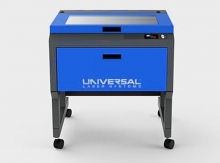 Item Number:VLS4.75The VLS4.75 is a free-standing platform with a materials processing envelope of 24" x 18" x 8.5" or 3,672 in³. The single laser platform supports a 10.6µm CO2 laser source ranging in power from 10 to 75 watts or one 9.3µm CO2 30 watt, 50 watt, or 75 watt laser source.
 -
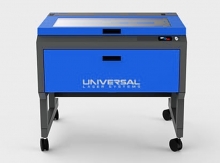 Item Number:VLS6.75The VLS6.75 is a free-standing platform with a material processing envelope of 32" x 18" x 8.5" or 4,896 in³. The single laser platform supports a 10.6µm CO2 laser source ranging in power from 10 to 75 watts or one 9.3µm CO2 30 watt, 50 watt, or 75 watt laser source.
 -
 Learn about the VMC 1300 Pro CNC Milling Machine, a precision 3-axis solution ideal for advanced educational training and industrial applications.
 -
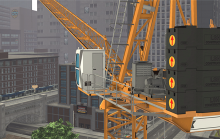 Operators who train on Vortex construction simulators develop the real-world skills they need to operate heavy equipment safely and efficiently. Scalable to every training need and budget, Vortex simulators incorporate Smart Training TechnologyTM, which means that they provide the most transferable skills on the market today, outside of the real equipment.
 -
 From ship loading/unloading to horizontal transport to yard management, CM Labs’ true-to-life simulator solutions can be used to train employees through the entire terminal workflow.
 -
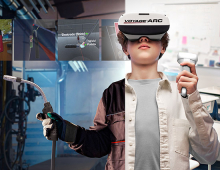 Item Number:K5338-1Introduce students to welding with the Voyage™ Arc VR headset. An immersive, classroom-ready solution for safe, engaging career exploration and foundational skills training.
 -
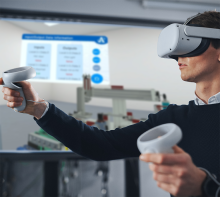 Item Number:VR870-ABExplore Amatrol's VR Smart Factory – Allen-Bradley (VR870-AB) for Meta Quest. Train with a digital twin Mechatronics system to build real-world Industry 4.0 skills virtually.
 -
 VRNA offers a fully immersive VR experience designed to enhance the efficiency and reduce the expenses associated with teaching patient care job skills typically conducted in a laboratory environment, including Certified Nursing Assistant (CNA) and Emergency Medical Services (EMS) modules.
 -
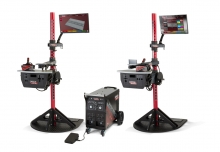 The VRTEX systems are virtual reality arc welding training simulators. These computer-based training systems are educational tools designed to supplement and enhance traditional welding training. They allow students to practice their welding technique in a simulated and immersive environment. The VRTEX systems promote the efficient transfer of quality welding skills and body positioning to the welding booth while reducing material waste associated with traditional welding training.