


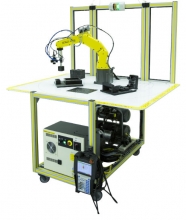
The NEW FANUC LR Mate 200iD/4S Fenceless CERT Cart was developed from combining FANUC DCS Position and Speed Check software with an Allen Bradley SafeZone Mini Safety Laser Scanner. The result is FANUC’s NEW Fenceless Cart that will still fit through a standard door and runs off 110V power. The Fenceless cart allows a greater work envelope and introduces students to the latest in integrated safety products from FANUC and Allen Bradley.
Stratasys FDM (Fused Deposition Modeling) materials are engineered to deliver unmatched performance, durability, and precision for additive manufacturing applications across industries. From prototyping to production, Stratasys offers a wide range of thermoplastics—each designed to meet specific mechanical, thermal, and chemical requirements. Whether you're creating functional prototypes, end-use parts, or manufacturing tools, Stratasys FDM materials provide the reliability and repeatability that engineers, educators, and manufacturers demand.
Get ready for a new era of 3D printing.
Programmable PhotoPolymerization P3™ technology, an evolution of digital light processing (DLP) is ushering in a new era in 3D printing: the mass production of functional end-use parts.
P3 software precisely orchestrates light, temperature, pull forces and pneumatics to optimize prints for the best possible results. With P3, manufacturers can achieve injection molding part quality and surface finish with incredible accuracy, in a diverse and continuously growing range of high-performance materials.
What makes P3 unique?
P3 is a combination of several tightly controlled, programmable steps in the printing process. P3 extends DLP printing’s capabilities and supports the next generation of production applications made with photopolymers. This powerful combination of production-grade technology and performance materials unlocks functional end-use applications in 3D printing with competitive throughput and part cost.
How it works:
Four critical parts of the P3 process enable the unique combination of high throughput, production-grade part quality and materials.
- Light: Programmable light sets off an exothermic reaction that forms layers with outstanding resolution, accuracy and dosage control.
- Environmental stability: Temperature-controlled printing mitigates warping and shrinkage, while unlocking materials with advanced properties, like flame retardancy.
- Pneumatic separation: A perfectly timed separation procedure reduces pull forces, leading to a molded-like surface finish, high-throughput and ultra-fine features, such as textures or large surface areas like molds.
- Motion: Precise control over printer movements ensures a repeatable, fast and accurate workflow in a wide range of geometries and high-performance materials.
- Green Strength: The P3 process produces a high polymerization conversion, unlocking faster print times, extreme geometries, and build nesting.
Stereolithography is an additive manufacturing process that uses a vat of liquid UV-curable photopolymer resin and a UV laser to build parts one layer at a time.
Benefits of stereolithography include:
- Parts with smooth sidewall quality and detail
- Low-volume part production of complex geometries
- Tight tolerances, layer thickness of between 50 to 200 microns
- Versatile range of materials for specific applications
Stereolithography is commonly used as a prototyping technology within industries that need to print parts or models to validate fit form and function or for concept visualization. Stereolithography is also used in manufacturing applications for short-run part production, such as vacuum castings, injection mold tooling, investment casting master patterns, and functional end-use part production for certain environments.
Due to its competitive build times and the superior quality of the finish straight off the machine, very little post-processing is required, providing cost savings and reduced lead times.
SAF™ Selective Absorption Fusion™
Boost your manufacturing capability with powder bed fusion 3D printing.
SAF technology is the power behind the H Series™ Production Platform, designed for production-level throughput of end-use parts.
The SAF-powered H350™ 3D printer provides you with control over your production and costs. Grow your business through volume production with consistent end-use functional parts.
What is SAF?
SAF is the industrial-grade technology that powers the powder-based additive manufacturing process, leading to higher end-use parts production levels. SAF is the latest 3D printing technology behind the H Series Production Platform that enables control over the printing process to achieve accurate, consistent production at competitive part costs.
How SAF technology works:
SAF is the technology behind the H350’s powder bed fusion 3D printing process. SAF uses HAF™ infrared absorption fluid to fuse polymer powder particles in layers to build parts. It also utilizes Big Wave™ powder management, a proprietary technology that provides reliable powder distribution across the build, where industrial-grade piezo-electric print heads jet the HAF fluid in prescribed areas to create each part cross-section. This is followed by exposure to infrared energy, which causes the areas with HAF to melt and fuse. The sequence is repeated until the parts are completed.
Typical Applications

Industrial-grade technology
Industrial Piezo-electric print heads and innovative powder management designed for durability and high uptime.

Production throughput
One-pass print-and fuse, few consumable replacements for minimal downtime, and high nesting densities to meet production demands.

End-use production parts
Real-time powder heating, unique thermal management, and broad powder range for a wide spectrum of part properties.
Advancing Additive Manufacturing
FDM 3D printed parts are tough enough to be used as advanced conceptual models, functional prototypes, manufacturing tools, and production parts. Using strong, reliable, and durable materials, FDM 3D printers streamline production processes from design through manufacturing, reducing costs and eliminating traditional barriers.
Download our FDM 3D printer systems and materials overview brochure. A much-needed asset for your entry into FDM 3D printing.
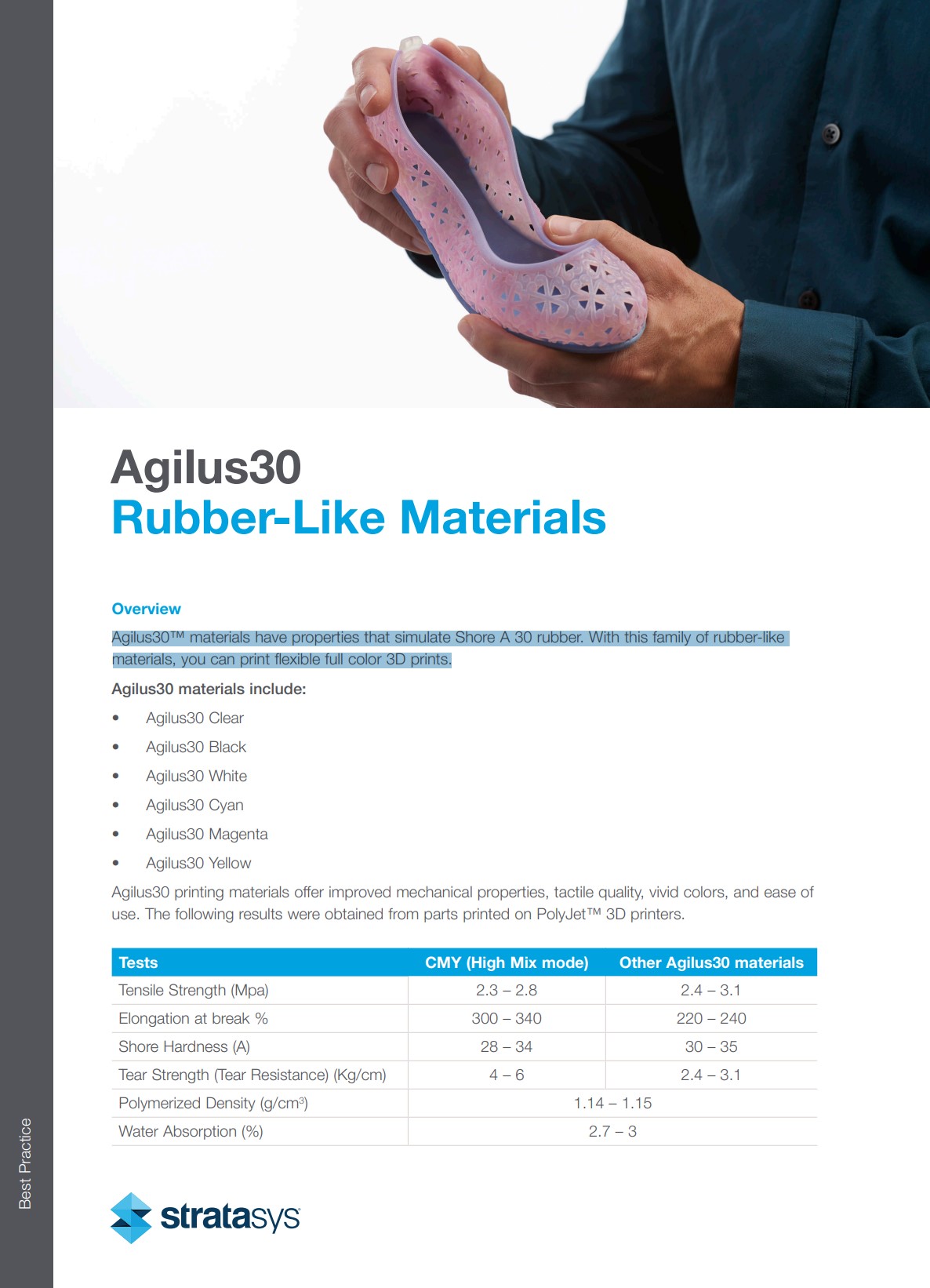
Agilus30™ materials have properties that simulate Shore A 30 rubber. With this family of rubber-like materials, you can print flexible full-color 3D prints.

Creaform Adademia
Discover Creaform ACADEMIA, an educational solution suite for forward-thinking teachers and researchers looking to inspire, collaborate, and push the innovation envelope forward by using the latest advancements in 3D measurement technologies.
The power to innovate using 3D scanning
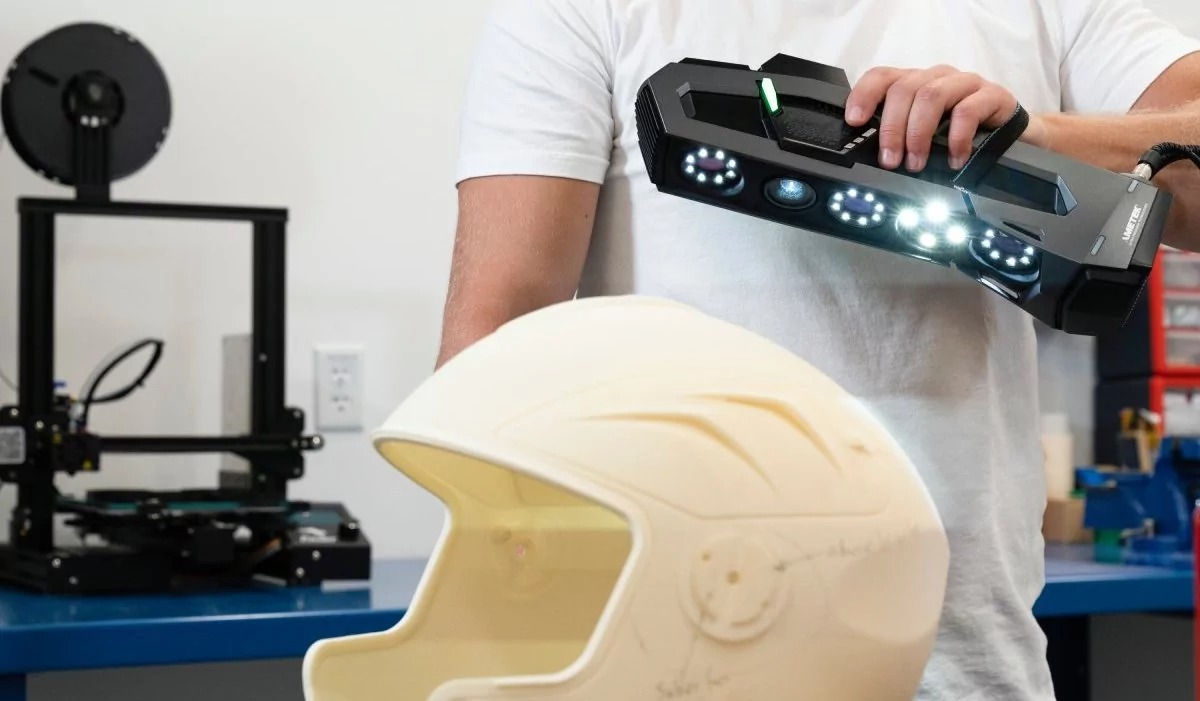
Taking an object from the physical world and bringing it into the digital world is a very important skill that students who aspire to become engineers must acquire. 3D scanning is, therefore highly relevant for engineering students because they will be called upon to use it once they work in the industry.
Educational solution suite
Benefit from the unprecedented speed, remarkable portability, and unrivaled accuracy for which Creaform 3D scanning solutions are renowned. Your ahead-of-the-curve research projects and teaching curricula will only be enhanced with our innovative and award-winning 3D scanners.
- Selection of metrology-grade 3D measurement technologies from the Creaform lineup
- Creaform ACADEMIA software covering reverse engineering and inspection
- 5-year ACADEMIA Customer Care Plan
- Optional accident coverage, warranty extension, and calibration services
- E-learning courses for hardware and software
Pages
-
-
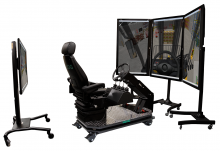 Item Number:FLTSimlog's Forklift Personal Simulator puts trainees at the controls of a typical factory forklift with rear-wheel steering. Challenging training scenarios reproduce the productivity demands of modern factory, warehouse, and distribution center environments. Our intelligent Instructional Design will guide your trainees through a series of 7 skill-building Simulation Modules that emphasize safety in every exercise.
 -
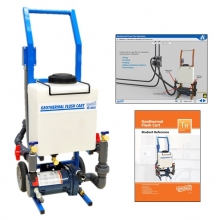 Item Number:95-GEO3Amatrol’s Geothermal Flush Cart Learning System (95-GEO3) teaches how to purge debris and air from the geothermal loop and then charge it with a glycol/water solution
 -
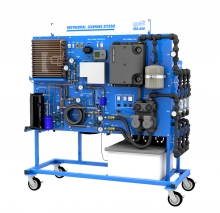 Item Number:950-GEO1Amatrol’s 950-GEO1 Geothermal Energy Training System enables learners to understand and apply their newly obtained technician skills in the ever-growing area of geothermal energy.
 -
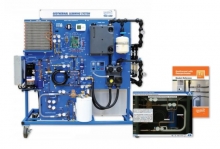 Item Number:950-GEO1DAmatrol’s 950-GEO1 Geothermal Energy Training System enables learners to understand and apply their newly obtained technician skills in the ever-growing area of geothermal energy.
 -
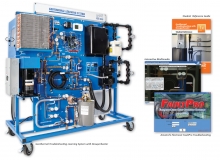 Item Number:950-GEO2DAmatrol’s 950-GEO2D Geothermal Troubleshooting Learning System with Desuperheater uses an exposed component layout so that learners can see each component’s role in a geothermal system.
 -
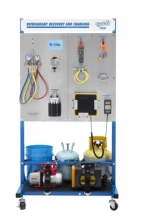 Item Number:T7031With Amatrol’s Refrigerant Recovery and Charging Learning System for R-134a, you can train future HVAC/R technicians hands-on the critical technical skills required for a successful career. Students will work with real equipment, including a recovery machine, manifold gauges, submersible cooler, temperature probe, filter dryer, low side liquid charger, vacuum pump, and micron vacuum gauge.
 -
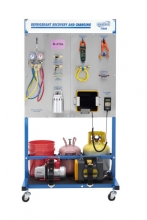 Item Number:T7032Teach aspiring HVAC/R technicians the critical technical skills needed to succeed on the job with Amatrol’s Refrigerant Recovery and Charging Learning System for R-410a (T7032). Students will work with real equipment, including a recovery machine, manifold gauges, submersible cooler, temperature probe, filter dryer, liquid vaporizer, low side liquid charger, vacuum pump, and micron vacuum gauge.
 -
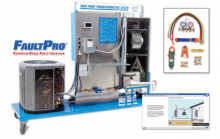 Item Number:T7100Amatrol’s Residential Heat Pump Troubleshooting Learning System (T7100) is used to teach hands-on the critical skills HVAC/R technicians need to succeed when working with residential HVAC systems that use a heat pump and traditional ducting. Students will work with real equipment, including a heat pump condenser, heat pump air handler, Wi-Fi-enabled thermostat, fuse box, ducting, and manifold.
 -
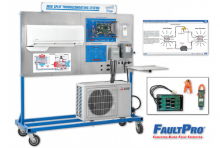 Item Number:T7130With Amatrol’s Residential Mini-Split Heat Pump Learning System (T7130) you can teach the critical hands-on technical skills HVAC/R technicians need when working with residential ductless (“mini-split”) HVAC systems. Students will work with real equipment, including a heat pump condenser, evaporator unit, thermostat, panel-mounted gauges, and condensate pump.