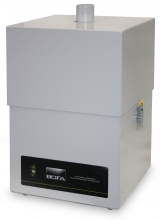
The AD Access combines economic ownership with performance to match the small laser user. A three-stage filter condition indicator is included as a standard feature, together with three stage filtration: DeepPleat pre-filter, HEPA and chemical section.
We offer equipment and curriculum from Amatrol and FANUC . Amatrol’s industry leading equipment and curriculum is developed in partnership with industry to deliver job ready, industry relevant skills. Working closely with companies like Caterpillar, Tropicana and many others Amatrol has designed equipment for work place success. FANUC offers the most complete range of industry-leading products and services for robotics, CNC systems, and factory automation solutions.
Mechatronics Smart Facotry Robotics
Production, without the line.
Imagine production without the oppressive costs and time requirements of tooling. Make changes quickly and affordably — at any stage in the production cycle. Create low–volume assembly fixtures and jigs directly from CAD data.
Direct digital manufacturing is where the world is going, and nothing will get you there faster than the truly transformative 3D production systems from Stratasys.
Find Your 3D Production System
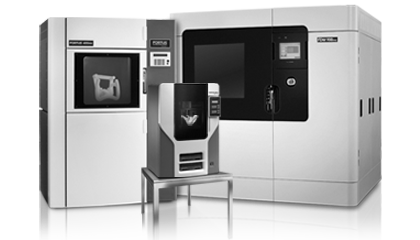
The Stratasys 3D Production Series brings world-class prototyping, tooling and digital manufacturing to your designers and engineers. The Fortus 250mc is the most compact and affordable machine, offering advanced 3D manufacturing capabilities in an office-friendly footprint. Fortus 900mc 3D Production Systems offer the widest range of Fused Deposition Modeling materials, including high performance thermoplastics, for amazingly durable, accurate parts as large as 36 x 24 x 36 in. with predictable mechanical, chemical and thermal properties.
More Information:
Prepare your students for careers in the rapidly growing fields of renewable energy engineering, sustainability, and energy efficiency with renewable energy engineering solutions suited to your education program.
With the demand for renewable energy on the rise and a lack of qualified technicians to maintain the new wind turbines, solar production and green technology, Tech-Labs is proud to introduce a new line of Green Energy products. We offer training products to help students at schools, universities, and research institutions to understand key concepts regarding renewable energy, energy management, and energy storage. You will bring students closer to these complex technologies while achieving the desired learning outcomes in a fun and interesting way.
We offer a variety of solutions that teach basic and advanced principles of harnessing renewable resources like wind, sunlight, biofuels, geothermal heat and water to create a more sustainable world.
Wind energy is a significant source of power whose use is growing dramatically, from under 3 gigawatts installed capacity in 1999 to over 34 gigwatts installed capacity in 2009 according to the U.S. Department of Energy. The Department of Energy has also set a goal for 20% of electrical energy used in the United States to be from wind power by 2030. Wind farms can be found popping up all over the central United States, the need for qualified wind technicians in wind-rich areas will continue to grow. To accommodate that growth Tech-Labs has partnered with leading manufactures to provide educators with the very best technical teaching equipment available. From Utility Grade to Residential Grade there is a program for all levels.
Wind Turbine Technicians are in demand – with few to be found. They are uniquely skilled, handling a wide breadth of operational and maintenance issues, frequently while a hundred meters in the air. The job skills they require incorporate many traditional technical disciplines like electric motor control, wiring, rotating machines, hydraulics, mechanical drives, networks, etc., along with more specialized skills in wind turbine nacelles, hubs, and turbine generator control units.
Hands-On, Job-Ready Skills for Solar Technicians
The future of solar energy is strong. Solar energy is being used in a broad range of applications such as generating electricity or home and utility use, directly heating hot water for homes, supplying heat for home heating systems, direct power for remote electronics such as information signs, and more. This is leading to an increased demand for qualified Solar Technicians.
Solar Technicians require specialized job skills, combining electrical and plumbing skills with solar technology savvy. They face unique challenges in bringing solar technology to commercial and residential applications. Our programs allow students to build the knowledge they need as well as develop the hands-on skills required. Successful Solar Technicians incorporate many traditional technical disciplines like electric motor control, wiring, rotating machines, piping, pumps, power distribution, etc. along with more specialized skills in solar technologies like solar installation, PV and thermal system troubleshooting, and specialized solar piping and pumps.
"Green Technology is the application of the environmental science to conserve the natural environment and resources, and to curb the negative impacts of human involvement. Sustainable development is the core of environmental technologies." - Wikipedia
The field of "green technology" encompasses a continuously evolving group of methods and materials, from techniques for generating energy to non-toxic cleaning products.
The goals that inform developments in this rapidly growing field include:
- Sustainability: meeting the needs of society in ways that can continue indefinitely into the future without damaging or depleting natural resources.
- "Cradle to cradle" design as opposed to the manufacturers "cradle to grave" cycle by creating products that can be fully reclaimed or re-used.
- Source reduction: reducing waste and pollution by changing patterns of production and consumption.
- Innovation: developing alternatives to technologies - whether fossil fuel or chemical intensive agriculture - that have been demonstrated to damage health and the environment.
- Viability: creating a center of economic activity around technologies and products that benefit the environment, speeding their implementation and creating new careers that truly protect the planet.
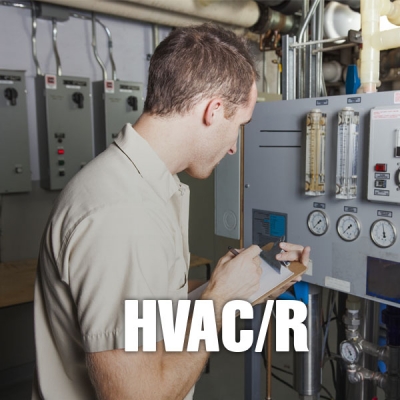
Before entering the field, students should fully understand each system's theory and operational or service techniques. We have provided the finest HVAC training units to the educational market for over forty years. They can be found in high schools, colleges, and so on worldwide.
The training units in this catalog represent a wide variety of subjects in the heating, refrigeration, and air conditioning industries. The heating and air conditioning training units range from demonstrating simple concepts to illustrating advanced troubleshooting and servicing techniques.
Modern industry relies on highly complex production systems to produce high-quality, economical products for an ever demanding world. Mechatronics teaches systems thinking that is required to effectively operate, program, and problem solve in this complex environment. With the rapid proliferation of automation technology, mechatronics has become one of the fastest growing technical education programs in the world. Many technologies are integrated to make these sophisticated production systems:
- Mechanical
- Electrical
- Electronics
- Software
The study of Mechatronics is a multidisciplinary field of engineering that includes a combination of mechanical engineering, electrical engineering, telecommunications engineering, control engineering, and computer engineering. Tech-Labs offers teaching resources from industry leaders Amatrol and FANUC.
The Oil and Gas Industry provides the fuel that keeps the world moving forward and connects us in previously impossible ways. Tech-Labs is proud to offer a wide variety training resources from Amatrol and Bayport Technical which includes Cut Away Valves, Acrylic Trainers and Demonstrators, Working Models...
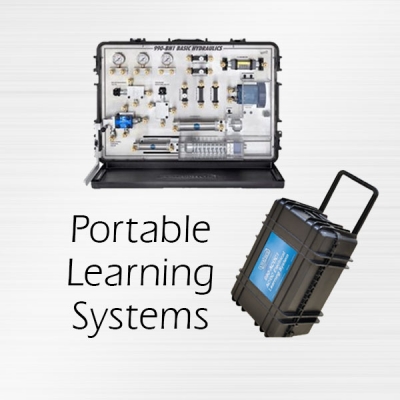
Insufficient Training Space? Not Any Longer! Amatrol's Portable Learning Systems are the Answer!
Training is now more in demand than ever, but finding sufficient training space is not always possible. Amatrol’s portable learning systems are the perfect solution when training space is limited but comprehensive knowledge and skill building cannot be sacrificed! These mobile systems can be placed on a conference room table, shop floor desk, or practically anywhere! Their durability and compact size also provide for safe, compact storage when available training space is needed to teach other topics.
Amatrol’s portable workstation cases feature a collapsible handle and wheels that make moving them easy. Multiple latches securely fasten the workstation’s durable lid during transport to protect the system components. Need to train students in a different location at your facility? Just latch the lid, extend the handle and away you go! The compact size of these learning systems allows multiple workstations to easily fit into a car’s trunk or even its backseat!
Do They Really Deliver the Same Level of Training as a Full-Size System? Yes!
Amatrol challenged its engineers and curriculum designers to create portable training systems that could provide the same knowledge and skill outcomes as the larger systems. These portable systems use industry standard components and have all the features of their larger counterparts. Supported by Amatrol’s world-class curriculum, these learning systems fill an important role in today’s training needs.
Pages
-
-
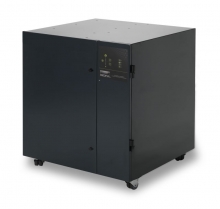
The Advantage Base 1 Oracle has been designed so that a number of manufacturer’s laser engravers can sit on top of the extractor, effectively doubling it up as a workstation.
All the Base units in the range have the option of an onboard compressor for a compact installation. BOFA’s ‘Easi-Seal’ filter location makes filter change easy, quick and safe.
The revolutionary Auto-Voltage Sensing Turbine automatically self-adjusts to run on any voltage worldwide, whilst the Reverse Flow filter technology enhances filter performance and ensures longer filter life.
-
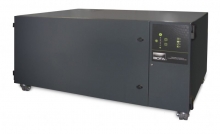
The Laser Companion 'Ride On' range has been designed so that a number of manufacturer's laser engravers can sit on top of the extractor, effectively doubling it up as a workstation.
The Advantage Base 2 Oracle has been designed so that a number of laser engravers can sit on top of the extractor, effectively doubling it up as a workstation.
All the Base units in the range have the option of an onboard compressor for a compact installation. BOFA’s Easi-Glide filter location mechanism makes filter changes easy, quick and safe.
-
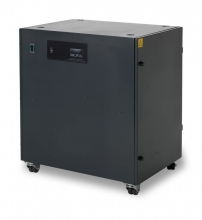
The Advantage Base 3 has been designed specifically for the Universal VersaLaser engraver. The dimensions of the unit allow the VersaLaser to fit perfectly onto the extractor, effectively doubling it up as a workstation. The unit is also offered with an onboard air compressor to provide the laser with its air assist requirements and comes complete with extraction hose kit and compressor link up on compressor models.
-
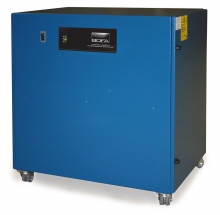
The Advantage Base Z has been designed specifically for the new Epilog Zing laser engraver. The dimensions of the unit allow the Zing to fit perfectly onto the extractor.
-
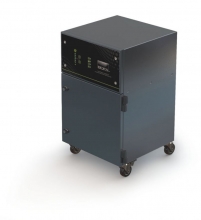
The AD GoldSEAL RS is a dust extraction system designed for the jewelry industry that recovers and collects precious metals.
The metal particles are collected in an easy to remove tray and the HEPA filter can be incinerated to reveal the precious metal collected in the filtration process.
Automatic Flow Control allows the user to preset correct air flow rates, for lower noise levels and allow further protection of the HEPA filter.
-
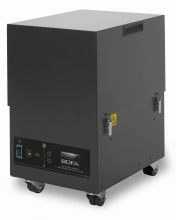 The AD Universal fume extraction and filtration system has been designed to provide cost-effective solutions for light to medium duty applications. These compact systems are ideal for small-scale industrial environments and light laser coding applications.
 -
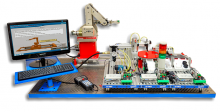
High school students are destined to become knowledge workers, regardless of whatever specific career choice they make. Engineering and technology offer some of the most rewarding career opportunities possible! Amatrol’s high school programs are designed to engage students who demand a high degree of interactivity and challenge to keep them interested and learning. All of our high school programs articulate to colleges for up to 18 credit hours.
-
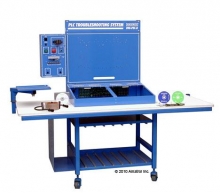 Item Number:890-PEC-BThe model 890-PEC-B Programmable Controller Troubleshooting Learning System teaches programming and troubleshooting of programmable controllers and their use in industrial, commercial, and residential applications. The 890-PEC-B System teaches PLC troubleshooting like no other product by providing a hands-on learning station that models real world PLC-controlled machines with up to 40 faults that can be inserted into the system.
 -
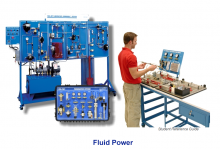 Amatrol’s fluid power training systems are the best in the industry. Our learning programs are developed in partnership with industry and education to ensure that the skills are on target to support modern industry needs.