
Important workplace training for the Oil and Gas industry includes Communication Skills, Conflict Resolution, Mathematics, Principles of Advanced Manufacturing, Trigonometry and Working in Groups. Amatrol’s Interactive Multimedia Gives Learners the Tool They Need to Excel.
Empowering Education Through 3D Printing
 UltiMaker is a global leader in professional desktop 3D printing, renowned for delivering accessible, reliable, and high-performance additive manufacturing solutions. In the world of education and technical training, UltiMaker's printers are empowering instructors and students alike by turning ideas into tangible models—bridging the gap between theory and practice. From middle school makerspaces to advanced engineering labs, UltiMaker’s user-friendly ecosystem provides educators with the tools they need to build 21st-century skills through hands-on, project-based learning.
Built for the classroom, UltiMaker’s printers—such as the S3 and S5—offer seamless workflows, intuitive software integration, and a broad material compatibility, making them ideal for cross-curricular applications in STEM, CTE, and design programs. Educators can unlock student creativity while teaching real-world problem-solving, prototyping, and design thinking—critical skills that prepare learners for success in today’s rapidly evolving industries.
With an extensive library of lesson plans, curriculum support, and a global community of educators, UltiMaker is more than a technology provider—it's a partner in shaping the future of education. Whether you’re launching a makerspace, enhancing a Fab Lab, or incorporating additive manufacturing into your existing curriculum, UltiMaker provides scalable solutions to fit your goals.
Improve Safety and Performance for Waste Management Drivers—Before They Take the Wheel
Monday, February 23, 2026
Driver Training Solutions’ Sanitation Simulator provides immersive, scenario-based training designed specifically for waste collection and sanitation fleet operators. Trainees can safely develop critical skills such as route navigation, vehicle handling, stop-and-go operations, backing, tight turns, and hazard awareness—all within a controlled virtual environment.
By removing the risks, costs, and wear associated with on-road training, organizations can deliver consistent, repeatable instruction while protecting both equipment and personnel. The simulator allows drivers to build confidence and competence before ever operating a real vehicle.
Ideal for municipalities, private waste contractors, and fleet training academies, this solution supports safer operations, reduces accident rates, and improves overall efficiency across a wide range of waste management applications.
Download the Matrix Automatics PLC Adaptor Guidelines to learn how to connect PLC systems to pneumatic training platforms for advanced automation instruction.
Available through Tech-Labs, these adaptor modules allow educators to bridge pneumatic fundamentals with real-world PLC control, helping students build practical automation skills.
What’s Covered in This Guide
- PLC input, output, relay, and power interface modules
- Wiring diagrams and connection examples
- Module compatibility with different PLC types
- DIN rail mounting options and configurations
- Suggested setups for Siemens and other PLC systems
The guide outlines multiple module options for connecting PLC inputs, motor outputs, relay outputs, and power connections to the Automatics training platform.
Why PLC Integration Matters
Integrating PLCs into pneumatic training allows students to move beyond basic circuits into industrial automation concepts such as digital inputs/outputs, relay logic, sequencing, and control system design.
- Bridges foundational skills with advanced automation
- Supports real-world industrial control workflows
- Enhances troubleshooting and system design skills
This guide is ideal for programs looking to expand into Industry 4.0-aligned automation training.
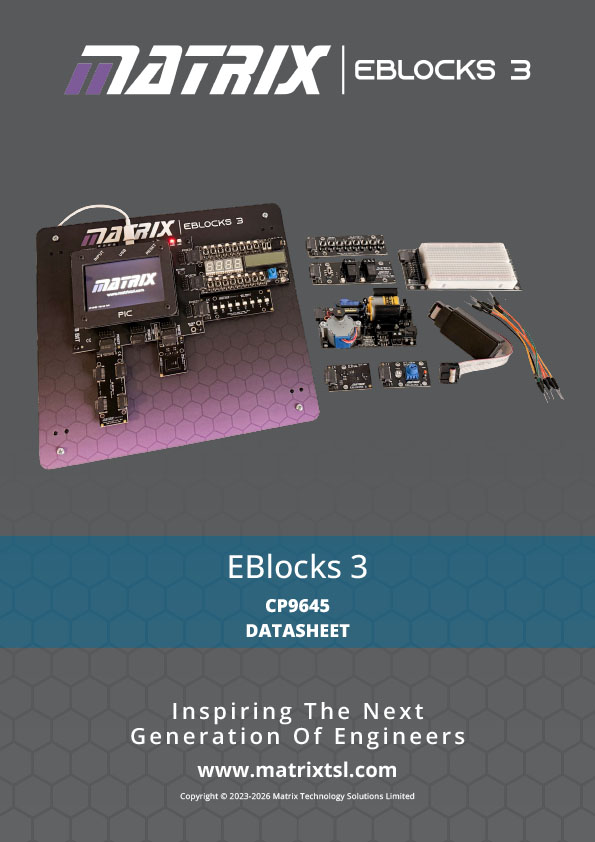
EBlocks3 from Matrix TSL is a modern, modular embedded systems platform designed to simplify the teaching and learning of microcontrollers, electronics, programming, and rapid prototyping. Whether students are just beginning their journey in embedded systems or advancing toward complex IoT and automation projects, EBlocks3 provides a flexible and scalable learning environment.
The platform combines powerful upstream processor boards with a growing ecosystem of downstream modules, allowing learners to build complete embedded systems quickly and easily. With support for PIC®, Arduino®, ESP32, and FPGA technologies, EBlocks3 enables institutions to teach multiple hardware and software platforms using a common modular architecture.
- Modular design for rapid system development and experimentation
- Compatible with PIC, Arduino, ESP32, and FPGA platforms
- Integrated color touchscreen display with Wi-Fi and Bluetooth capabilities
- Automatic hardware detection through Matrix Auto-ID technology
- Support for Flowcode, MPLAB X, Arduino IDE, and other development environments
- Extensive range of sensor, communications, actuator, and interface boards
- Designed specifically for educational environments
- Fully compatible with existing EBlocks 2 downstream hardware
EBlocks3 helps bridge the gap between theory and practical application by allowing students to build real-world embedded systems using industry-relevant hardware. Learners can explore digital electronics, sensor integration, communications protocols, control systems, wireless technologies, and Internet of Things (IoT) applications through hands-on projects and experimentation.
The modular architecture allows instructors to create learning experiences that grow alongside student skill levels—from introductory electronics concepts through advanced embedded systems development and engineering design projects.
- Overview of the EBlocks3 platform architecture
- PIC, Arduino, ESP32, and FPGA programming solutions
- Communication and networking modules
- Sensor and actuator expansion boards
- Prototype and project development boards
- Wireless, RFID, Ethernet, CAN Bus, and IoT technologies
- Software integration and Flowcode support
- Technical specifications and system configurations
Download the catalog to discover how EBlocks3 can support embedded systems, electronics, mechatronics, automation, engineering, and computer science programs.
Build Confident Instructors. Strengthen Your Program.
Build confident instructors, strengthen your technical education program, and maximize your training equipment's value with Tech-Labs. Our instructor training services combine hands-on equipment instruction, curriculum integration, new instructor development, customized professional development, and preparation for SACA Silver and Gold certifications.
With nearly 50 years of experience supporting educators and industry, Tech-Labs helps instructors develop the technical expertise and classroom confidence needed to deliver engaging, industry-aligned training. The result is stronger instruction, greater certification attainment, improved student outcomes, and a more sustainable workforce-development program.
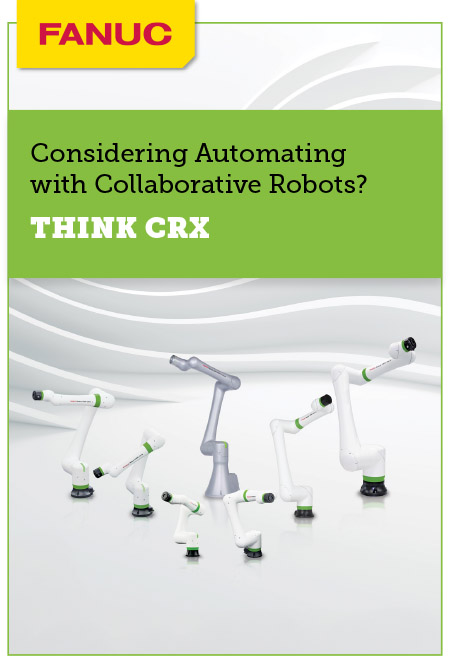
This brochure provides an overview of the FANUC CRX Series of collaborative robots, including available payloads, reaches, programming options, safety features, mounting configurations and technical specifications. The CRX lineup offers models for applications ranging from light-duty handling and assembly to palletizing, welding and painting.
Explore CRX applications such as machine tending, inspection, pick-and-place, packaging, grinding, dispensing and welding. The brochure also covers drag-and-drop programming, hand-guided teaching, FANUC vision and force-sensing options, food-grade models and the explosion-resistant CRX-10iA/L Paint cobot.
Thursday, September 10, 2026
Preparing students for careers in advanced manufacturing requires more than introducing new technology into the classroom. It requires close collaboration among educators, employers, technology leaders, and workforce development partners to ensure the skills students learn reflect modern industry needs.
At the FANUC Aligning Skills Between Industry & Education event hosted at the College of Western Idaho, representatives from education and industry came together to explore how robotics, automation, CNC technologies, and hands-on technical training can help build the workforce of tomorrow.
When educators and employers work together, students gain the skills and experience needed to move confidently from the classroom into advanced manufacturing careers.
Building a Workforce for Advanced Manufacturing
Manufacturing technology is evolving rapidly. Robotics, automation, collaborative robots, machine vision, CNC systems, and increasingly connected production environments are changing both the work being performed and the skills employers need.
For schools and technical programs, the challenge is making sure students have opportunities to work with technologies and processes that reflect what they will encounter in the workplace.
The College of Western Idaho provides an example of how industry-aligned education can help close that gap. As an official FANUC Authorized Satellite Training (F.A.S.T.) site for robotics, CWI provides students and industry professionals with access to hands-on FANUC robotics training and industry-relevant skills development.
Industry and Education Working Together
The event brought together leaders from College of Western Idaho, FANUC America, Micron Technology, X-Cal, and other regional organizations to discuss one of manufacturing's most important challenges: developing enough skilled people to support increasingly automated production environments.
That collaboration creates benefits on both sides.
- Educators gain insight into the technologies, competencies, and workforce needs shaping modern manufacturing.
- Employers can help schools understand the skills graduates need to succeed from day one.
- Students gain hands-on experience with industrial technologies used throughout manufacturing.
- Communities develop stronger pathways connecting technical education with high-demand careers.
Hands-On Experience with FANUC Technology
Throughout the event, participants explored technologies used in today's automated manufacturing environments, including industrial robots, collaborative robots, CNC technologies, vision systems, and automation applications.
Hands-on experiences like these are important because automation education goes beyond learning how a robot moves. Students must learn to think about complete manufacturing systems — programming, controls, safety, troubleshooting, integration, process improvement, and how automation interacts with people and other equipment.
Preparing Students for What's Next
The demand for automation skills extends far beyond the job title of "robot programmer." Manufacturers need technicians, maintenance professionals, controls specialists, engineers, machine operators, integrators, and other skilled employees who understand how automated systems work.
By bringing industry technology into educational environments and building stronger connections between schools and employers, programs can give students a clearer pathway from technical education to meaningful careers.
Watch the video to hear perspectives from College of Western Idaho, Micron Technology, FANUC America, X-Cal, and others working to strengthen the advanced-manufacturing workforce.
High-Voltage Isolation and Fault Diagnosis in Practice
Tuesday, September 8, 2026
Practice High-Voltage Safety Before Working on a Real Vehicle
Working on electric and hybrid vehicles requires technicians to safely isolate high-voltage systems before service or diagnostic work begins. In this video, Lucas-Nülle demonstrates how the LOTO Trainer for High-Voltage Vehicles gives students a controlled environment to practice high-voltage isolation, lockout/tagout procedures, electrical measurements, and safe recommissioning.
Learners can work through five common high-voltage disconnection methods and diagnose up to ten realistic workshop faults while using tools such as an insulation resistance tester and milliohmmeter. The trainer helps automotive and EV programs move students beyond theory by giving them repeated practice with the procedures and diagnostic skills required for high-voltage vehicle service.
Build the confidence and procedural discipline students need before they work around real high-voltage EV and hybrid vehicle systems.
Skills Demonstrated
- High-voltage system isolation
- Lockout/tagout procedures
- Verification of a de-energized system
- Insulation resistance testing
- Low-resistance measurement with a milliohmmeter
- Systematic fault diagnosis
- Safe recommissioning after service procedures
Prepare Students for Modern Automotive Service
The LOTO Trainer provides a practical bridge between classroom instruction and work on real electric and hybrid vehicles. It is well-suited for automotive technology, EV training, career and technical education, community college, and workforce-development programs preparing technicians for increasingly electrified vehicle systems.
Pages
-
-
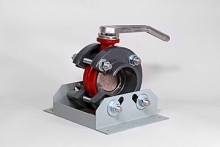 Item Number:295-712DAC Worldwide’s Angled Disc Butterfly Valve Cutaway (295-712) is an industrial valve sample and teaching aid that allows for convenient classroom or laboratory instruction in the design, construction, and maintenance of an angle disc-type butterfly valve.
 -
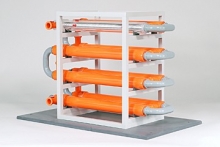 Item Number:281DAC Worldwide’s Annular Tube Heat Exchanger Model (281) is a highly-detailed scale model of a common annular tube (tube-in-tube) heat exchanger. The model provides realistic training in the operation and maintenance of industrial heat exchangers.
 -
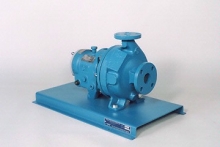 Item Number:275-100The ANSI Centrifugal Pump Dissectible (Goulds) consists of an actual industrial-quality pump to provide learners with a realistic training experience that will build skills that translate easily to the workplace.
 -
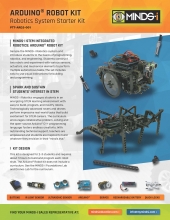 Item Number:PTT-ARD2-001Sample the MINDS-i Robotics system and introduce students to the basics of programming, robotics, and engineering. Students construct two robots and experiment with various sensors, actuators, and mechanical elements to perform multiple autonomous tasks. The set includes easy to use visual instructions for building and programming.
 -
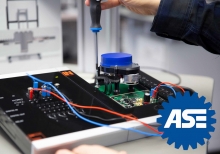 Let your students build employable skills by working on state-of-the-art real-world systems that teach the procedures required to work safely on today’s vehicles.
 -
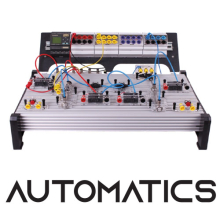 Matrix TSL Automatics provides hands-on training in pneumatics and automation systems using real components adapted for classroom learning.
 -
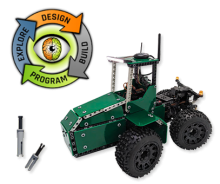 Item Number:MCK-AFTR-BLU/RED/ORN/GRNMINDS-i Robotics introduces an autonomous STEM program with a GPS-IMU tractor. Students learn programming, design, & collaboration for real-world farming tasks.
 -
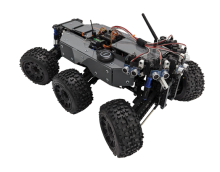 Item Number:MCK-MRLB-001Explore new frontiers in STEM education with the MINDS-i STEM Integrated Robotics: an Autonomous Self-Driving Mars Rover. This rover, equipped with cutting-edge GPS and IMU technology, elevates STEM learning by immersing students in programming, electromechanical systems, and autonomous navigation.
 -
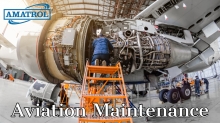 To engage and reach learners with a variety of learning styles, Amatrol’s Aviation Maintenance Training program features a robust combination of learning methods to provide an outstanding learning experience that includes both comprehensive theoretical knowledge and practical, hands-on skills valuable throughout industry.