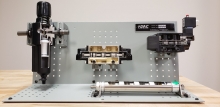
DAC Worldwide’s Pneumatic Component Cutaway Set (760) is a tabletop assortment of industrial pneumatic components that have been modified for classroom use as teaching aids for pneumatic component training.
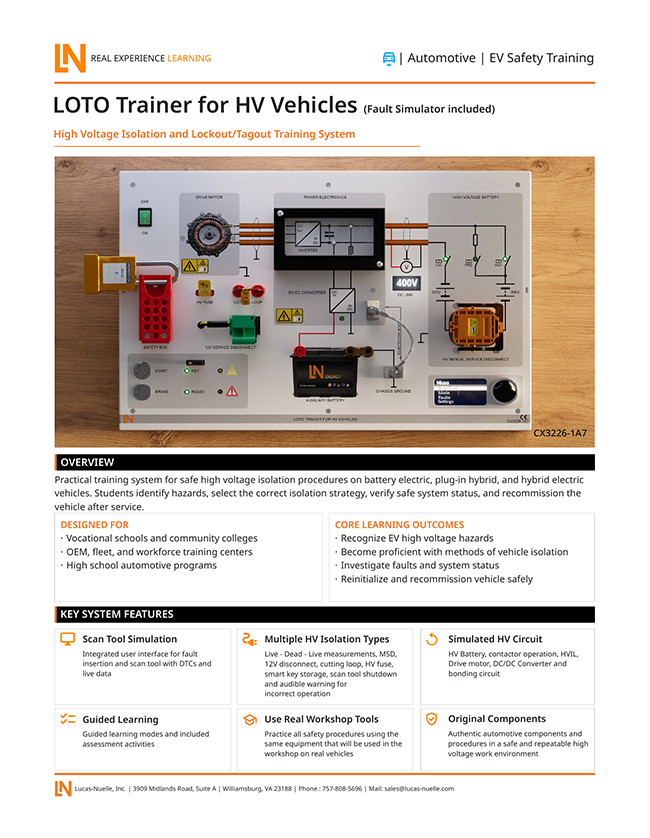
The Lucas-Nuelle CX3226-1A7 is a practical training system for teaching safe high-voltage isolation and lockout/tagout procedures for battery-electric, plug-in hybrid, and hybrid-electric vehicles.
Students learn to identify electrical hazards, choose an appropriate isolation method, verify that the vehicle is safe to service, investigate simulated faults, and recommission the vehicle after work is complete.
Designed For
- Vocational schools and community colleges
- OEM, fleet, and workforce training centers
- High school automotive programs
- Recognize electric-vehicle high-voltage hazards
- Become proficient with methods of vehicle isolation
- Investigate faults and system status
- Verify safe working conditions
- Reinitialize and recommission vehicles safely
Scan Tool Simulation
An integrated interface supports fault insertion and simulates a scan tool with diagnostic trouble codes and live data.
Multiple High-Voltage Isolation Methods
Training covers Live-Dead-Live measurements, manual service disconnects, 12-volt disconnection, cutting loops, high-voltage fuses, smart-key storage, scan-tool shutdown, and warnings for incorrect operation.
Simulated High-Voltage Circuit
The system represents an HV battery, contactor operation, high-voltage interlock loop, drive motor, DC/DC converter, and equipotential bonding circuit.
Guided Learning
Guided instruction modes and assessment activities reinforce correct procedures and decision-making.
Use of Real Workshop Tools
Students practice safety procedures using the same types of equipment used when servicing real vehicles.
Original Components
Authentic automotive components support safe, repeatable high-voltage training.
- High-voltage awareness
- High-voltage isolation methods
- Lockout/tagout procedures
- Safe-work-condition verification
- Diagnostic trouble code and fault investigation
- Safety decision-making
- Complete vehicle isolation and lockout/tagout
- Scan-tool shutdown
- Incorrect isolation procedure
- Procedure-validation failure
- Vehicle recommissioning verification
- High-voltage interlock fault investigation
- Equipotential bonding fault investigation
- Residual voltage after isolation
- Active insulation fault
- Unknown contactor status
- Collision-damaged vehicle assessment
- Authorization-limit recognition
- Unsafe-work-condition recognition
Some exercises may require separate testing equipment.
- Four-wire Kelvin milliohmmeter with a test current of at least 200 mA, resolution of 1 mOhm or better, and a pass threshold below 0.1 ohm
- Insulation and voltage tester or megohmmeter supporting 500 V and 1,000 V DC, a range of at least 200 MOhm, and a CAT III or CAT IV 1,000 V rating
Pages
-
 Item Number:760C
 -
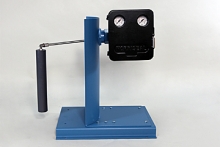 Item Number:295-713DAC Worldwide’s Pneumatic Level Controller Assembly Cutaway (295-713) is a sectioned, highlighted float-operated pneumatic level controller assembly that allows for realistic demonstration and training related to this common level control device used in oil and gas production operations.
 -
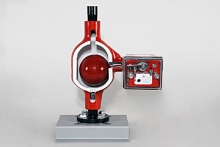 Item Number:295-722DAC Worldwide's Pneumatic Level Switch Cutaway, Oilfield-Type (295-722) is a realistic, sectioned example of a common industrial level switch, as used in oilfield production applications and other process systems.
 -
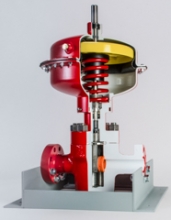 Item Number:295-719PDAC Worldwide’s Pneumatic Surface Safety Valve Cutaway (295-719P) depicts a sectioned full-size valve sample. A key component in ESD systems, these safety-related wellhead components ensure system shutdown in emergency circumstances.
 -
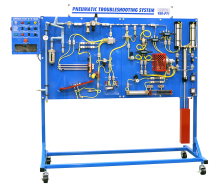 Item Number:950-PT1Hands-on pneumatic troubleshooting training with real-world faults. Amatrol’s 950-PT1 uses FaultPro® to teach pneumatic, mechanical, and electrical system diagnostics.
 -
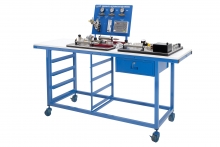 Item Number:27-PNA1Amatrol’s Pneumatics 1 Assessment Workstation (27-PNA1) features a compact workstation designed to effectively assess hands-on pneumatics skills with a variety of industry-standard components.
 -
 Item Number:990-DRV1FAmatrol's 990-DRV1F features industry-standard components like a Rockwell PowerFlex 4 variable frequency AC drive and a 3-phase AC motor used to teach the fundamentals of configuring and operating an AC drive. The 990-DRV1F uses FaultPro, Amatrol’s electronic fault insertion, to teach motor drive troubleshooting skills, such as drive input, motor input, and drive relay troubleshooting.
 -
 Item Number:990-ACDC1With the 990-ACDC1 learning system, you can teach the basics of AC and DC electrical systems in industrial, commercial, agricultural, and residential applications. The system offers industry-relevant skills including how to operate, install, design, and troubleshoot fundamental AC and DC electrical circuits for various purposes.
 -
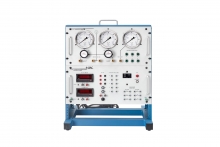 Item Number:616-000DAC’s Portable Calibration Training System (616-000) is a portable tabletop instrument calibration workstation that allows for convenient testing and calibration of instruments, process controllers, and other instrumentation and process control-related components.
 -
 Item Number:990-MC1FSL
Amatrol’s Portable Electric Motor Control Troubleshooting Training System (990-MC1FSL) features typical industry components like a 3-phase AC squirrel cage motor. It uses 3-phase AC for power and 24 VDC for control, all packed within a space-saving, portable product. The real-world motor control components will prepare learners for work in industries where electric relay control applications are used, like conveyor control and driving large utility pumps. Teach students how to read and interpret ladder diagrams.