Amatrol’s High School Learning Systems create the need for students to want to learn math and science – they can’t interact with the exciting technology without it. Learning is interactive and challenging, keeping them engaged and wanting to do more. The math and science so desperately needed for 80% of jobs today is a natural outcome.
Building the Future of Chemical Engineering
Friday, April 18, 2025
University of St. Thomas Expands Chemical Engineering with Pignat Training Systems
At the University of St. Thomas in Houston, Texas, students are preparing for real-world careers in chemical engineering through hands-on practice with industry-grade equipment. The university recently added a Batch Continuous Distillation trainer (DVI/3000) and a Gas-Liquid Absorption trainer (ABS/2000) to its new Unit of Operations Lab. These systems, manufactured by Pignat SAS and sourced through DAC Worldwide, give students direct experience with two essential separation processes: distillation and gas absorption.
Preparing the First Class of Chemical Engineers
According to Lab Manager Thomas Ciavatti, the new additions mark an important milestone for the program. Four years ago, the Physics and Engineering Department expanded to include multiple disciplines, with chemical engineering joining most recently. Thanks to these units, the University of St. Thomas will graduate its first class of chemical engineers this year.
“These process units will really give students experience with very important processes. The units that have been delivered are top quality and we’re really looking forward to our students getting the full experience with them.” — Thomas Ciavatti
Real-World Processes in the Lab
- DVI/3000 Distillation Column – separates alcohol from water, reinforcing concepts in liquid-liquid separation.
- ABS/2000 Absorption Unit – demonstrates gas separation, such as removing CO₂ from a gas mixture.
With these Pignat trainers, students gain an experiential grasp of core engineering concepts that can be applied across industries. For Ciavatti, this hands-on training ensures graduates leave school with knowledge layered by experience, ready to solve challenges in their future careers.
Partnering for Workforce Success
Through partnerships with Pignat and DAC Worldwide, the University of St. Thomas is equipping students to become highly skilled engineers. The program not only emphasizes technical expertise but also the university’s mission of shaping ethical, well-rounded professionals ready to make an impact in industry and society.
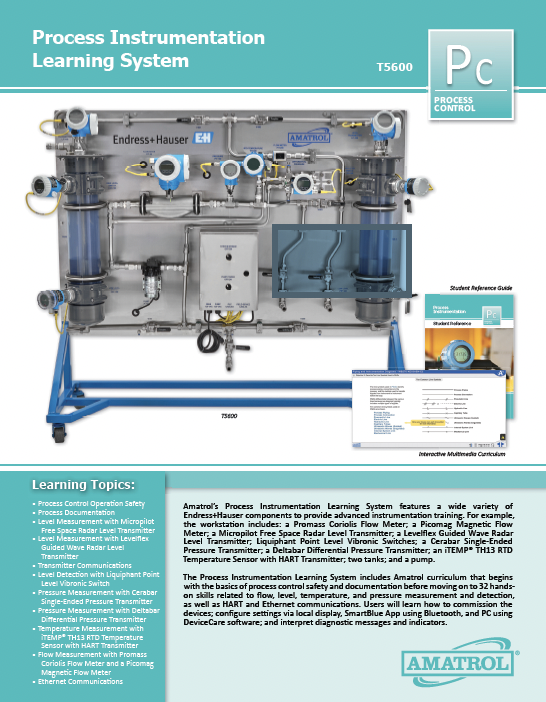
Download the brochure for Amatrol’s Process Instrumentation Learning System (T5600) and explore a hands-on training solution designed to build real-world skills in modern process control and instrumentation.
This learning system features a wide variety of Endress+Hauser instrumentation components, including flow meters, radar level transmitters, pressure transmitters, point level switches, and an RTD temperature sensor with HART transmitter. Learners can develop practical experience with core process measurement applications involving flow, level, pressure, and temperature.
The included multimedia curriculum begins with the fundamentals of process control, safety, and documentation before progressing into 32 hands-on skills. Students also learn transmitter communications, device commissioning, configuration through local display and software tools, and diagnostic interpretation using HART and Ethernet communications.
What You’ll Find in the Brochure
- Overview of the T5600 Process Instrumentation Learning System
- Featured Endress+Hauser instrumentation components
- Learning topics covering safety, documentation, and measurement applications
- Details on HART and Ethernet communications training
- Information about the included multimedia curriculum and hands-on skill development
Key Training Areas
- Process control operation safety
- Process documentation
- Level measurement and detection
- Pressure measurement
- Temperature measurement
- Flow measurement
- Transmitter communications
- Ethernet communications
Endress+Hauser Trainer from Amatrol
Wednesday, October 4, 2023
Watch the Amatrol T5600 Process Instrumentation Learning System video to see how this advanced training system helps learners build practical skills in process control, instrumentation, and transmitter communications. Developed through a partnership between Amatrol and Endress+Hauser, this system is designed for hands-on training in calibration, commissioning, and diagnostics using industry-relevant instrumentation components.
The T5600 includes a wide variety of Endress+Hauser components, including a Promass Coriolis Flow Meter, Picomag Magnetic Flow Meter, Micropilot Free Space Radar Level Transmitter, Levelflex Guided Wave Radar Level Transmitter, Liquiphant Point Level Vibronic Switches, Cerabar Single-Ended Pressure Transmitter, Deltabar Differential Pressure Transmitter, and an iTEMP® TH13 RTD Temperature Sensor with HART Transmitter, along with two tanks and a pump.
In the video, viewers get an overview of the trainer’s measurement and detection capabilities across flow, level, pressure, and temperature, as well as its role in teaching calibration, commissioning, and diagnostic procedures. The system is also built for durability, with heavy-duty features such as stainless steel mounting panels and tubing, Swagelok compression fittings, NPT-threaded connections, anti-vibration mounting, and plastic sight tubes.
What You’ll See in This Video
- An overview of the T5600 Process Instrumentation Learning System
- Featured Endress+Hauser transmitters and measurement devices
- How learners practice calibration, commissioning, and diagnostics
- Training applications for flow, level, pressure, and temperature measurement
- Examples of transmitter communication using HART, Bluetooth, and Ethernet
- How the system supports engineering, electrical, process control, and industrial training programs
Hands-On Skills Covered
- Process control safety and documentation
- Flow measurement and detection
- Level measurement and point level detection
- Pressure measurement
- Temperature measurement
- Calibration and commissioning procedures
- Device diagnostics and troubleshooting
- Transmitter communication via HART, Bluetooth, and Ethernet
Learners can configure settings directly on the device, through Endress+Hauser’s SmartBlue application, or on a PC with DeviceCare software. This makes the T5600 a strong fit for programs preparing students and technicians for work in process control, instrumentation, and industrial maintenance environments.
Industrial facilities depend on reliable maintenance teams to keep equipment running safely, efficiently, and with minimal downtime. Today’s maintenance technicians need more than theory—they need hands-on experience with the mechanical systems, lubrication practices, and troubleshooting methods used in real industrial environments.
X-Cal provides industrial maintenance training solutions built around Amatrol hands-on learning systems that help learners practice installation, adjustment, inspection, and diagnostics. These solutions support career pathways in industrial maintenance, mechatronics support, manufacturing maintenance, and multi-craft technician roles.
Build Job-Ready Maintenance Skills
A strong industrial maintenance program develops foundational mechanical knowledge, safe work habits, and practical troubleshooting ability. Learners benefit from repeatable training exercises that reinforce real maintenance tasks—before they ever step onto a plant floor.
- Mechanical power transmission fundamentals
- Shaft alignment concepts and best practices
- Belts, chains, couplings, and gear drives
- Lubrication fundamentals and lubricant management
- Central lubrication system operation and troubleshooting
- Diagnostics and fault isolation using safe testing methods
Featured Training Systems
Premier High School CTE Programs | Quick Access
Amatrol offers a comprehensive lineup of Career & Technical Education (CTE) programs designed specifically for high school environments. Whether your district is implementing a 1-, 2-, 3-, or 4-year CTE pathway, Amatrol provides scalable solutions that align with industry needs and classroom realities.
Built around hands-on skill development, interactive eLearning, and competency-based instruction, these programs help students gain real-world technical skills while supporting career readiness, postsecondary success, and workforce alignment. Amatrol’s CTE programs are ideal for schools seeking engaging, outcomes-driven training that supports Perkins V, local workforce initiatives, and industry-recognized credentials.
Explore programs that help students connect classroom learning to real careers.
Available High School CTE Program Areas
Manufacturing & Industrial Technology
Build foundational skills in mechanical systems, electrical systems, fluid power, and industrial maintenance to support modern manufacturing careers.
Build foundational skills in mechanical systems, electrical systems, fluid power, and industrial maintenance to support modern manufacturing careers.
Automation, Robotics & Mechatronics
Introduce students to automated systems, PLC fundamentals, robotics, and smart manufacturing concepts used across Industry 4.0 environments.
Introduce students to automated systems, PLC fundamentals, robotics, and smart manufacturing concepts used across Industry 4.0 environments.
Electrical, Electronics & Power Systems
Develop essential skills in AC/DC electricity, wiring, controls, and electrical troubleshooting for industrial and technical career pathways.
Develop essential skills in AC/DC electricity, wiring, controls, and electrical troubleshooting for industrial and technical career pathways.
Welding, Fabrication & Skilled Trades
Prepare students for careers in welding, fabrication, and mechanical assembly with hands-on equipment and safety-focused training.
Prepare students for careers in welding, fabrication, and mechanical assembly with hands-on equipment and safety-focused training.
HVAC, Energy & Building Systems
Support pathways in HVAC/R, renewable energy, and building technologies with applied training aligned to real-world systems.
Support pathways in HVAC/R, renewable energy, and building technologies with applied training aligned to real-world systems.
Process Technology & Advanced Manufacturing
Teach core concepts in fluid systems, process control, and system troubleshooting for chemical, energy, and advanced manufacturing careers.
Teach core concepts in fluid systems, process control, and system troubleshooting for chemical, energy, and advanced manufacturing careers.
Programs can be implemented as standalone courses or combined into multi-year pathways that support career exploration, skill progression, and postsecondary readiness.
Need help mapping a multi-year pathway? Contact us for a recommended program plan.
Today’s automotive technicians must understand increasingly complex electrical and electronic vehicle systems. From lighting and charging circuits to sensors, actuators, and body control systems, modern vehicles rely on integrated technology that requires both theoretical knowledge and hands-on diagnostic skills.
LJ Create Automotive Panel Trainers provide a safe, structured, and highly visual learning platform for teaching automotive electrical and electronic systems. Designed specifically for education and workforce training environments, these panel trainers allow students to explore real-world circuits, perform measurements, diagnose faults, and build confidence before working on live vehicles.
- Real automotive components mounted on durable training panels
- Clearly labeled circuits for structured learning
- Safe, low-risk training environment
- Supports hands-on diagnostics and troubleshooting
- Aligned with automotive career pathways
LJ Create panel trainers allow learners to build practical skills in automotive wiring, circuit testing, and system diagnostics. Students use multimeters, test equipment, and structured lab activities to measure voltage, current, and resistance, and to analyze signal patterns.
By working on clearly organized training panels before transitioning to full vehicles, learners gain a foundational understanding while reducing the risk of component damage and improving diagnostic confidence.
- Basic automotive electrical principles
- Wiring diagrams and circuit interpretation
- Lighting and accessory circuits
- Charging and starting systems
- Sensors and actuators
- Body electrical systems
- Fault finding and diagnostic procedures
- Safe use of automotive test equipment
LJ Create Automotive Panel Trainers are ideal for high school CTE automotive programs, technical colleges, community colleges, and apprenticeship pathways. Their modular design allows institutions to select panels that align with specific curriculum goals—from foundational electrical systems to advanced electronic diagnostics.
These systems integrate easily into automotive labs and complement live-vehicle training, helping programs build structured, progressive skill-development models.
- Automotive Technology CTE programs
- Community and technical college automotive labs
- Apprenticeship and pre-apprenticeship programs
- Workforce development initiatives
- Instructor-led or blended learning environments
Strengthen your automotive training program with hands-on panel trainers that build diagnostic confidence and real-world system understanding.
Contact us today to explore available panels, curriculum alignment, and funding opportunities for your program.
Amatrol EV Manufacturing Training Systems provide hands-on instruction aligned with today’s electrified automotive production environments. Learners explore key EV manufacturing processes, including electric motors, power electronics, battery fundamentals, automation, and industrial controls used in advanced vehicle and mobility production.
Designed for both education and workforce development programs, these systems prepare students and technicians for careers in electric-vehicle, battery, and advanced-mobility manufacturing—helping institutions stay aligned with the rapidly evolving electrification industry.
Amatrol’s Mitsubishi automation training solutions provide industry-aligned instruction using authentic industrial components from Mitsubishi Electric. Students gain practical experience working with PLCs, HMIs, variable frequency drives, and integrated automation systems that mirror the technologies used in modern manufacturing facilities.
Designed to support mechatronics, industrial maintenance, and automation pathways, these systems bridge the gap between classroom theory and real-world application. Learners build programming, troubleshooting, and system-integration skills that prepare them for careers in advanced manufacturing and smart factory environments.
Hands-On CNC Machining for Education & Industry
Advanced manufacturing demands highly skilled CNC operators and programmers who understand precision machining, safety, and real-world production workflows. As industries continue to modernize, training programs must provide students with hands-on experience using equipment that reflects what they will encounter in the field.
APT CNC training systems provide robust, industrial-grade machining platforms designed specifically for education and workforce development. These systems allow learners to gain experience in CNC milling and turning operations while building confidence in setup, programming, operation, and troubleshooting.
- Industrial-quality CNC milling and turning platforms
- Designed for hands-on technical training environments
- Supports G-code programming and CAM integration
- Safe, instructor-friendly controls for classroom use
- Scalable for high school, college, and industry training
APT CNC systems allow students to progress from foundational machining principles to advanced programming and precision part production. Learners develop competencies in blueprint interpretation, workholding, tooling selection, machine setup, offsets, and part verification.
Through real machining applications, students experience the full manufacturing workflow—from raw material to finished part—while reinforcing critical thinking and problem-solving skills required in modern machine shops.
- CNC machine safety and operation
- Manual data input (MDI) and G-code programming
- Tool setup and tool offsets
- Work coordinate systems
- Spindle speed and feed rate calculations
- Fixture setup and part clamping
- Turning and milling operations
- Part inspection and quality verification
APT CNC platforms are well-suited for Career & Technical Education (CTE) programs, community colleges, technical institutes, and industrial training departments. The systems provide the durability and precision required for repeated instructional use while maintaining an accessible learning curve for students.
These machines integrate seamlessly into advanced manufacturing pathways, including robotics, automation, and Industry 4.0 programs, helping institutions create stackable skill development models aligned with workforce needs.
APT CNC systems can be integrated into broader automation training environments, including robotic machine tending cells and smart manufacturing demonstrations. This allows programs to expand from standalone machining instruction to fully automated production workflows.
- High school manufacturing labs
- Community and technical college machining programs
- University engineering labs
- Apprenticeship and workforce upskilling programs
- Industrial training departments
Get Started
Whether you are launching a new CNC machining program or expanding an existing advanced manufacturing lab, APT CNC training systems provide the hands-on experience learners need to succeed in today’s precision manufacturing careers.
Contact us today to discuss system configurations, automation integration options, and program alignment for your facility.
Pages
-
-
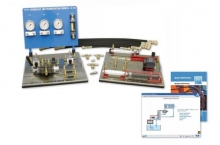 Item Number:BH-85Each Basic Hydraulics training system features standard industrial grade components. This attention to quality gives students experience they would normally only get on-the-job by helping them recognize industrial components and how to troubleshoot them more effectively. Components included with Basic Hydraulics are pre-mounted on circuit panels with silk-screened labels next to each, which facilitates ease of use and identification.
 -
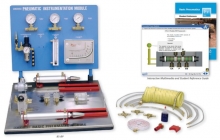 Item Number:85-BPAmatrol’s Basic Pneumatics training system (85-BP) introduces pneumatic principles through a combination of Amatrol’s top-flight multimedia curriculum with hands-on industrial pneumatic skill-building. Topics covered in this learning system include single-acting cylinder circuits, pressure vs. cylinder force, and flow control valves, while the panels can be used to practice skills such as connecting and operating a needle valve to control actuator speed.
 -
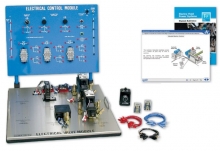 Item Number:85-EHThe Electro-Hydraulics training system includes an electrical control panel with relay control components and an electrical valve module with solenoid-operated hydraulic directional control valves and electrical/electronic sensors. These components will be used to study a variety of topics including electrical control systems, basic control devices, power devices, control relays, sequencing control, timer control, pressure control applications, and circuit applications.
 -
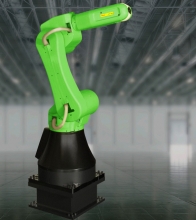 Item Number:CR-35iAFANUC’s new CR-35iA is the world’s first collaborative robot with a payload capacity of up to 35 kg. Fenceless, it opens a whole new world of possibilities. Working safely side by side with human operators, it is space as well as cost saving. And because inside it’s like any other FANUC robot, it operates like all FANUC robots. Certified to meet the requirements of ISO 10218-1:2011 and RIA/ANSI R15.06-2012, FANUC’s CR-35iA collaborative robot can work in a variety of applications alongside human workers including: machine tending, handling heavy payloads that require lift assist devices or custom equipment, higher payload mechanical assembly, palletizing or packing, and tote or carton handling.
 -
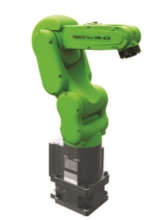 Item Number:CR-4iACR-4iA is a small collaborative robot with 4 kg payload
 -
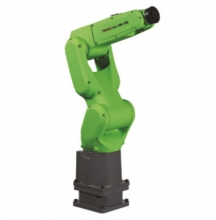 Item Number:CR-7iAThe FANUC CR-7iA is FANUC's newest collaborative robot resembles the LR Mate family. Painted green to show it's ability to work beside humans, you can expect the same reliability as FANUC's yellow robots. The CR-7iA is ideal for small part sorting and assembly, inspection, machine tending, and part delivery. It has a 7 kg payload, 717 mm reach, and is equipped with iRVision and Force Sensing. There are a variety of mounting options such as floor, wall, and ceiling.
 -
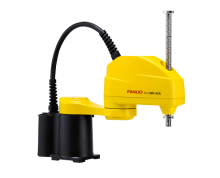 FANUC’s new SCARA robots are ideal for high-speed, precision applications such as assembly, pick and place, testing/inspection and packaging processes.
 -
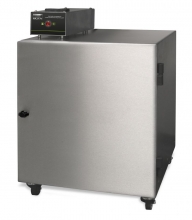
In the rare event that a burning ember or spark is drawn into the fume extraction unit, there is the possibility that debris in the filters could ignite. Although any resultant fire would typically be retained within the fume extraction unit, this would cause significant damage and in extreme circumstances, the risk may extend beyond the extraction unit. For processes where such risks have been identified, additional protection in the form of an in-line firebox is an additional precaution.
-
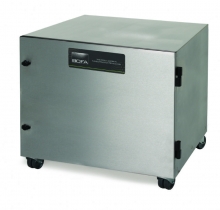
The BOFA inline pre-filter 1000 has been designed specifically for applications that generate high amounts of dust or particulate.
This inline filter unit is positioned alongside the main BOFA fume filtration system to increase the overall filter capacity and extend the life of the main filters. The DeepPleat DUO pre-filter incorporates a massive drop-out chamber within the filter, having a volume area of 15ltrs. Above the drop-out chamber but still within the housing there is a sealed 200mm deep pleat layer of F8 media giving a surface area in excess of 30 sq meters.