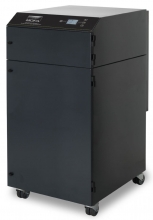
BOFA’s AD 1000 iQ high-end laser extraction system combines extremely large filter capacity with high airflow and pressure rates, making it the ideal choice for heavy-duty applications that generate large amounts of particulate and gaseous organic compounds.
Discover Why Instructors Nationwide Choose Amatrol
Monday, August 19, 2019
Every summer, Career and Technical Education (CTE) instructors nationwide gather at Amatrol’s headquarters to participate in our hands-on training sessions. These sessions empower educators with the tools and knowledge they need to deliver cutting-edge technical education in their classrooms.
Hear from Instructors Themselves
What makes Amatrol trainers and eLearning stand out? Don’t just take our word for it—hear directly from the instructors who use them daily. Watch the video below to discover how Amatrol solutions help educators:
- Engage students with hands-on learning experiences
- Build workforce-ready skills
- Deliver industry-standard technical training
Amatrol trainers and eLearning solutions are trusted by educators worldwide for their:
- Comprehensive Curriculum: Covering a wide range of technical skills, from automation to HVAC systems.
- Real-World Applications: Preparing students for today’s workforce with practical, hands-on training.
- Ease of Use: Intuitive designs and user-friendly resources make integration into classrooms seamless.
Instructor Training Sessions to see how Amatrol can transform your classroom.
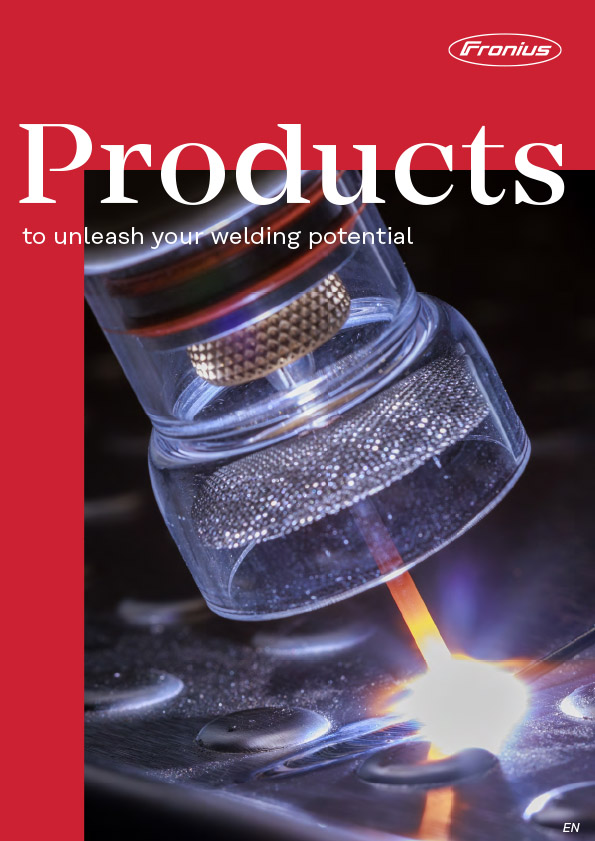
Fronius is a global leader in welding technology, renowned for its innovative solutions catering to various industries. With a focus on precision, efficiency, and quality, Fronius offers advanced welding systems that enhance productivity and ensure superior results for both manual and automated welding applications. Their products are designed to meet the rigorous demands of automotive, aerospace, and manufacturing industries, making Fronius a trusted partner for businesses looking to optimize their welding processes.
Fronius continuously pushes the boundaries of technology by integrating smart features, including digital connectivity and process monitoring, ensuring that its welding systems remain at the forefront of Industry 4.0 advancements. With a strong commitment to sustainability, Fronius also provides energy-efficient solutions that reduce operational costs and minimize environmental impact, aligning with the needs of modern industry professionals.
Welding Training for the Future
Friday, February 14, 2025
Hands-on training meets automation! The APT Mod-Weld is a cutting-edge robotic welding system designed for education and industry, integrating FANUC’s CRX-10 collaborative robot with Fronius TPSi 400 welding technology.
Why choose the Mod-Weld?
- Trains welders and programmers—bridging the gap between manual welding and automation
- Industry-approved technology—used in colleges, high schools, and industrial training centers
- Safety first—FANUC’s CRX stops instantly on impact, ensuring a secure training environment
- User-friendly interface—simplifies robotic programming for students and professionals
Want to see the APT Mod-Weld in action? Schedule a demo today!
Innovations in Technical Training & Workforce Development
Wednesday, February 14, 2024
Tech-Labs hosted an exclusive Open House, bringing together educators, industry leaders, and workforce development professionals to explore the latest advancements in hands-on technical training. The event featured live demonstrations, interactive training sessions, and expert discussions showcasing Industry 4.0, medical simulation, 3D printing, and automation technologies. Attendees had the opportunity to experience state-of-the-art training equipment, learn about industry-based certifications, and connect with peers dedicated to bridging the skills gap in today’s workforce.
One of the highlights was the hands-on training stations, where guests engaged with Amatrol smart factory trainers, Stratasys 3D printing solutions, and TacMed medical simulation systems. Industry experts provided insights into upskilling strategies, emerging trends in automation, and how schools and employers can integrate these technologies into their programs. The event reinforced our commitment to supporting technical education and workforce development, equipping students and professionals with the tools they need to succeed in high-demand careers.
Stay tuned for more training events and open house opportunities in 2025!
Levil Control Options for 5-Axis Mill and Mill-Turn
Experience unmatched performance, precision, and control with the FANUC CNC Series 31i-B5. This flyer provides a detailed overview of FANUC’s high-performance CNC system, designed to support even the most demanding machining operations.
Key Features Include:
- Up to 96 axes, 24 spindle axes, and 15 paths: Handle highly complex machining operations with ease.
- Integrated FANUC Dual Check Safety: Maximize operator safety and machine protection during every cycle.
- 3D Interference Check: Prevent collisions and downtime through real-time monitoring and collision control.
- High-Speed Smooth Tool Center Point Compensation: Ensure superior accuracy and finish on intricate parts.
- Integrated High-Speed PMC: Increase efficiency and cycle performance with faster processing.
- Preventive Maintenance Functions: Extend machine life with smart, built-in maintenance tracking.
- MANUAL GUIDE i: Simplify CNC programming with intuitive, conversational controls.
- Dynamic Compensation Functions: Maintain peak accuracy and control with real-time adjustments.
- Learning Control / High-Speed Cycle Machining: Minimize machining times while maintaining quality.
- Simultaneous 5-Axis Machining: Execute advanced geometries and tight tolerances with ease.
- Ultra High-Speed Processors & CNC Internal Bus: Optimize data handling and reduce latency.
- Optical Fiber Communication: Accelerate data transfer for smoother CNC system performance.
Download the brochure now to explore how the FANUC CNC Series 31i-B5 can enhance your shop floor or training environment.
Need help integrating FANUC controls into your curriculum or facility? Contact our team to learn more about automation and CNC training solutions.
The future of hands-on learning is already here.
Wednesday, November 10, 2021
What Makes the EDU MiLL Ideal for Classrooms?
Designed with education in mind, the EDU MiLL is easy to use and built to inspire. Its intuitive interface allows students of all levels—from beginners to aspiring engineers—to bring their ideas to life. Whether they’re 3D printing prototypes or milling precision parts, students gain hands-on experience with real industrial processes.
- Simple Operation: Students can confidently operate the EDU MiLL with minimal training.
- Project-Based Learning: Students take ownership of their learning by designing and fabricating their own projects.
- Material Exploration: The ability to work with various materials introduces students to real-world manufacturing challenges and opportunities.
- Future-Ready Skills: Exposure to 3D printing and CNC gives students a head start for careers in engineering, industrial design, and advanced manufacturing.
Creating Opportunities That Matter
For many students, machines like the EDU MiLL are their first exposure to the technologies driving modern industry. Thanks to this hands-on experience, they gain an understanding of real-world production challenges—learning not just how to design and create, but how to solve problems that arise during experimentation.
This foundation prepares them for success in college and beyond, where they can focus on refining solutions instead of learning everything from scratch.
Supporting the Next Generation of Innovators
Programs like the one at Treasure Coast High School wouldn't be possible without support from industry partners and organizations dedicated to advancing STEM and CTE education. Tools like the EDU MiLL don’t just teach—they transform classrooms into innovation labs that increase student engagement, spark creativity, and help young learners see the real-world impact of their education.
Want to bring advanced manufacturing into your classroom? Contact Tech-Labs today to explore EDU MiLL packages and classroom integration support.
Download the Levil Control Options Brochure
Enhance your CNC milling capabilities with the FANUC CNC Series 0i-MF integrated into Levil Technology's control systems. Discover a full suite of features designed to improve precision, optimize workflow, and deliver superior machining results.
Key Programming & Control Features:
- Helical Interpolation: Perform complex operations with precision and ease.
- Set-Up Guidance: Simplify machine setup with intuitive prompts.
- Jerk Control: Reduce mechanical stress and enhance surface finish.
- 3-D Manual Feed: Precise control in three axes for accurate alignment.
- Cutter Radius Compensation: Automatically adjust for cutter radius deviations.
- G54-G59 + 48 Work Offsets: Manage multiple work coordinates effortlessly.
- Polar Coordinate Command: Streamline circular and angular programming tasks.
- Tool Life Management: Monitor and maximize tool usage for cost savings.
- Scaling: Easily adjust program size for different workpiece requirements.
Advanced Machining Features:
- Tilted Working Plane: Machine angled surfaces with high precision.
- Nano-Smoothing: Achieve ultra-smooth finishes and exceptional accuracy.
- Program Restart: Resume operations mid-program with minimal downtime.
- 32-Character Program Names: Improve file organization and identification.
- Small-Hole Peck Drilling: Enhanced performance for delicate drill operations.
- Threading Cycle: Simplify internal and external threading processes.
- 400 Tool Offset Pairs: Store more tools and streamline tool management.
- Tool Length Measurement: Automate tool calibration for accurate machining.
Ready to elevate your CNC operations? Click below to download the full brochure and explore everything the FANUC 0i-MF control system has to offer with Levil CNC Milling Machines.
Need help integrating FANUC controls into your curriculum or facility? Contact our team to learn more about automation and CNC training solutions.
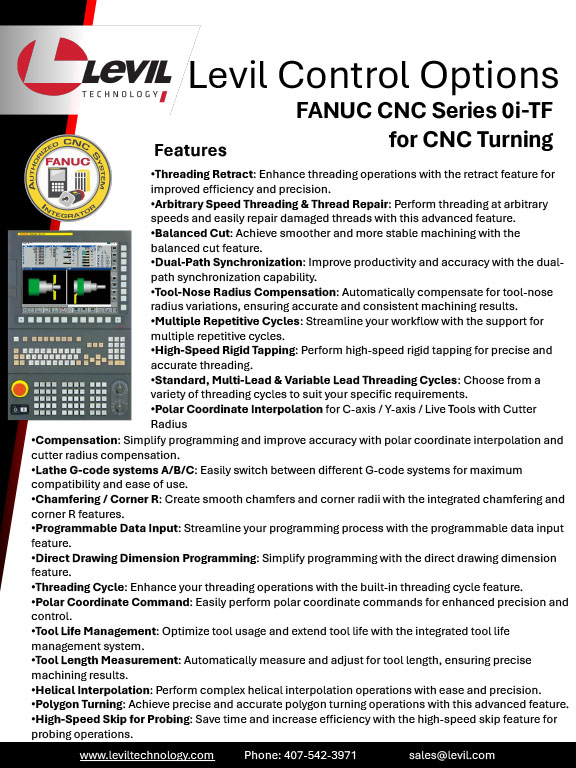
Download the Levil Control Options Brochure for CNC Turning
Boost productivity and precision in your turning operations with the FANUC CNC Series 0i-TF, integrated seamlessly with Levil Technology's advanced control systems. This brochure details powerful features that simplify programming, extend tool life, and deliver exceptional machining accuracy.
Key Turning Control Features:
- Threading Retract: Improve threading accuracy and efficiency.
- Arbitrary Speed Threading & Thread Repair: Perform threads at varying speeds and repair damaged threads with ease.
- Balanced Cut: Achieve smoother, vibration-free cutting operations.
- Dual-Path Synchronization: Coordinate dual-path lathes for optimized throughput.
- Tool-Nose Radius Compensation: Maintain dimensional accuracy automatically.
- Multiple Repetitive Cycles: Streamline complex programs with ease.
- High-Speed Rigid Tapping: Ensure precision with faster tapping operations.
- Standard, Multi-Lead & Variable Lead Threading Cycles: Select the threading cycle that best fits your needs.
Additional Advanced Features:
- Polar Coordinate Interpolation: For C-axis, Y-axis, and live tools with cutter compensation.
- Lathe G-code Systems A/B/C: Enhance flexibility and compatibility.
- Chamfering / Corner R: Simplify edge finishing operations.
- Programmable Data Input: Save time by inputting data directly.
- Direct Drawing Dimension Programming: Easily translate drawings into G-code.
- Threading Cycle: Built-in support for threading operations.
- Polar Coordinate Command: Execute polar commands efficiently.
- Tool Life Management: Extend tool life and reduce downtime.
- Tool Length Measurement: Automatic tool length calibration ensures accuracy.
- Helical Interpolation: Perform complex operations effortlessly.
- Polygon Turning: Create multi-sided profiles with precision.
- High-Speed Skip for Probing: Accelerate probing cycles and save machine time.
Ready to take your CNC turning operations to the next level? Click below to download the full brochure and explore the unmatched features of the FANUC 0i-TF controller integrated with Levil turning machines.
Need help integrating FANUC controls into your curriculum or facility? Contact our team to learn more about automation and CNC training solutions.
Tuesday, September 6, 2022
Precision Performance in a Small Footprint
This video showcases the impressive capabilities of the Levil Technology LMV-400, a compact yet powerful CNC milling machine engineered for high-precision 3-axis machining — with an optional upgrade to a 4th axis. Whether you're in a small shop, a school lab, or an advanced training center, the LMV-400 is designed to deliver exceptional results without sacrificing valuable space.
Who Is This Machine For?
- Technical education programs looking for real-world machining experience
- Manufacturing labs ready to upgrade their prototyping or small-batch production capabilities
- Training centers looking to integrate CNC machining and robotics into a single workflow
A Complete Training Tool for EV Charging Station Systems
Friday, March 21, 2025
Prepare students for the rapidly growing world of electric vehicles with the LJ Create Electric Vehicle Charging Stations Panel Trainer. This hands-on system allows learners to safely investigate how EV charging stations operate, communicate, and respond to faults—delivering authentic and immersive training experiences for technical education programs.
- AC & DC Charging Modes: Teach the differences between single-phase and three-phase AC charging and explore high-speed DC charging.
- Vehicle Communication Signals: Students observe and analyze CAN-based signals between the charger and the vehicle, learning how safety interlocks and operational commands are transmitted.
- Real-Time LCD Monitoring: A built-in touchscreen allows students to configure scenarios, monitor battery state of charge, temperature, energy cost, and power flow in real-time.
- Multi-Panel Integration: Compatible with LJ Create’s EV Systems and EV Batteries panels for expanded training scenarios and system interaction.
With 16 built-in fault options and a lockable fault insertion panel, instructors can simulate real-world problems across the charging station and in-car charging components. Students use multimeters, oscilloscopes, and critical thinking to diagnose faults, making it an excellent platform for authentic assessment and technician readiness.
- Onboard DC Charging
- Onboard AC Charging
- Charging Disconnect / Reset Simulation
- DC Charging with Multi-Panel Connection
- AC Charging with Multi-Panel Connection
- 240V 3-phase input simulating grid supply
- Switchable AC/DC charging operation
- Battery temperature and state-of-charge adjustment
- Customizable for different geographic regions
- Instructor control via passcode-protected fault panel
Ideal for high schools, community colleges, technical institutes, and workforce development programs preparing students for careers in EV technology, automotive repair, and renewable energy systems.
Whether you're setting up a new EV lab or expanding your current automotive training program, the LJ Create Electric Vehicle Charging Stations Panel Trainer delivers everything you need to provide relevant, hands-on education.
Contact us today to request a quote, schedule a demo, or speak with a product expert.
Pages
-
-
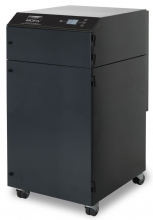
BOFA’s AD 1500 iQ is the ideal choice for heavy-duty applications that generate large amounts of particulate and gaseous organic compounds.
Performance has been further enhanced with the inclusion of several features including BOFA’s acclaimed iQ Operating System, making the AD 1500 iQ one of the most advanced systems available.
The iQ system takes performance and safety parameters to a new level and ensures that maintenance, downtime, and ownership costs are kept to a minimum.
-
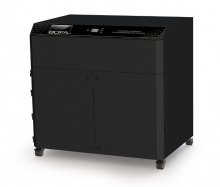 The AD 2000 iQ’s technology delivers superior and measurable performance, ensuring airflow and filtration is maintained even when particulates start to build up. It’s thanks to the vacuum/pressure which is three times greater than that of its predecessor, the AD 2000.
 -
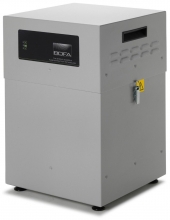
Low airflow entry-level laser fume extractor incorporating DeepPleat pre filter technology and large combined filter.
BOFA’s Advantage 250 fume extraction and filtration system has been designed to provide a cost-effective solution for light duty applications. This compact and extremely quiet system is ideal for use in schools, sign making workshops, small-scale industrial environments and light laser coding applications.
-
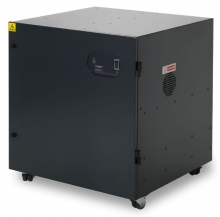
The Advantage Base C180 has been designed specifically for the GCC C180 laser engraver. The dimensions of the unit allow the C180 to fit perfectly onto the extractor, effectively doubling it up as a workstation. The unit is also offered with an onboard air compressor to provide the laser with its air assist requirements and comes complete with extraction hose kit and compressor link up on compressor models.
-
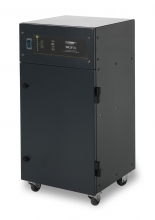
The compact system designed for small-scale industrial sites and light laser coding applications.
The AD Nano+ fume extraction and filtration system has been designed as a cost-effective solution for light to medium duty applications and is the ideal choice for installations where floor space is limited.
-
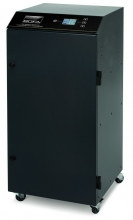
The AD Oracle iQ is our most technically advanced laser fume extractor, combining a powerful range of unique features into one compact unit.
This versatile unit can be used across a range of laser applications and the revolutionary auto-voltage sensing blower automatically self-adjusts to run on any voltage worldwide.
Our inline AD Cyclone has been designed to separate lower particle sizes during laser marking process.
-
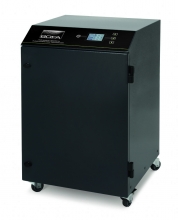 Introducing BOFA’s most technically advanced compact laser fume extractor. The AD Oracle SA iQ has been enhanced with BOFA’s iQ Operating System, RFA and ACF technology and packs a powerful range of unique features into one compact unit.
 -
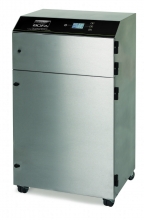
The AD PVC iQ extraction system has been designed to effectively deal with the corrosive nature of the fumes generated when lasering PVC materials.
The latest design specification now offers many of the features associated with our “Best in class” AD Oracle iQ model as standard but in addition all internally exposed surfaces have been coated to resist the corrosive nature of the fume and each unit is fitted with HCL and VOC sensors which continually monitor the exhaust air of the unit giving added safety assurance.
-
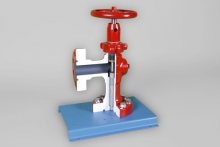 Item Number:295-711ADAC Worldwide’s Adjustable Oil Field Choke Valve Cutaway (295-711A) is a sectioned, specialty valve sample that supports training in the design features, internal components, and maintenance of adjustable choke valves used in oil and gas production operations.