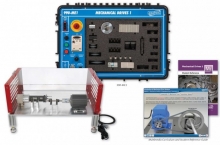
Amatrol’s Portable Mechanical Drives 1 Learning System (990-ME1) covers the fundamentals of mechanical transmission systems and applications, such as how to: operate, install, analyze performance, and design basic mechanical transmission systems using chains, vbelts, spur gears, bearings, and couplings. These fundamentals can be applied to a variety of applications within the automotive, agricultural, and power industries.
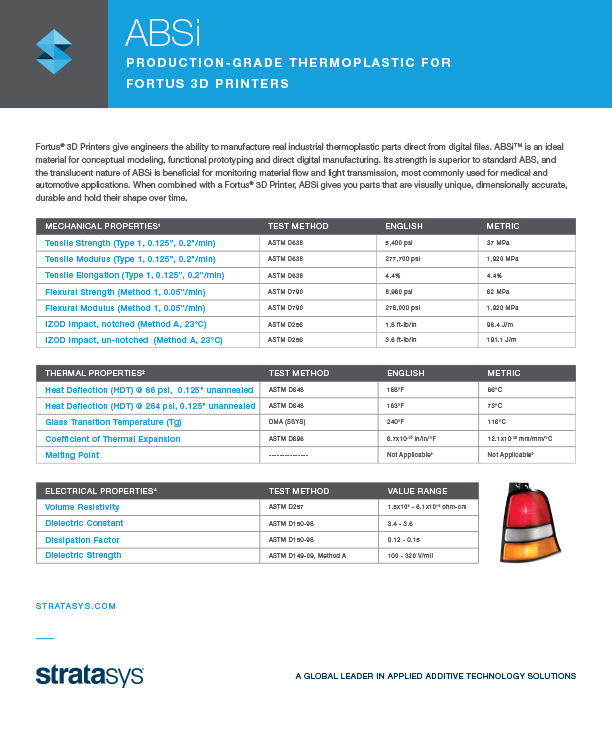
ABSi-P500 is an ABS type with high impact strength. The semi-translucent material used to build the FDM parts is USP Class VI approved. Most commonly used for automotive and medical applications. Available in three colors.
See How Paris Junior College Equips Students for Modern Manufacturin
Tuesday, January 28, 2025
At Paris Junior College, the Mechatronics program is setting a new standard in workforce training. Jeff Franklin, a Mechatronics Instructor, shares how the program combines mechanical, electrical, and computer systems to prepare students for modern industrial environments.
Students gain hands-on experience with advanced trainers, including Programmable Logic Controllers (PLCs), bridging the gap between theoretical knowledge and practical application. These real-world skills empower graduates to thrive in industries embracing Industry 4.0 technology.
- Comprehensive training in mechanical, electrical, and computer systems
- Hands-on experience with PLCs and other cutting-edge tools with Amatrol Training Solutions
- Customized solutions to support technical education programs
Are you ready to transform your school’s training program? Let us help you develop an industry-aligned curriculum and equip your students with the skills to excel in the modern workforce. Contact us today to get started!
Training Tomorrow’s Workforce at NTCC!
Monday, January 27, 2025
At the heart of Mount Pleasant, Texas, Northeast Texas Community College (NTCC) is addressing a critical need in the region: the demand for skilled maintenance workers. This need, identified by local businesses and industries, led NTCC to create a dynamic training program that bridges the skills gap and prepares students for high-demand careers in the area.
Why the Program Matters
Local industries have emphasized the growing demand for skilled labor in maintenance, automation, and related fields. NTCC’s program provides students with the expertise to meet this demand, helping industries thrive and ensuring sustainable economic growth in Northeast Texas.
Cutting-Edge Training with Amatrol
NTCC utilizes Amatrol’s comprehensive training solutions to ensure students gain practical, job-ready skills:
- Hands-On Equipment: Industry-standard trainers to simulate real-world applications.
- Virtual Trainers: Interactive tools for mastering concepts in a risk-free environment.
- Online Curriculum: Flexible, engaging coursework accessible anytime, anywhere.
Tech-Labs: Your Partner in Workforce Development
As a trusted distributor, Tech-Labs provides complete support to NTCC, including equipment installation, teacher training, and ongoing technical support. Together, we’re empowering educators to deliver top-tier technical training and students to succeed in rewarding careers.
Ready to learn more? Contact us today to explore how we can help your institution build innovative workforce training programs.
Hands-On Technical Training
Monday, March 17, 2025
At Diboll High School, Career and Technical Education (CTE) is more than just a class—it's a career-launching experience. Students gain real-world skills in engineering and manufacturing, ensuring they are ready for the jobs of tomorrow.
What Makes This Program Unique?
- Amatrol Training System – Industry-standard equipment for hands-on learning.
- FANUC Fenceless Cart – Safe, collaborative robotics training for automation careers
- SACA Certifications – Helping students gain industry-recognized credentials.
- Stratasys 3D Printing – Advanced additive manufacturing technology.
Experience These Innovations Firsthand! We are committed to equipping educators with the best training solutions. Ready to see these technologies in action? Schedule a visit to our Solutions Center and explore hands-on training options for your students.
College of the Mainland and Tech-Labs
Tuesday, November 19, 2024
Discover how College of the Mainland’s Industrial Careers Program, led by Program Manager Kermit Harris, is preparing students for success in refinery instrumentation and electrical careers. Using state-of-the-art training equipment and curriculum provided by Tech-Labs, students gain the knowledge and hands-on experience needed to confidently enter the workforce.
This program goes beyond education—it transforms lives. Hear the heartfelt story of how one student’s journey from uncertainty to a promising career showcases the power of technical training.
Key highlights include:
- Real-world training on advanced industrial trainers.
- Expert guidance that builds a solid foundation for refinery work.
- Stories of life-changing impact and career growth.
Join the movement. Learn how Tech-Labs can empower your training programs today!
Equipping Students with In-Demand Skills
Tuesday, January 28, 2025
Meridian Technology Center is setting the standard for hands-on technical training, equipping students and industry professionals with the skills needed to succeed in today’s workforce. Through our partnership, Meridian Tech utilizes cutting-edge Amatrol training systems to create an engaging and effective learning environment.
Why Amatrol?
- Comprehensive Training: Covers electrical systems, mechanical systems, fluid power, and process controls.
- Interactive Learning: Amatrol systems offer hands-on, real-world simulations to help students build confidence and competence.
- Industry Alignment: Training systems are designed to replicate real-world challenges, ensuring graduates are job-ready.
- Safety First: Built with safety in mind, making them ideal for students and professionals alike.
How Meridian Tech Uses Amatrol
Students in the Industrial Technology program gain hands-on experience with Amatrol’s training systems, mastering concepts such as programmable logic controllers (PLCs), fluid power, and computer science. The program also incorporates **SACA certifications**, providing students with industry-recognized credentials that open doors to high-demand careers.
Tech-Labs: Your Partner in Technical Training
As an authorized distributor of Amatrol products, Tech-Labs proudly supports schools like Meridian Technology Center by delivering advanced training tools and expert service. We partner with educational institutions and industries to bridge the skills gap, offering solutions that include:
- Hands-on technical trainers
- Interactive eLearning solutions
- Industry-based certifications
- Custom curriculum and implementation support
Ready to bring cutting-edge training solutions to your institution? Contact us today and let us help you build the workforce of the future!
Lucas-Nülle Trainers: The Key to EV Safety and Skills Development
Tuesday, January 28, 2025
Automotive technology is evolving, and training programs must keep up with industry demand. Schools like Oklahoma City Community College (OCCC) are leading the way by implementing Lucas-Nüelle’s advanced EV training systems. Their students graduate with industry-recognized certifications and hands-on skills, thanks to a program that partners with top automotive dealerships like General Motors, Toyota, and Honda.
What Makes Lucas-Nülle Trainers Special?
- Battery Trainer: Safely teach diagnostics and repairs for EV batteries in a controlled environment.
- ASE L3 Trainer: Simulate advanced EV diagnostics and fault scenarios to prepare students for the L3 certification.
- First Responder Trainer: Provide emergency responders with the knowledge they need to handle EV safety during critical situations.
These trainers make teaching essential skills students need easy while focusing on safety and real-world application. Whether you're preparing future technicians or emergency responders, Lucas-Nülle provides the tools for success.
Ready to see how this could work in your program? Contact us today to discuss how we can help your school implement Lucas-Nülle training systems.
Building the Future of Manufacturing
Friday, November 22, 2024
Oklahoma State University-Oklahoma City (OSU-OKC) is setting a new benchmark for advanced manufacturing education through its innovative FAME program. With a vision to create industry-ready professionals, the program combines academic rigor, hands-on training, and real-world industry experience.
What is the FAME Program?
The Federation for Advanced Manufacturing Education (FAME) provides a world-class workforce development model that combines strong technical training, manufacturing core competencies, and intensive professional practices. Through intentional hands-on experience, FAME prepares students to excel in the modern manufacturing industry and meet the evolving demands of employers.
Originally created by Toyota, FAME transitioned to the Manufacturing Institute in 2019 for national scaling. As the workforce development and education partner of the National Association of Manufacturers, the Manufacturing Institute now manages FAME USA, which continues to grow with the support of over 450 manufacturers nationwide.
At OSU-OKC, the FAME program integrates this proven model, offering students a unique opportunity to work in industry while attending school. This approach ensures graduates are equipped with the skills, experience, and professional mindset to thrive in advanced manufacturing careers.
By leveraging industry partnerships and cutting-edge equipment provided by Tech-Labs, OSU-OKC’s FAME program is shaping the future of manufacturing education and talent development in Oklahoma and beyond..
Industry Partnerships for Success
The program requires students to work in industry while completing their coursework. This mutual commitment ensures students receive both theoretical and practical knowledge, creating a workforce that’s ready to contribute from day one.
Tech-Labs: Empowering Education
Tech-Labs has played a crucial role in OSU-OKC's success. By providing state-of-the-art equipment and ongoing support, Tech-Labs has helped establish an environment where students can learn using tools that mirror what they will encounter in industry. From setup and training to sustained service, Tech-Labs has been a vital partner in OSU-OKC’s journey to excellence.
Impactful Outcomes
The FAME program is already making a difference in the lives of students like Tyler Connor, who values the hands-on experience and the opportunity to make an impact in the field. The program is not just about teaching skills but also about instilling servant leadership and creating a legacy of innovation.
Contact us to learn more about our advanced training solutions!
Partnering with CMU Tech to Help Shape Tomorrow’s Workforce
Monday, January 27, 2025
We proudly support CMU Tech's mission to empower students with the skills they need to succeed in high-demand industries. By providing cutting-edge training solutions, we help CMU Tech connect students to life-changing opportunities.
CMU Tech’s innovative programs, led by industry experts like Brigitte Sundermann and Robbi Grimm, offer hands-on education in mechatronics, advanced manufacturing, and workforce development. With our training solutions, their students are fully equipped to excel in the workforce.
Why Choose X-Cal?
- We deliver industry-leading training systems tailored to real-world needs.
- Our solutions empower educators to provide hands-on, career-focused programs.
- We’re committed to creating pathways for workforce readiness and growth.
Ready to enhance your training programs? Contact Us today to explore how our solutions can help your institution shape the future of education.
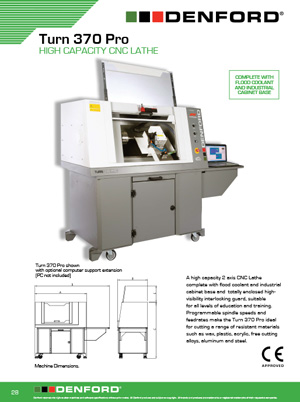
Download the Turn 370 Pro Brochure
Turn 370 Pro is a high-capacity, 2-axis CNC lathe designed for education and industrial training environments. Featuring flood coolant, an industrial cabinet base, and programmable spindle speeds, the Turn 370 Pro handles a wide range of resistant materials, including aluminum and steel.
Key Features
- Totally enclosed high-visibility interlocking guard
- Flood coolant and industrial cabinet base
- Quick Change Toolpost and Holder
- VR CNC Turning Operating Software and QuickTURN 2D Design Software
Ready to Elevate Your Training Program? Contact us today to learn how Denford's Turn 370 Pro can integrate into your curriculum or production floor!
Pages
-
 Item Number:990-ME1
 -
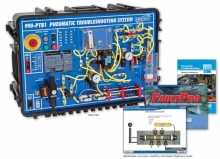 Item Number:990-PTB1This system’s value is twofold: first it provides vital training experience for learners and professionals that will perform industrial maintenance, installation, and troubleshooting on pneumatic systems used in real-world automation machinery, packaging equipment, pharmaceutical applications, chemical handling tasks, and more. Secondly, this system features industry-standard valves, switches, and gauges all within a portable learning system that can be placed on a conference room table, shop floor desk, or practically anywhere when training space is limited.
 -
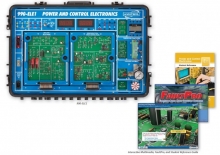 Item Number:990-ELE1Amatrol’s Portable Power and Control Electronics Learning System (990-ELE1) covers how to operate, adjust, and troubleshoot electronic components, circuits, and systems used in machine applications. The portable learning system allows for on-the-go exploration of the fundamental concepts of industrial power and control electronics, such as measuring temperature, speed, and analog signals. The 990-ELE1 provides skills and topics that will be invaluable in industries like manufacturing, transportation, energy, and construction.
 -
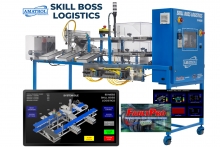 Item Number:95-MSB3The Amatrol Skill Boss Logistics offers a performance-based assessment for evaluating the skills and competencies of future supply chain automation technicians.
 -
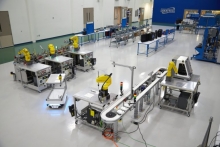 The Smart Factory is a fully connected and flexible manufacturing system that connects its physical systems, operational information, and human assets to control manufacturing, maintenance, inventory, and supply chain operations.
 -
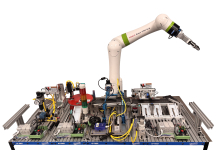 Item Number:87-TMSTrain future technicians with Amatrol’s Tabletop Smart Factory and Cobot-Integrated Mechatronics systems—hands-on, compact training with real industrial components, Rockwell Automation integration, and FANUC CRX collaborative robotics.
 -
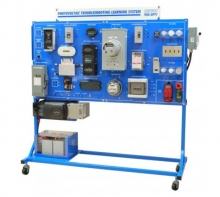 Item Number:950-SPT1The 950-SPT1 teaches students connection, operation, programming, and troubleshooting of AC/DC and grid-connected systems. The curriculum is PC-based multimedia that is highly interactive. It allows students to use the learning style best for them – reading, listening, visual. The 950-SPT1 supports the NABCEP (North American Board of Certified Energy Practitioners) test for Certified Solar Photovoltaic System Installer.
 -
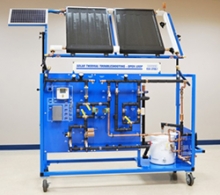 Item Number:950-STOL1The 950-STOL1 includes all components needed to develop hands-on, job ready skills: all solar specific components as well as balance of system items. The learning system contains a mobile workstation, multiple component circuit panels, a solar collector unit, fault insertion, PC-based multimedia student curriculum, and instructor’s assessment guide. An optional sun simulator is available to facilitate classes indoors when outdoor conditions do not support solar heating.
 -
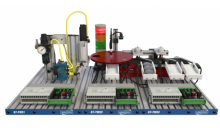 Item Number:870-PTAB82Amatrol’s Tabletop Mechatronics is a portable, durable, affordable learning system that forms a fully automated line to teach real-world mechatronics skills. This learning system features a pick-and-place, gauging, and inventory station, all of which fit on a standard tabletop!
 -
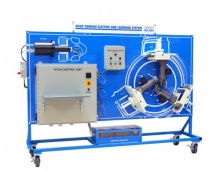 Item Number:950-TEH1Amatrol's 950-TEH1 Turbine Electric Hub Troubleshooting Learning System teaches students adaptive skills for wind turbine operation, adjustment, and troubleshooting in a wide variety of situations. The 950-TEH1 allows students to develop and practice component, subsystem, and system-level skills. The fully functional, scaled-down utility-scale turbine electric hub. The Turbine Electric Hub Troubleshooting Learning System includes...