DAC Worldwide's Hydraulic Sequence Valve Cutaway (773-213) is a sectioned hydraulic sequence valve example with a two-stage balanced piston design, which incorporates a commonly-encountered valve type manufactured by an industry leader.
MINDS-i Education kits are all made out of the same basic pieces, with helpful step by step instructions. The MINDS-i platform consists of simple beams and connectors that lock together to make a durable chassis.
WebLytics retains the ease-of-use, affordability, application focus and accessibility that defines every OnRobot product. WebLytics installs quickly and is readily expandable and future-proofed for new robots and tools as they become available. The WebLytics server can be deployed on a shop floor’s local network or added to a virtual network that connects to the robot cell. Collected data is stored locally on the WebLytics server and WebLytics’ built-in web server is always accessible from the shop floor network or from anywhere in the world via secure HTTPS connection.
Learn how to properly apply a K9 tourniquet with our comprehensive TacMed™ K9 Tourniquet overview.
Ensuring workplace security is essential in the modern digital era. Comprehensive knowledge of both overall security protocols and IT measures is vital for safeguarding employees, assets, and confidential data. Overlooking security measures can result in theft, fraudulent activities, and data breaches, posing significant risks to both individuals and organizations. This course aims to instruct employees on optimal strategies for upholding workplace security and defending against cyber threats.
Learning Objectives
The primary goal of this course is to teach individuals how to identify security breaches in their workplace. The user will learn how to:
- Identify security breaches
- Respond to security breaches
- Be aware of their surroundings
- Practice proper safety procedures
- Safeguard against digital threats
The Security Hazard Awareness simulation is ideal for employees or supervisors in general industries.
A scaffold serves as a temporary framework enabling workers to carry out tasks at elevated levels. They are essential in construction, maintenance, planned shutdowns, and various other high-altitude work activities.
The United States Bureau of Labor Statistics (BLS) reports that scaffold-related incidents cause approximately 60 fatalities and 4,500 injuries annually. Falls from scaffolds contribute to around 25% of fatal falls from all work surfaces, leading to an estimated 60 deaths each year due to scaffold-related accidents.
Learning Objectives
The primary goal of this course is to teach workers safe work procedures to follow when working on or around scaffolding. Users will learn:
- How to identify common scaffolding hazards
- Preventing accidents on the job site
- The role of the scaffolding competent person
- How to avoid common injuries’ associated with scaffolding
- Protocol for working around scaffolding
The scaffolding awareness simulation is ideal for current and future employees or supervisors who work in or around scaffolding on a construction site.
Annually, thousands of individuals in the US suffer injuries caused by electricity. At times, workers may come across equipment and circuits that are powered or pose a risk of being energized during their tasks. Without adequate precautions, an arc flash incident can occur.
An arc flash, also known as a flashover, is an electrical discharge or explosion arising from a connection through the air to the ground or another voltage phase within an electrical setup. For instance, this happens when a wire comes into contact with an earthed system. Working near or within electrical panels and systems heightens the risk of exposure to an arc flash, necessitating extreme safety measures.
Learning Objectives
The primary goal of this course is to teach workers safe work procedures while performing work activities around electrical areas. The user will learn:
- The proper locking out and tagging out electrical equipment
- How to properly do a Live – Dead – Live check
- Practices that can eliminate or minimize electrical hazards
- The proper use of electrical test equipment
- Electrical fundamentals
- Properly managing arc flash risks
- Electrical safety Personal Protective Equipment (PPE)
The simulation is ideal for personnel working in and around hazardous electrical areas.
Seeking innovative training solutions for the oil and gas sector? Dive into Hard Hat VR, a revolutionary immersive training platform crafted specifically for the high-stakes realm of oil and gas. Step away from outdated methods and embrace Virtual Reality tailored to enhance safety and efficiency in your industry!
Why Hard Hat VR for Oil & Gas?
- Realistic Oilfield Scenarios: Experience training in lifelike oil rigs and refineries without real-world risks.
- Industry-Tailored Interactivity: Engage in hands-on, industry-relevant training for lasting impact.
- Cost-Effective Solutions: Slash training expenses and minimize operational interruptions.
- Enhanced Safety Protocols: Prepare your workforce for real hazards within a controlled VR environment.
Who Benefits?
- Oil and Gas Companies
- HSE (Health, Safety, and Environment) Professionals
- Technical and Vocational Institutes
Maximize Your Gains
- Heightened Training Efficiency
- Elevated Safety Standards on the Field
- Enhanced Knowledge Retention Among Employees
The Smart Automation Certification Alliance (SACA) recently hosted an exclusive Process Control Technical Work Group meeting at Endress+Hauser headquarters in Greenwood, Indiana. The meeting brought together experts in the process control and instrumentation industry to help validate certification standards for process control in areas such as process control systems, process control troubleshooting, and smart process instrumentation.
In this video, SACA Executive Director Jim Wall and Endress+Hauser Director of Workforce Development Nicole Otte discuss the importance of industry experts providing input on the skills and competencies needed for today’s smart manufacturing workforce. Collaboration with industry experts is essential to create nationally-recognized, occupation-driven certifications that will ensure that future workers have the skills employers need most.
According to Wall, “The whole goal of having the standards and certifications program is to help schools and colleges and other training providers develop and expand programs that include these new technologies, so that we get more people with these skills into the workforce.”
Ladder safety is a key aspect of fall prevention. According to the CDC, 81% of fall injuries, which is the leading source of fatalities among construction site workers, involve the use of ladders. As such, it’s important to remember and follow ladder safety best practices. Ladder Training isn’t considered a necessity by law, but the importance is often overlooked. The HSE recommends that anyone using ladders needs to be competent and carrying out officially certified training is one way to do this. Teaching the basics of ladder health and safety can help prevent potential injuries and inform others on how to identify if a ladder is a potential risk.
Learning Objectives
The primary goal of this course is to teach workers safe work procedures to follow when using ladders in a work environment. The user will learn:
- To identify hazards associated with ladder use
- How to select the correct ladder for the job
- How to inspect a ladder for defects
- How to practice proper safety procedures
- To see the consequences of improper actions
The Ladder Safety simulation is ideal for employees or supervisors who work in or around work environments that utilize ladders.
Oakland Community College (OCC), situated in Auburn Hills, MI, stands as one of FANUC America's esteemed 1,500 partner institutions. At OCC, a specialized robotics and automated systems technology program equips students for roles in the realm of industrial automation. The automation lab at OCC houses an extensive array of FANUC robots renowned worldwide for their application in material handling, welding, palletizing, and machine tending across various industries. Graduates from OCC, having acquired certifications or degrees, emerge primed for careers in industries employing robotics and automation technology.
This video spotlights OCC's steadfast dedication to nurturing individuals into adept professionals in advanced automation, paving the way for prosperous career trajectories. Through firsthand accounts from multiple students, viewers gain insights into their educational journey and future aspirations. The central message underscores the demand from employers seeking individuals capable of bridging the skills gap. OCC's program not only supplies skilled workers to meet industry demands but also assists its graduates in securing fulfilling and rewarding career paths.
Pages
-
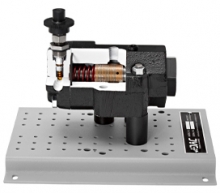 Item Number:773-213
 -
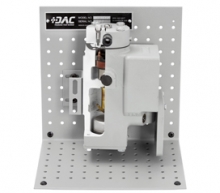 Item Number:273-840DAC Worldwide’s I/P Transducer Cutaway (273-840) is a detailed I/P converter cutaway that depicts a common current-to-pressure transducer used within industrial process control systems. This common piece of pneumatic control hardware is found in manufacturing facilities, petrochemical plants, refineries, and other similar industrial, commercial, and oil and gas applications.
 -
 Amatrol's IGNITE: Mastering Manufacturing program teaches Industrial Internet of things (IIoT) & Industry 4.0 skills required for today's manufacturing careers.
 -
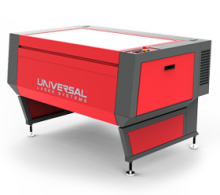 Item Number:ILS12.150DThe ILS12.150D is a free-standing platform with a materials processing envelope of 48" x 24" x 12" or 13,824 in³. The dual laser platform supports a power range of 10 to 150 watts (up to 75 watts with one 10.6µm CO2 laser; up to 150 watts with a second 10.6µm CO2 laser). The ILS12.150D also supports a single 9.3µm laser at 30, 50 or 75 watts (If a 9.3µm CO2 laser is installed, the maximum 10.6µm laser is 75 watts).
 -
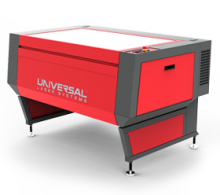 Item Number:ILS12.75The ILS12.75 is a free-standing platform with a materials processing envelope of 48" x 24" x 12" or 13,824 in³. The single laser platform supports either one 10.6µm CO2 laser (10 to 75 watts) or one 9.3µm CO2 laser (30, 50 or 75 watts).
 -
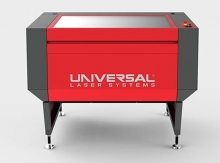 Item Number:ILS9.150DThe ILS9.150D is a free-standing platform with a materials processing envelope of 36” x 24” x 12” or 10,368 in³. The dual laser platform supports a power range of 10 to 150 watts (up to 75 watts with one 10.6µm CO2 laser; up to 150 watts with a second 10.6µm CO2 laser).
 -
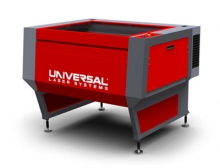 Item Number:ILS9.75The ILS9.75 is a free-standing platform with a materials processing envelope of 36” x 24” x 12” or 10,368 in³. The single laser platform supports either one 10.6µm CO2 laser (10 to 75 watts) or one 9.3µm CO2 laser (30, 50, or 75 watts).
 -
 Item Number:iLSEach base can hold up to 12 modules to accommodate multiple applications and/or multiple students while still fitting through a standard doorway.
 -
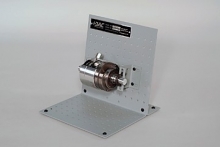 Item Number:200-2202DAC Worldwide’s In-Line Friction-Type Pneumatic Clutch Cutaway (200-2202) depicts a sectioned industrial pneumatically-activated, spring-return, in-line, friction-type clutch for use in a classroom and laboratory training related to mechanical drives.
 -
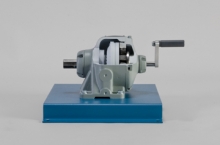 Item Number:205-230In-line helical gear reducers have a unique set of benefits. They’re useful in higher horsepower applications where long-term efficiency is more important than initial costs, which can be higher for this type of gear reducer (although in-line reducers are less expensive than parallel shaft reducers).