A full cutaway view of the valve body exposes the complete internal design characteristics, flow path, valve stem, compressor connection, backseat, front-seat, packing and gauge port, while retaining its operational characteristics.
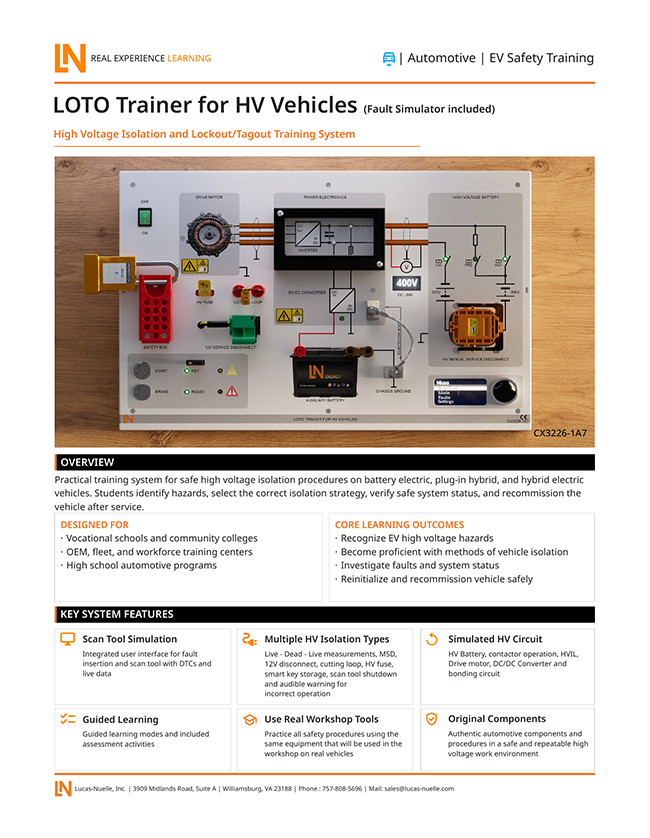
The Lucas-Nuelle CX3226-1A7 is a practical training system for teaching safe high-voltage isolation and lockout/tagout procedures for battery-electric, plug-in hybrid, and hybrid-electric vehicles.
Students learn to identify electrical hazards, choose an appropriate isolation method, verify that the vehicle is safe to service, investigate simulated faults, and recommission the vehicle after work is complete.
Designed For
- Vocational schools and community colleges
- OEM, fleet, and workforce training centers
- High school automotive programs
- Recognize electric-vehicle high-voltage hazards
- Become proficient with methods of vehicle isolation
- Investigate faults and system status
- Verify safe working conditions
- Reinitialize and recommission vehicles safely
Scan Tool Simulation
An integrated interface supports fault insertion and simulates a scan tool with diagnostic trouble codes and live data.
Multiple High-Voltage Isolation Methods
Training covers Live-Dead-Live measurements, manual service disconnects, 12-volt disconnection, cutting loops, high-voltage fuses, smart-key storage, scan-tool shutdown, and warnings for incorrect operation.
Simulated High-Voltage Circuit
The system represents an HV battery, contactor operation, high-voltage interlock loop, drive motor, DC/DC converter, and equipotential bonding circuit.
Guided Learning
Guided instruction modes and assessment activities reinforce correct procedures and decision-making.
Use of Real Workshop Tools
Students practice safety procedures using the same types of equipment used when servicing real vehicles.
Original Components
Authentic automotive components support safe, repeatable high-voltage training.
- High-voltage awareness
- High-voltage isolation methods
- Lockout/tagout procedures
- Safe-work-condition verification
- Diagnostic trouble code and fault investigation
- Safety decision-making
- Complete vehicle isolation and lockout/tagout
- Scan-tool shutdown
- Incorrect isolation procedure
- Procedure-validation failure
- Vehicle recommissioning verification
- High-voltage interlock fault investigation
- Equipotential bonding fault investigation
- Residual voltage after isolation
- Active insulation fault
- Unknown contactor status
- Collision-damaged vehicle assessment
- Authorization-limit recognition
- Unsafe-work-condition recognition
Some exercises may require separate testing equipment.
- Four-wire Kelvin milliohmmeter with a test current of at least 200 mA, resolution of 1 mOhm or better, and a pass threshold below 0.1 ohm
- Insulation and voltage tester or megohmmeter supporting 500 V and 1,000 V DC, a range of at least 200 MOhm, and a CAT III or CAT IV 1,000 V rating
Pages
-
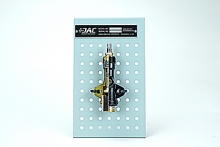 Item Number:373-195
 -
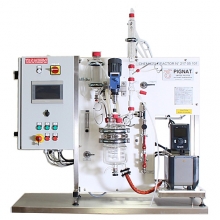 Item Number:REA/3000Pignat's Computerized Chemical Reactor (REA/3000) is a one-gallon, controlled, multi-purpose, jacketed glass reactor system specifically designed for education and research. This unit supports the study of controlled batch chemical reactions and allows students to operate and experience reaction processes and modify the variables upon which the reactions being studied are based.
 -
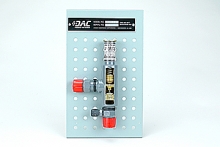 Item Number:373-519This Condenser Pressure Control Valve (KVR) Cutaway provides a full cutaway view of a control valve that exposes the complete internal components and operating principles.
 -
 The Confined Space Entry simulation is ideal for future employees or supervisors who work in or around work environments that utilize confined spaces. This course will equip learners with the knowledge and skills necessary to safely enter and work in confined spaces.
 -
 The Construction Electrical Hazard awareness simulation is ideal for future employees and supervisors who work in or around active construction sites. The primary goal of this course is to teach workers safe work procedures to follow while working around electrical hazards in a construction environment.
 -
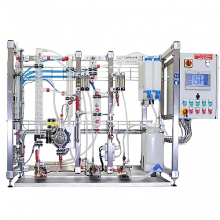 Item Number:DVI/100Pignat's compact, benchtop Continuous Distillation trainer (DVI/100) allows students to operate a continuous distillation process. Expertly crafted glass components show the flow of fluid through the complete process in both liquid and gaseous phases. With an efficient startup time, steady-state operation can be reached in 20 minutes.
 -
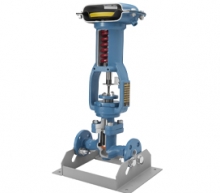 Item Number:255DAC Worldwide’s Control Valve Cutaway, .75"-1.5" (255) supports realistic classroom training in the operation, construction, and maintenance of a pneumatically-operated control valve used in industrial process systems. The complete internal configuration of the valve’s actuator and body is exposed and showcased through carefully-planned sectioning and color-coding.
 -
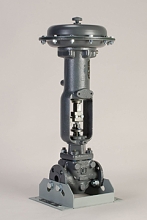 Item Number:255KDAC Worldwide's dissectible (255K) is a realistic, hands-on valve sample that supports realistic classroom training in the disassembly, inspection, and reassembly of a full-size industrial diaphragm-actuated control valve.
 -
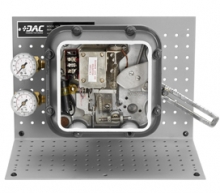 Item Number:273-810DAC Worldwide’s Control Valve Positioner Cutaway (273-810) is a detailed, sectioned, professionally-crafted control valve positioner cutaway that depicts a common control valve positioner.
 -
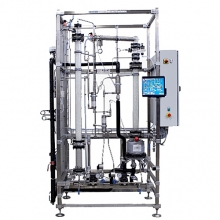 Item Number:ABR/3000The regeneration process is observed on the second column, which is continuously fed. An energy‐saving heat exchanger is placed between the two columns to optimize energy usage. With this unit, students are able to study various control loops, determine mass balance, and process efficiency. The unit also includes a LabView monitoring system.