Amatrol’s High School Learning Systems create the need for students to want to learn math and science – they can’t interact with the exciting technology without it. Learning is interactive and challenging, keeping them engaged and wanting to do more. The math and science so desperately needed for 80% of jobs today is a natural outcome.
Simlog Off-Highway Truck Personal Simulator's Complete Haul Cycle 2 Module has trainees drive the truck from the dumping zone to the wheel loader. After the truck is fully loaded by the loader, return the dumping zone, dump the load and drive away.
Simlog's Reach Lift Truck Personal Simulator: Slalom 1 Forward Driving - pick up the load, drive forward through the slalom course, and place the load on the floor at the target position defined by a red outline.
Simlog's Reach Lift Truck Personal Simulator: Slalom 2 - Pick up the load, drive in reverse through the slalom course, and place the load on the floor at the target position defined by a red outline.
Simlog's Reach Lift Truck Personal Simulator: Selective Pallet Racks 2, Standard Aisles - Working with selective pallet racks, pick up each marked load and place it at its target position, using the overhead map for guidance. The loads and their target positions are mixed among the various heights of rack shelves.
Simlog's Reach Lift Truck Personal Simulator: Selective Pallet Racks, Narrow Aisles - working with selective pallet racks, pick up each marked load and place it at its target position, using the overhead map for guidance. The loads and their target positions are mixed among the various heights of rack shelves.
Simlog Mining Truck Personal Simulator - Corridor Driving Module: Trainees drive the truck through the corridor to the target. The trial ends when the truck is over the target and parked (gear in Park or Neutral with parking brake engaged).
Simlog Mining Truck Personal Simulator - Complete Haul Cycle 1 Module: Trainees drive the truck from the dumping zone to the rope shovel and position the truck under the dipper (the shovel's horn will sound when the truck is appropriately positioned).
After the truck has been fully loaded (the shovel's horn will sound when the loading is complete), return to the dumping zone, dump the load and drive away.
Simlog Electric Rope Shovel - Following Grade Module: make the rightmost dipper tooth follow the line (the cursor changes color as the tooth moves away from the line). The trial ends when the tooth reaches the end of the line, and the operator activates the horn.
Simlog Electric Rope Shovel - Single-Pass Digging Module: Fill the dipper by digging at the rock face. The trial ends when there is material in the dipper, the dipper is no longer in contact with the rock face, and the operator activates the horn.
Simlog’s Bulldozer Personal Simulator puts students behind the controls of a medium-sized Bulldozer as they experience the reality of a typical construction site. The virtual work site features dynamic terrain with life-like dirt pushing and spreading.
Training efficiency is delivered through a modular Instructional Design that teaches real skills for productive and safe equipment operations in the field.
Pages
-
-
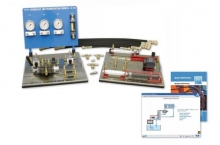 Item Number:BH-85Each Basic Hydraulics training system features standard industrial grade components. This attention to quality gives students experience they would normally only get on-the-job by helping them recognize industrial components and how to troubleshoot them more effectively. Components included with Basic Hydraulics are pre-mounted on circuit panels with silk-screened labels next to each, which facilitates ease of use and identification.
 -
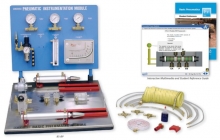 Item Number:85-BPAmatrol’s Basic Pneumatics training system (85-BP) introduces pneumatic principles through a combination of Amatrol’s top-flight multimedia curriculum with hands-on industrial pneumatic skill-building. Topics covered in this learning system include single-acting cylinder circuits, pressure vs. cylinder force, and flow control valves, while the panels can be used to practice skills such as connecting and operating a needle valve to control actuator speed.
 -
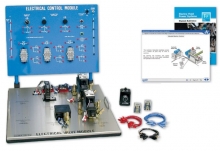 Item Number:85-EHThe Electro-Hydraulics training system includes an electrical control panel with relay control components and an electrical valve module with solenoid-operated hydraulic directional control valves and electrical/electronic sensors. These components will be used to study a variety of topics including electrical control systems, basic control devices, power devices, control relays, sequencing control, timer control, pressure control applications, and circuit applications.
 -
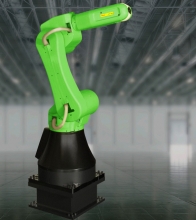 Item Number:CR-35iAFANUC’s new CR-35iA is the world’s first collaborative robot with a payload capacity of up to 35 kg. Fenceless, it opens a whole new world of possibilities. Working safely side by side with human operators, it is space as well as cost saving. And because inside it’s like any other FANUC robot, it operates like all FANUC robots. Certified to meet the requirements of ISO 10218-1:2011 and RIA/ANSI R15.06-2012, FANUC’s CR-35iA collaborative robot can work in a variety of applications alongside human workers including: machine tending, handling heavy payloads that require lift assist devices or custom equipment, higher payload mechanical assembly, palletizing or packing, and tote or carton handling.
 -
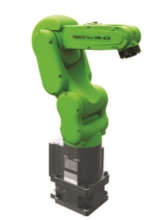 Item Number:CR-4iACR-4iA is a small collaborative robot with 4 kg payload
 -
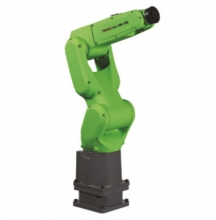 Item Number:CR-7iAThe FANUC CR-7iA is FANUC's newest collaborative robot resembles the LR Mate family. Painted green to show it's ability to work beside humans, you can expect the same reliability as FANUC's yellow robots. The CR-7iA is ideal for small part sorting and assembly, inspection, machine tending, and part delivery. It has a 7 kg payload, 717 mm reach, and is equipped with iRVision and Force Sensing. There are a variety of mounting options such as floor, wall, and ceiling.
 -
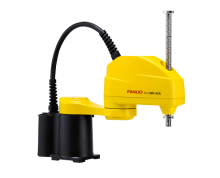 FANUC’s new SCARA robots are ideal for high-speed, precision applications such as assembly, pick and place, testing/inspection and packaging processes.
 -
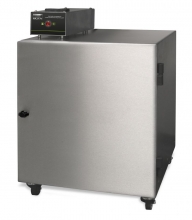
In the rare event that a burning ember or spark is drawn into the fume extraction unit, there is the possibility that debris in the filters could ignite. Although any resultant fire would typically be retained within the fume extraction unit, this would cause significant damage and in extreme circumstances, the risk may extend beyond the extraction unit. For processes where such risks have been identified, additional protection in the form of an in-line firebox is an additional precaution.
-
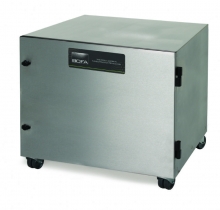
The BOFA inline pre-filter 1000 has been designed specifically for applications that generate high amounts of dust or particulate.
This inline filter unit is positioned alongside the main BOFA fume filtration system to increase the overall filter capacity and extend the life of the main filters. The DeepPleat DUO pre-filter incorporates a massive drop-out chamber within the filter, having a volume area of 15ltrs. Above the drop-out chamber but still within the housing there is a sealed 200mm deep pleat layer of F8 media giving a surface area in excess of 30 sq meters.