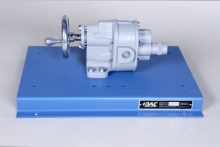
DAC Worldwide’s External Gear Pump Dissectible (275-135) is a realistic industrial pump for use in classroom and laboratory training relating to process pumps.
DAC Worldwide's electrical & electronics training systems offer a variety of hands-on training solutions. Whether you need to teach basic electrical skills, transformer wiring, frequency drives, or motor wiring, we have what you need.
Harnessing electrical power is one of the most important achievements in the history of humanity. Its applications throughout the industry are too numerous to list, but understanding the components used to perform these applications in specific fields is vital for anyone looking for careers in those industries.
DAC Worldwide's Electrical & Electronics training products help learners answer important questions, such as:
- How is an electrical circuit wired?
- What does a circuit breaker do?
- How do you program a PLC?
DAC Worldwide has the Electrical & Electronics teaching aids necessary to build up competencies of future and current workforce members. The available Electrical & Electronics training aids are an integral part of many DAC Worldwide programs, such as Advanced Manufacturing, Chemical Manufacturing, Marine, Military, Oil & Gas, and Power Generation.
DAC Worldwide's heat transfer & steam training systems offer hands-on skills in areas such as boiler tube maintenance, heat exchangers, and rotary kiln maintenance. Contact DAC Worldwide today for more information!
DAC Worldwide's mechanical drives training systems offer a variety of hands-on training solutions or provide an ideal skill assessment tool. These systems provide hands-on skills for gears, bearings, vibration analysis, alignments, and more.
DAC Worldwide's process control and instrumentation products provide hands-on training for multiple tasks including those associated with flow, level, and temperature controlled processes.
DAC Worldwide's pumps, compressors, and valves training systems offer a variety of hands-on training solutions. Including systems that teach control valves, pump packing, maintenance, and flange bolt torquing, these systems are perfect additions to your training program.
DAC Worldwide's electrical & electronics cutaways offer an inside look at many components commonly found in the workplace to enhance the learning experience. These cutaways include transformers, AC Motors, generators, and many more.
DAC Worldwide's fluid power cutaways offer an inside look at many components commonly found in the workplace to enhance the learning experience. These cutaways include various valves and other devices commonly used in fluid power applications.
DAC Worldwide's heat transfer & steam cutaways provide learners with a better understanding of how these components perform their function. This is extremely valuable in reinforcing training and prepares them for more advanced topics.
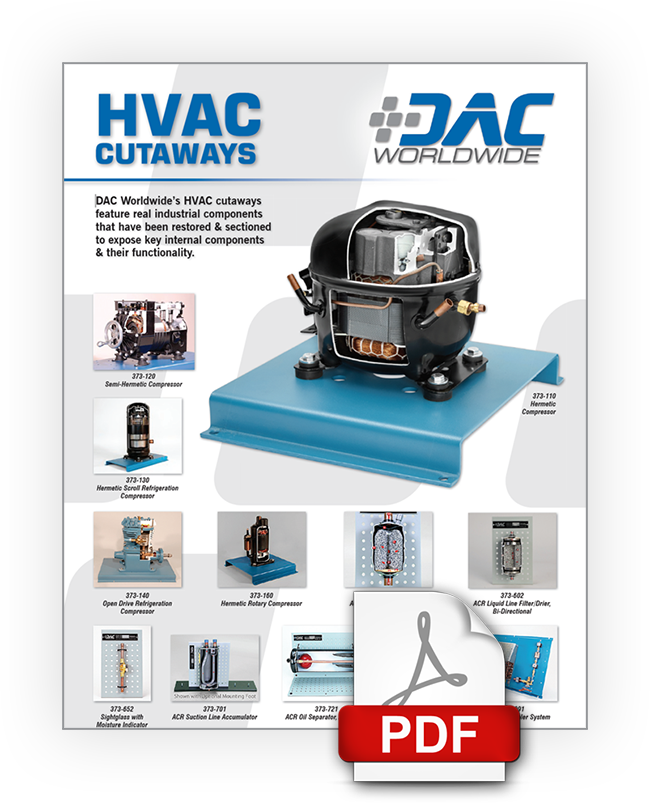
DAC Worldwide's HVAC cutaways enhance learning by providing a look inside components found in most HVAC systems including compressors, solenoids, and valves. On many of DAC Worldwide's cutaways, functionality has been retained and a hand wheel provided to demonstrate low-speed manual operation. Each cutaway is mounted on a modular, heavy-gauge steel baseplate and support assembly. For industrial training relevance, common models by well-known manufacturers are chosen. View the pdf to see the cutaway trainers available.
Pages
-
 Item Number:275-135
 -
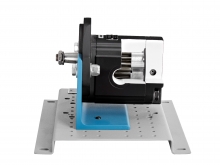 Item Number:778-110DAC Worldwide’s Hydraulic Gear Pump Cutaway, External-Type (778-110) is an industrial hydraulic gear pump that has been sectioned to reveal the inner workings of this component. This exposure allows learners to understand the design, operation, construction, and maintenance of this common process pump used throughout the industry.
 -
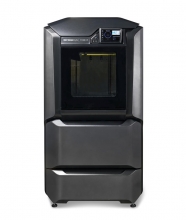 Item Number:F190CR and F370CRIt starts with high-strength composite materials, but the Stratasys composite-ready F Series offers much more. More materials, more reliability – more capability than other similar printers.
 -
 The Fall Protection awareness simulation is ideal for future employees and supervisors who will work in or around construction environments. The primary goal of this course is to teach workers safe procedures when working at heights on a construction site.
 -
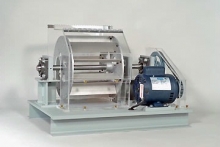 Item Number:202-000DAC Worldwide’s Fan Balancing Trainer (202-000) is a precision assembly allowing for convenient demonstration and training in fan balancing and other vibration analysis-related topics. Based on the design of a typical squirrel cage fan, this heavy-duty aluminum device allows for assembly in a variety of configurations, creating a broad range of balancing scenarios.
 -
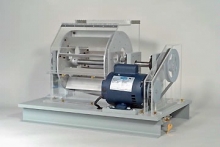 Item Number:202-PACDAC Worldwide’s Fan Balancing Training System Plus (202-PAC) is a hands-on industrial training system that allows learners to gain experience with fan balancing to achieve maximum fan efficiency and stability.
 -
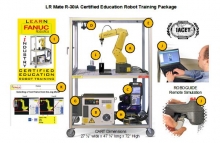 A large working envelope with a reach of 717 mm, and a payload of 7 kg, combine to provide solutions for high productivity handling and assembly applications.
 -
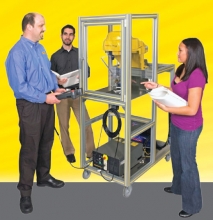 With FANUC Robotics’ CERT Program, new courses and project based activities prepare students for a workplace that will be increasing in robotic automation. The Fanuc Robotics Education Training Cart incorporates the compact M-1+A robot housed in a self contained, mobile enclosure. The lightweight parallel-link M-1+A robot is designed for small part handling, high speed picking and assembly applications.
 -
 FANUC America now offers Certified Education Robot Training (CERT) to qualifying High Schools, Community Colleges, and Universities. With FANUC America's educational robots, students can learn to utilize the latest automation technology while applying Science, Technology, Engineering, and Math. Industrial robotics training in the classroom can safely be achieved through the CERT program. FANUC America provides the necessary training to the instructor as well as a curriculum to introduce students to robot applications.
 -
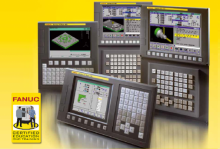 The FANUC CNC Certified Education Training program is an industry certification available to qualified high schools, community colleges, and universities. The program certifies instructors at educational institutions to train their students to program, set-up and operate CNC machine tools using FANUC’s control platform.