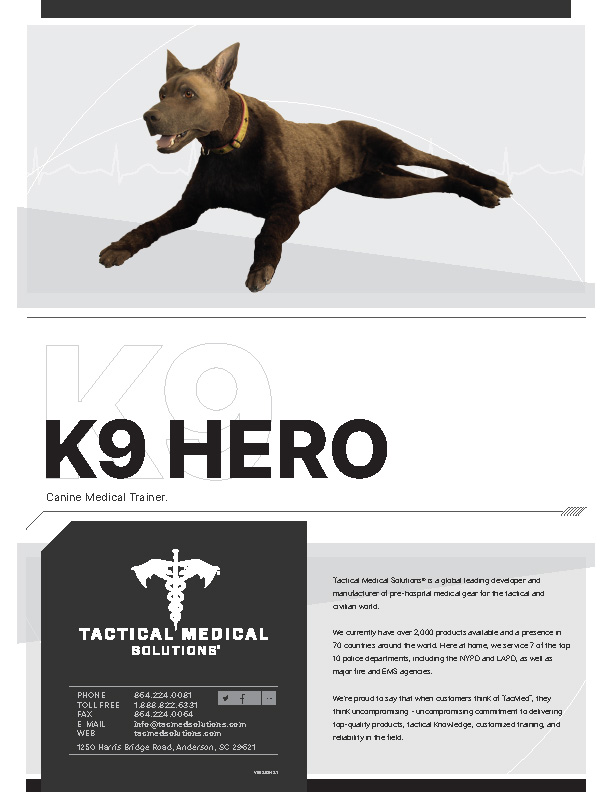
Every individual should be trained with hands-on skills for basic workplace safety. With our Enterprise Safety package, you get seven modules that allow learners to put safety training into practice in a safe, virtual environment. The training modules include Confined Space, LOTO, Fall Protection, AED, CPR, Fire Suppression, and Virus Vision.
The TraumaFX® Canine Medical Trainer (K9 HERO) is a full-body medical trainer for Operational Canine First Responders, Military Working Dog (WMD) handlers, Veterinarians, and veterinary technicians. All training sites are realistic to replicate actual medical procedures' look, feel, and function. The head of the simulator has been hand-sculpted to mimic a Belgian Malinois, and the exterior is covered in durable, non-staining synthetic fur. K9 HERO allows learners to perform critical life-saving tasks such as maintaining an airway, needle decompression/thoracocentesis, hemostasis, IV insertion, Intraosseous (I/O) infusion, Cardiopulmonary Resuscitation (CPR), tracheostomy, and bandaging.
Immerse yourself in the world of hybrid and electric vehicles with our training system "MobileTrain - Diagnosis and installation of charging stations"! Are you ready to shape the future of vehicle charging and become an expert in the installation and maintenance of charging stations? Then this training system is just right for you!
With the rise of electric vehicles, the demand for competent specialists who are familiar with the installation and maintenance of charging stations is also increasing. Our training system offers you the opportunity to delve deep into the subject matter and learn all about the structure, function and safety aspects of charging stations. From identifying different types of charging stations and connection cables to assessing energy and performance requirements - we cover all the important topics.
You will not only learn about the technical and legal requirements for installation, but also how to connect charging stations in a technically correct way and test communication signals. You will also gain an insight into the protective equipment for charging stations and learn how to carry out maintenance and safety tests in accordance with national regulations. And the best thing? You can start/stop charging with an RFID card or NFC-enabled smartwatch/phone and troubleshoot potential problems on your own.
Our training system is mobile, compact and practical, making it easy to transport and set up. It includes a real practical wallbox with a high-speed charging capability of 22KW (240V 50 Amp) and enables practical commissioning and customer instruction. Thanks to various interfaces such as Ethernet, RS485, Wi-Fi and Bluetooth, networking is possible and you can perform actual vehicle charging with a maximum power of 22KW.
This training system has been specially developed for training electricians and includes not only the wallbox as an individual device, but also the installation of the supply line and its safety devices. It is very practice-orientated and prepares you to professionally inspect, test and maintain the electrical infrastructure for charging stations.
Are you ready to become part of the EV revolution and take your skills to the next level? Then sign up now for our "MobileTrain - Diagnosis and Installation of Charging Stations" training system and become a sought-after expert in the world of electric vehicles!
This video demonstrates a vertical down weld on the MOD-WELD system with a FANUC CRX Cobot.
This video goes over how to start up the CRX MOD-WELD System.
This video demonstrates a simple weld on the MOD-WELD system with a FANUC CRX Cobot.
This video demonstrates how to tack weld on the MOD-WELD system with a FANUC CRX Cobot.
This video demonstrates multi-directional welding on the MOD-WELD system with a FANUC CRX Cobot.
This video demonstrates weaving on the MOD-WELD system with a FANUC CRX Cobot.
This video demonstrates circular welding on the MOD-WELD system with a FANUC CRX Cobot.
This video demonstrates putting the FANUC CRX Cobot into a zero/shutdown position on the MOD-WELD.
Pages
-
-
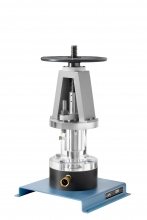 Item Number:250-000DAC Worldwide’s Valve Packing Training System (250-000) is a detailed replica of a six-inch gate valve, equipped with a backseat, which facilitates the proper removal and installation of packing.
 -
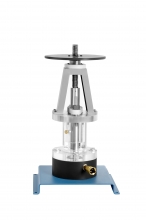 Item Number:250-PACIndustrial maintenance technicians must be familiar with a wide variety of valves used throughout many different types of industries. A common task technicians encounter on the job is replacing valve packing to prevent valves from leaking.
 -
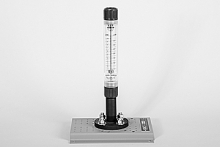 Item Number:272-718DAC Worldwide's Dissectible Variable Area Flow Meter (272-718) (rotameter) allows for close visual inspection of a common PVC and acrylic liquid flow meter to better understand its function, design characteristics, operation, and possible maintenance.
 -
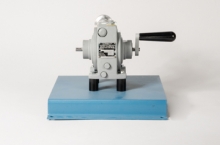 Item Number:205-290DAC Worldwide's Variable Speed Gear Reducer Cutaway is a sectioned variable speed industrial gear reducer. Speed variations allow for continuous variable-ratio speed adjustment of mechanical systems are still regularly encountered in industrial applications due to their durability, dependability, and consistency of operation.
 -
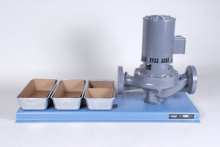 Item Number:275-128DDAC Worldwide’s Vertical Centrifugal Pump Dissectible (275-128D) is an actual industrial centrifugal pump assembly that allows for realistic training in the field or bench-top disassembly, inspection, and reassembly of a vertical centrifugal pump.
 -
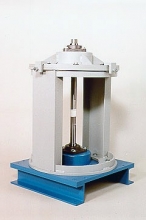 Item Number:207-000DAC Worldwide’s Vertical Coupling/Shaft Alignment Training System (207-000) is a heavy-duty, precision learning system that allows for convenient, realistic training in shaft alignment. When paired with a variety of hands-on exercises, the system creates a complete performance-based course in the maintenance of shaft alignment.
 -
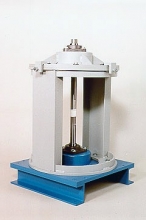 Item Number:207-PACDAC Worldwide’s Vertical Coupling/Shaft Alignment Training System Plus (207-PAC) is a heavy-duty, precision learning package that allows for convenient, realistic training in shaft alignment. When paired with a variety of hands-on exercises, the training system creates a complete performance-based course in the maintenance of shaft alignment.
 -
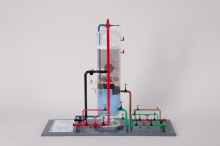 Item Number:295-115DAC Worldwide's Vertical Cross-Flow Separator Model (209) is a highly-detailed scale model of a common vertical cross-flow separator used throughout the oil and gas industry, as well as other processing, production, and refining applications.
 -
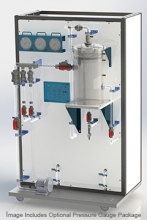 Item Number:295-101DAC Worldwide’s Vertical Separator Trainer (295-101) is a reduced-scale, three-phase vertical separator that mimics its real-world counterpart by using alternate production stream components, refined oil, air, and water.