This Open Drive Refrigeration Compressor Cutaway provides a full cutaway view of the compressor body that exposes the complete internal components and operating principles.
Simlog Replica Controls for the Backhoe Loader Personal Simulator features industrial strength components suitable for both table-top mounting and Simlog’s Operator Chair. If you are a Simlog customer, you may be able to re-use the Replica Controls that you already have.
Replica Controls begin with two industrial USB joysticks. There are a total of 8 push-buttons for the thumb, plus a trigger, to let you change the viewpoint by looking to the left/right, looking up/down, and by changing the viewing mode during the simulation. The USB electronics are built right into the base, so the joystick can be connected directly to your PC. Simlog also offers table-top mounting brackets to bring the joysticks down from table-top height to the sides of an ordinary chair to mimic better the positioning of real controls in the cabin of real heavy equipment.
To complete the Replica Controls, add the Logitech “G920 Driving Force Racing Wheel” consisting of a steering wheel, a three-pedal unit, and the Transmission Control Lever suitable for many other Personal Simulators. (The Logitech “Driving Force Shifter” can also be used.)
Simlog’s new Backhoe Loader Personal Simulator puts you at the controls of a backhoe loader at work in a typical construction site. Both SAE and ISO joystick patterns are available, and changing the point of view during the simulation is easy with joystick buttons, keyboard function keys and mouse controls.
Nine Simulation Modules of increasing level of difficulty begin by teaching basic skills and coordination in early exercises such as “Bucket Positioning” and “Stockpiling”. Later Simulation Modules culminate skills training with exercises such as exposing buried utilities with the backhoe bucket on "Buried Utilities - Perpendicular Excavation."
Simlog’s new Backhoe Loader Personal Simulator puts you at the controls of a backhoe loader at work in a typical construction site. Both SAE and ISO joystick patterns are available, and changing the point of view during the simulation is easy with joystick buttons, keyboard function keys, and mouse controls.
Nine Simulation Modules of increasing level of difficulty begin by teaching basic skills and coordination in early exercises such as “Bucket Positioning” and “Stockpiling”. Later Simulation Modules culminate skills training with exercises such as exposing buried utilities with the backhoe bucket on "Buried Utilities - Perpendicular Excavation."
Simlog’s new Backhoe Loader Personal Simulator puts you at the controls of a backhoe loader at work in a typical construction site. Both SAE and ISO joystick patterns are available, and changing the point of view during the simulation is easy with joystick buttons, keyboard function keys and mouse controls.
Nine Simulation Modules of increasing level of difficulty begin by teaching basic skills and coordination in early exercises such as “Bucket Positioning” and “Stockpiling”. Later Simulation Modules culminate skills training with exercises such as exposing buried utilities with the backhoe bucket on "Buried Utilities - Perpendicular Excavation."
Simlog’s Wheel Loader Personal Simulator Version 2 puts you at the controls of a modern wheel loader equipped with either a bucket or forks, at work in a typical construction site with a dump truck or flatbed truck.
Simlog’s Wheel Loader Personal Simulator Version 2 puts you at the controls of a modern wheel loader equipped with either a bucket or forks, at work in a typical construction site with a dump truck or flatbed truck.
Simlog’s Wheel Loader Personal Simulator Version 2 puts you at the controls of a modern wheel loader equipped with either a bucket or forks, at work in a typical construction site with a dump truck or flatbed truck.
Simlog’s Wheel Loader Personal Simulator Version 2 puts you at the controls of a modern wheel loader equipped with either a bucket or forks, at work in a typical construction site with a dump truck or flatbed truck.
Simlog’s Hydraulic Excavator Personal Simulator puts students at the controls of a modern, sophisticated machine in interaction with an articulated dump truck. The virtual work site features dynamic terrain with life-like material.
Training efficiency is delivered through a modular Instructional Design that teaches real skills for productive and safe equipment operations in the field.
Simlog's Hydraulic Excavator Personal Simulator puts trainees at the controls of a modern Hydraulic Excavator in interaction with an articulated dump truck. Using life-like dynamic terrain combined with our intelligent instructional design, your trainees are guided through a series of 12 skill-building Simulation Modules.
Pages
-
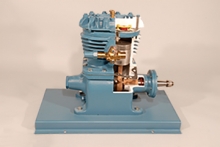 Item Number:373-140
 -
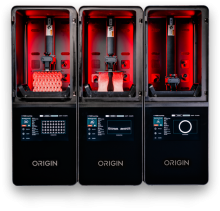 A transformative 3D printer enabling mass production of end-use parts in a diverse range of high-performance materials. Achieve industry-leading accuracy, consistency, detail and throughput with the P3™ Programmable Photopolymerization technology.
 -
 Item Number:TFX-T-PWT-1The Packable Wound Trainer (PWT) is a ruggedized task trainer with a simulated hemostatic wound. It is composed of lifelike synthetic skin and includes a hemostatic wound, providing trainees with the ability to execute critical patient treatment, such as wound packing and compression training. The PWT functions as a stand-alone skills station during the crawl phase of training.
 -
 Amatrol’s Packaging Program combines maintenance technician training courses with world-class simulators featuring industry-standard components so that learners are prepared for successful careers within the packaging industry.
 -
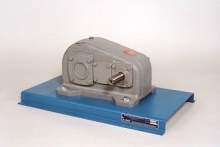 Item Number:205-140The Parallel-Shaft Helical Gear Reducer Dissectible is a sturdy unit mounted on a 7-gauge, formed-steel baseplate with provision for bench-top, workstation, or storage rack mounting.
 -
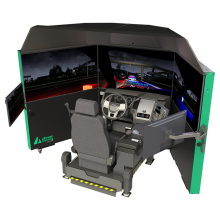 PatrolSim™ 8 is an advanced law enforcement driving simulator that delivers immersive, scenario-based training to improve officer decision-making, pursuit management, and emergency vehicle operations in a safe virtual environment.
 -
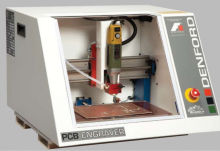 Learn about the PCB Engraver, a compact 3-axis CNC solution built for precision PCB manufacturing and educational training environments.
 -
 With its appealing technical specifications, peel 3d is the most affordable professional-grade 3D scanner for reverse engineering.
 -
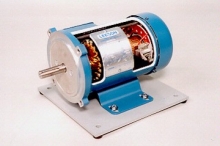 Item Number:273-940This DC permanent magnet motor cutaway supports industrial training activities related to electric motor types, as well as repair and troubleshooting. A fractional horsepower, industrial-duty motor is modified for training purposes.
 -
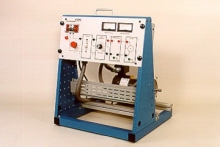 Item Number:417-000DAC Worldwide’s Permanent Magnet DC Motor Training System (417-000) provides a starting point for understanding a common, widely-used industrial induction motor.