

Train learners on real-world process instrumentation with Amatrol’s T5600, featuring Endress+Hauser components for flow, level, pressure, temperature, HART, Bluetooth, and Ethernet communications.
Download the VMC 1300 Pro Brochure
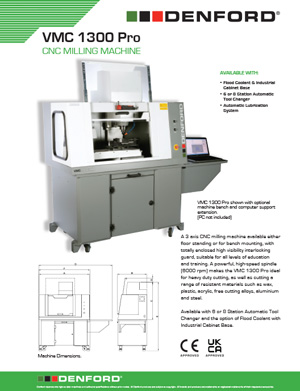
VMC 1300 Pro is a robust 3-axis CNC milling machine designed for advanced education and light industrial training. With its high-speed spindle, automatic tool changer options, and full enclosure for safety, it’s the perfect machine for hands-on technical skills development.
Highlights
- High-speed 6000 rpm spindle
- Optional 6- or 8-station automatic tool changer
- Flood coolant system and industrial cabinet base available
- Includes VR CNC Milling Software and QuickCAM 2D Design Software
Ready to elevate your CNC milling capabilities? Download the VMC 1300 Pro brochure to discover all the features and options available for technical training programs!
PCB Engraver is a compact 3-axis CNC machine designed for PCB manufacturing and precision engraving across copper boards, plastics, and acrylics. Its floating head technology allows accurate machining even on uneven surfaces, making it ideal for educational and training programs.
Highlights
- Floating head technology for high-precision engraving
- Gerber and DXF file import capability
- Ideal for copper, plastics, and acrylic engraving
- Includes powerful, user-friendly operating software
Take your PCB prototyping to the next level! Download the PCB Engraver brochure and see how it supports technical education and hands-on training.
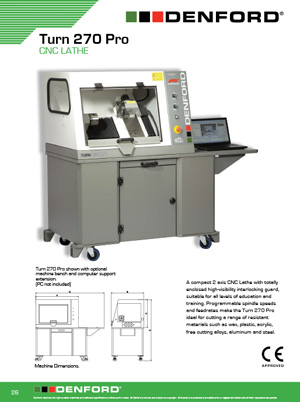
The Denford Turn 270 Pro is a compact 2-axis CNC lathe designed for educational environments. With an enclosed high-visibility guard and intuitive software, it offers a safe and effective introduction to CNC turning. This lathe is perfect for machining wax, acrylic, aluminum, and other free-cutting materials, making it ideal for technical education and training centers.
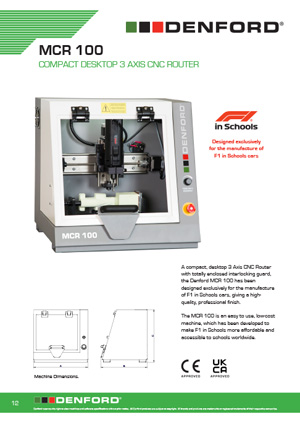
MCR-100 is a compact 3-axis desktop CNC router developed exclusively for F1 in Schools car manufacturing. Its enclosed design, easy-to-use software, and high-speed performance make it the ideal solution for STEM-focused programs and technical education initiatives worldwide.
Highlights
- Designed specifically for F1 in Schools competitions
- Compact, desktop-sized footprint
- Fully enclosed guarding for student safety
- Includes QuickCAM Pro Software with Car Wizard
Inspire the next generation of engineers! Download the MCR-100 brochure and explore affordable CNC technology for your STEM program.
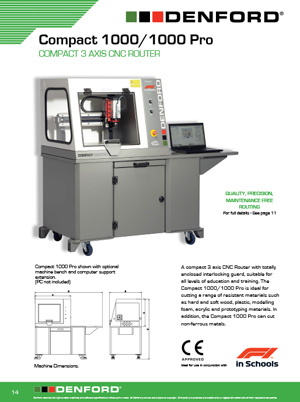
Compact 1000 and Compact 1000 Pro are 3-axis CNC routers built for education, light manufacturing, and rapid prototyping. Featuring a fully enclosed design and optional non-ferrous metal cutting on the Pro model, these routers deliver precision and safety for a wide range of training environments.
Highlights
- Fully enclosed safety guard with interlocks
- Pro version offers non-ferrous metal cutting
- VR CNC Milling Software and QuickCAM 2D Design Software included
- Available machine bench and 4th axis options
Expand your training capabilities today! Download the Compact 1000/1000 Pro brochure for full details and specifications.
Router 2600 and Router 2600 Pro are high-capacity, 3-axis CNC routers perfect for technical training programs. With a fully enclosed design, large table capacity, and optional non-ferrous metal cutting (Pro model), these machines deliver flexibility for a wide range of education and prototyping applications.
Highlights
- Large table capacity for larger projects
- Fully enclosed high-visibility guard for safe training
- Pro version supports non-ferrous metal cutting
- Includes VR CNC Milling Software and QuickCAM 2D Design Software
Boost your CNC training capabilities! Download the Router 2600/2600 Pro brochure and find the right fit for your classroom or lab.
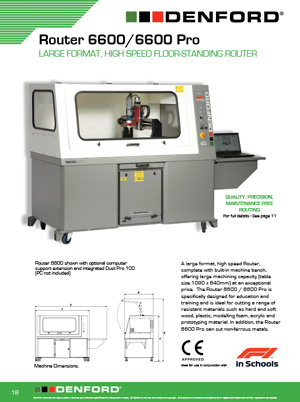
Router 6600 and Router 6600 Pro are large-format, high-speed CNC routers specifically designed for educational programs and training centers. With a built-in bench, expansive machining area, and optional non-ferrous metal capabilities (Pro model), they’re ideal for handling complex, full-scale projects.
Highlights
- Large-format table for full-size projects
- Fully enclosed guarding and integrated bench
- Pro version supports non-ferrous metal cutting
- Includes VR CNC Milling Software and QuickCAM 2D Design Software
Bring large-scale CNC training to life! Download the Router 6600/6600 Pro brochure and explore how it fits into your advanced manufacturing curriculum.
 We are proud to partner with NeuroMaker, a global leader in STEM education innovation. Designed by engineers and educators from Harvard and MIT, NeuroMaker solutions combine cutting-edge technology with hands-on learning experiences to inspire the next generation of creators, scientists, and problem-solvers. Their flagship product, the NeuroMaker HAND 2.0, empowers students to explore robotics, prosthetics, programming, and biomedical engineering through real-world applications.
 Train for Precision in Tight Indoor Environments
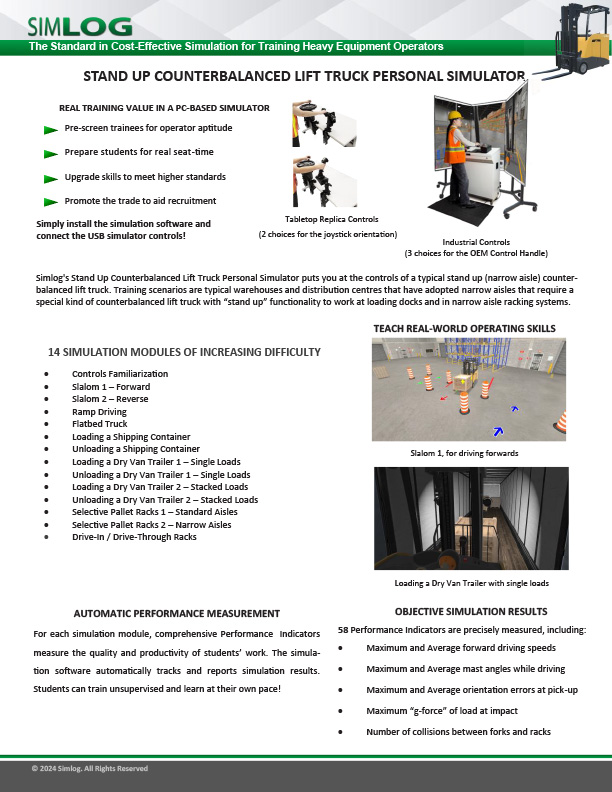
This simulator focuses on electric, stand-up counterbalanced lift trucks, widely used in manufacturing and shipping facilities. With Simlog’s simulation technology, operators can practice turning, loading, and stacking in confined spaces—all while building the muscle memory and judgment needed for safe forklift operation. It's a cost-saving solution that helps new hires ramp up faster and more confidently.
Friday, November 29, 2024
The Slalom 2 – Reverse module is designed to enhance backward driving control and forklift maneuverability. This advanced exercise pushes operators to refine their steering accuracy, mirror usage, and spatial awareness under pressure.
In this video, viewers see how trainees navigate a series of reverse turns, simulating the kind of tight path navigation required in real-world loading zones. The simulator builds the confidence and control needed to reverse safely in active warehouse environments.
Pages
-
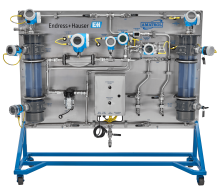 Item Number:T5600
 -
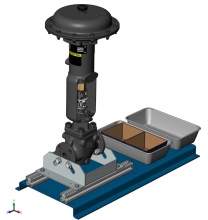 Item Number:255KEDAC Worldwide's Enhanced Control Valve Dissectible (255KE) is a realistic, hands-on valve sample that supports realistic classroom training.
 -
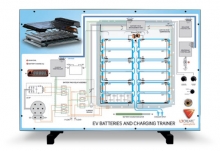 Item Number:741-01Students will investigate how battery temperature and efficiency is effected at differing levels of charge. Instructors can demonstrate regenerative charging and more with this on-vehicle charging systems panel trainer.
 -
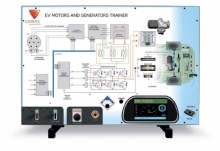 Item Number:742-01This trainer is focused on motor speed control and uses a variety of sensors to feedback on motor position and speed. Electrical circuit operation is illustrated under different conditions – Throttle, Brake, and Drive Select.
 -
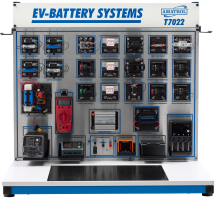 Item Number:T7022Train the next generation of EV workforce with the Amatrol T7200 EV Battery Technology Training System. Hands-on skills in safety, diagnostics, disassembly, and troubleshooting prepare learners for electric vehicle careers.
 -
 Item Number:271KThe Extended Dissectible Valve Assortment features actual industrial valves that industrial maintenance technicians will commonly encounter on the job.
 -
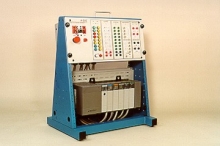 Item Number:464EDAC Worldwide’s Extended PLC Trainer (464E) is a multi-use training platform allowing for instruction related to the programming and use of industrial PLCs.
 -
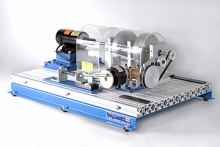 Item Number:203EIndustrial maintenance technicians must learn to operate, maintain, troubleshoot, and repair a wide variety of mechanical systems used to manufacture products. One of the key diagnostic tools technicians will use during preventive maintenance as well as to maintain optimum efficiency is vibration analysis.
 -
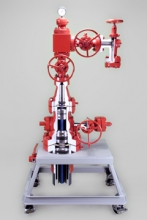 Item Number:295-795EDAC Worldwide’s Extended Wellhead Assembly Cutaway (295-795E) depicts the complete assembly of components used in creating a wellhead.
 -
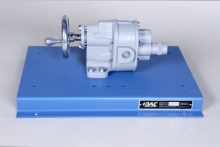 Item Number:275-135DAC Worldwide’s External Gear Pump Dissectible (275-135) is a realistic industrial pump for use in classroom and laboratory training relating to process pumps.