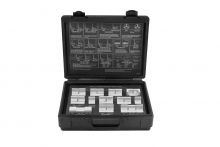
DAC Worldwide’s Weld Fault Comparison Kit (825-000) is a three-dimensional visual aid with accompanying training materials that facilitates basic training in weld quality and weld fault terminology by accurately depicting and identifying common weld defects.
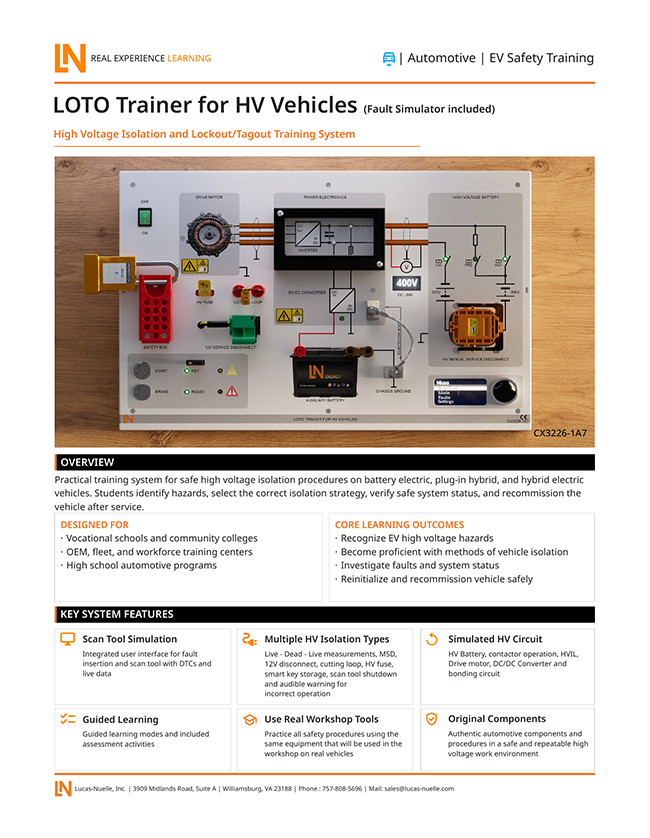
The Lucas-Nuelle CX3226-1A7 is a practical training system for teaching safe high-voltage isolation and lockout/tagout procedures for battery-electric, plug-in hybrid, and hybrid-electric vehicles.
Students learn to identify electrical hazards, choose an appropriate isolation method, verify that the vehicle is safe to service, investigate simulated faults, and recommission the vehicle after work is complete.
Designed For
- Vocational schools and community colleges
- OEM, fleet, and workforce training centers
- High school automotive programs
- Recognize electric-vehicle high-voltage hazards
- Become proficient with methods of vehicle isolation
- Investigate faults and system status
- Verify safe working conditions
- Reinitialize and recommission vehicles safely
Scan Tool Simulation
An integrated interface supports fault insertion and simulates a scan tool with diagnostic trouble codes and live data.
Multiple High-Voltage Isolation Methods
Training covers Live-Dead-Live measurements, manual service disconnects, 12-volt disconnection, cutting loops, high-voltage fuses, smart-key storage, scan-tool shutdown, and warnings for incorrect operation.
Simulated High-Voltage Circuit
The system represents an HV battery, contactor operation, high-voltage interlock loop, drive motor, DC/DC converter, and equipotential bonding circuit.
Guided Learning
Guided instruction modes and assessment activities reinforce correct procedures and decision-making.
Use of Real Workshop Tools
Students practice safety procedures using the same types of equipment used when servicing real vehicles.
Original Components
Authentic automotive components support safe, repeatable high-voltage training.
- High-voltage awareness
- High-voltage isolation methods
- Lockout/tagout procedures
- Safe-work-condition verification
- Diagnostic trouble code and fault investigation
- Safety decision-making
- Complete vehicle isolation and lockout/tagout
- Scan-tool shutdown
- Incorrect isolation procedure
- Procedure-validation failure
- Vehicle recommissioning verification
- High-voltage interlock fault investigation
- Equipotential bonding fault investigation
- Residual voltage after isolation
- Active insulation fault
- Unknown contactor status
- Collision-damaged vehicle assessment
- Authorization-limit recognition
- Unsafe-work-condition recognition
Some exercises may require separate testing equipment.
- Four-wire Kelvin milliohmmeter with a test current of at least 200 mA, resolution of 1 mOhm or better, and a pass threshold below 0.1 ohm
- Insulation and voltage tester or megohmmeter supporting 500 V and 1,000 V DC, a range of at least 200 MOhm, and a CAT III or CAT IV 1,000 V rating
Pages
-
 Item Number:825-000
 -
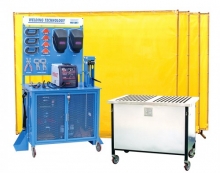 Item Number:950-WT1Welding is central to many industries including manufacturing, construction, and aerospace to name only a few. Welding is a blend of both art and science, joined together to create enduring bonds that allow us to create structures and machines on a scale impossible to achieve without it. The 950-WT1 teaches how to safely create an array of high quality weld types.
 -
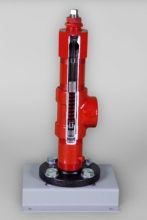 Item Number:295-703DAC's Wellhead Backpressure Regulator Cutaway (295-703) is a sectioned specialty regulator example for training in the operation, construction, and maintenance of three industrial back pressure regulators (BPRs), as used in gas and oil service in the oilfield.
 -
 Simlog’s Wheel Loader Personal Simulator is equipped with either a bucket or forks, at work in a typical construction site with a dump truck or flatbed truck. Configuration options are offered for both “Steering Wheel Steering” and “Stick Steering”, to reproduce the operator controls of (real) small, medium, and large-size wheel loaders.
 -
 Item Number:WMHSimlog's new Wheeled Material Handler Personal Simulator puts you at the controls of a typical wheeled material handler equipped with an articulated boom, four-tine grapple, elevating cab, and outriggers. Many different kinds of situations typical of (metal) scrap recycling yards are presented, in order to address the training needs of a wide variety of customers using different operational practices.
 -
 Item Number:950-WC1Amatrol’s Wind Concepts Learning System (950-WC1) introduces learners to a broad range of basic concepts in wind energy technology. Learners study how wind power systems work and what it takes to generate electrical power with wind.
 -
 The Warehouse Working from Heights simulation is ideal for future employees or supervisors who work in or around warehouse operations.
 -
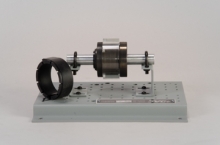 Item Number:200-2203DAC Worldwide’s Wrap-Spring Clutch Sample (200-2203) depicts a modified industrial in-line, wrap-spring-type clutch for mechanical drive training in a classroom or laboratory.
 -
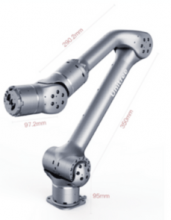 Unitree Z1 is a super-lightweight robotic arm with great payload capacity designed for Unitree robot dogs. It can cooperate with AlienGo or B1 quadruped and other mobile robots to complete complex tasks and explore various scenarios.
 -
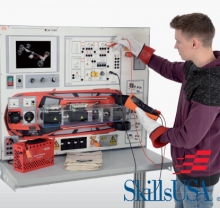 Our newest Hybrid and Electric vehicle trainer now covers all topics related to the New ASE L3 test. Allow your students to build confidence by knowing they can safely work on a state-of-the-art real-world system that performs the procedures needed for both hybrid and electric vehicles.